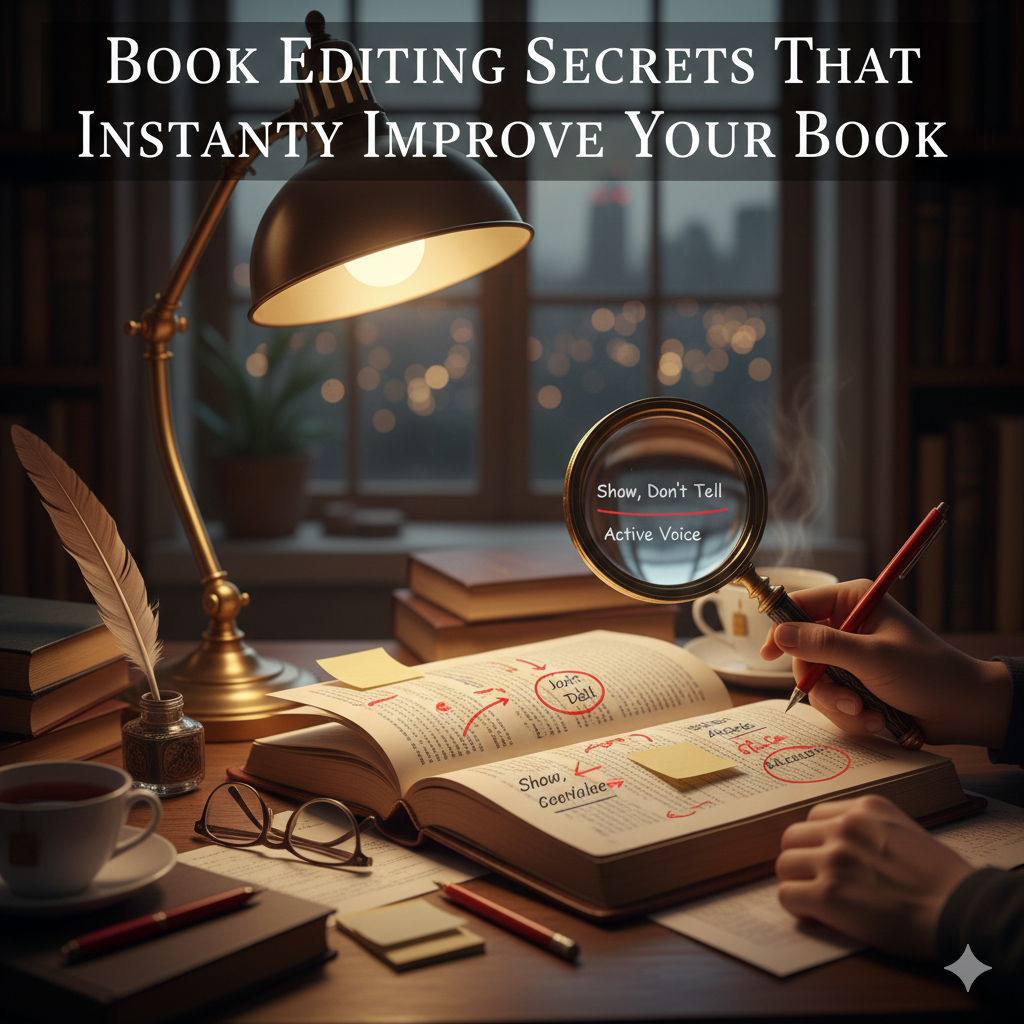
Book Editing Secrets That Instantly Improve Your Book
Introduction: Why Most Books Fail Before They Succeed
Many authors believe a great idea is enough to create a successful book.
Unfortunately, that belief costs countless writers their credibility, readers, and sales.
Even the most powerful story or valuable nonfiction content can fail if the editing is weak. Poor grammar, unclear sentences, pacing issues, and structural problems instantly turn readers away.
The good news?
You don’t need to rewrite your entire book to fix this.
By applying proven book editing secrets, you can dramatically improve readability, flow, and professionalism—often without changing your core message.
This guide breaks down step-by-step editing strategies used by professionals to transform average manuscripts into polished, publication-ready books.
What Is Book Editing and Why It Matters
Book editing is not just correcting spelling mistakes.
It is the process of refining language, structure, tone, and clarity so your book communicates effectively with readers.
Why Editing Is Non-Negotiable
-
Readers judge quality within the first few pages
-
Poor editing damages author credibility
-
Online reviews highlight errors quickly
-
Retail platforms penalize low-quality books
A well-edited book:
-
Reads smoothly
-
Builds trust
-
Keeps readers engaged
-
Increases sales and recommendations
Understanding book editing secrets gives authors a competitive advantage in an overcrowded market.
The 7 Book Editing Secrets Professionals Use
1. Edit in Layers, Not All at Once
One of the most important book editing secrets is separating the editing process into layers.
Trying to fix everything in one pass leads to missed errors and burnout.
Recommended Editing Layers
-
Structural editing – flow, chapters, logic
-
Content editing – clarity, consistency, tone
-
Line editing – sentence structure and style
-
Copyediting – grammar, punctuation, spelling
-
Proofreading – final error check
Each layer improves a different aspect of your book.
2. Cut Unnecessary Words Aggressively
Professional editors remove more words than they add.
Cluttered writing weakens impact and slows pacing.
Words to Watch For
-
Very, really, quite, just
-
That, which (when unnecessary)
-
Repeated phrases
-
Over-explaining obvious points
Shorter sentences create stronger authority and clearer meaning.
3. Fix the Opening First
Readers decide whether to continue within the first 10 pages.
One key book editing secret is polishing the opening before anything else.
Check Your Opening For
-
Clear promise to the reader
-
Strong hook or problem
-
Immediate value or intrigue
-
Confident, focused tone
If the opening fails, the rest of the book never gets read.
4. Read Your Manuscript Out Loud
This simple technique instantly reveals problems your eyes miss.
Reading aloud helps identify:
-
Awkward phrasing
-
Run-on sentences
-
Repetition
-
Unnatural dialogue
If a sentence feels uncomfortable to say, it feels uncomfortable to read.
5. Maintain Consistent Voice and Tone
Inconsistent tone breaks reader trust.
This is especially common in:
-
Nonfiction books
-
Multi-chapter guides
-
Books written over long periods
Editing for Consistency
-
Maintain same tense throughout
-
Keep point of view consistent
-
Use the same terminology
-
Match formality level across chapters
Consistency makes your book feel professionally crafted.
6. Strengthen Paragraph Structure
Long, dense paragraphs scare readers.
One powerful book editing secret is mastering paragraph rhythm.
Best Practices
-
2–3 lines per paragraph
-
One idea per paragraph
-
White space for readability
-
Clear topic sentences
This improves engagement on both print and digital formats.
7. Remove the Author Ego
Many authors fall in love with their own sentences.
Professional editing requires emotional detachment.
Ask yourself:
-
Does this serve the reader?
-
Does this move the story forward?
-
Is this necessary?
If the answer is no, it must go.
Step-by-Step Book Editing Process
Step 1: Take a Break Before Editing
Distance creates objectivity.
Wait 7–14 days before editing your draft.
Step 2: Perform Structural Review
Check:
-
Chapter order
-
Logical flow
-
Missing sections
-
Repetition
Fix big issues first.
Step 3: Edit for Clarity and Flow
Focus on:
-
Simple language
-
Clear explanations
-
Smooth transitions
This is where book editing secrets have the biggest impact.
Step 4: Line Edit for Style
Refine sentence rhythm and word choice.
Aim for:
-
Active voice
-
Shorter sentences
-
Natural pacing
Step 5: Proofread Carefully
Final checks include:
-
Typos
-
Formatting errors
-
Consistency issues
Never skip this step.
Benefits of Applying Professional Book Editing Secrets
1. Higher Reader Satisfaction
Clean editing keeps readers engaged and reduces negative reviews.
2. Increased Credibility
Professional editing positions you as a serious author.
3. Better Sales Performance
Well-edited books convert browsers into buyers.
4. Stronger Author Brand
Quality editing builds long-term trust with your audience.
Common Book Editing Mistakes to Avoid
1. Relying Only on Software
Editing tools help—but they cannot replace human judgment.
2. Editing While Writing
This kills creativity and slows progress.
3. Skipping Professional Editing
Self-editing alone is rarely enough.
4. Ignoring Reader Feedback
Early feedback highlights blind spots authors miss.
5. Rushing the Editing Process
Quality editing takes time and patience.
Why Choose a Professional Book Editing Service
Even with strong editing skills, professional services offer unmatched value.
What Professionals Provide
-
Objective perspective
-
Industry standards
-
Genre-specific expertise
-
Multiple editing rounds
-
Publishing-ready manuscripts
Professional editors apply advanced book editing secrets refined through experience.
When Professional Editing Is Essential
-
First-time authors
-
Commercial fiction
-
Business or authority books
-
Wide distribution goals
-
Brand-building publications
Investing in editing is investing in your book’s success.
How Professional Editing Improves Publishing Outcomes
A professionally edited book:
-
Passes platform quality checks
-
Receives better reviews
-
Attracts media opportunities
-
Builds author credibility
This is why publishing companies prioritize editing above all else.
Final Thoughts: Editing Is the Difference Between Average and Exceptional
Writing creates your book.
Editing makes it unforgettable.
By applying these proven book editing secrets, authors can instantly elevate clarity, confidence, and impact.
However, the most successful books combine smart self-editing with professional expertise.
If your goal is to publish a book that readers trust, recommend, and remember, editing is not optional—it is essential.