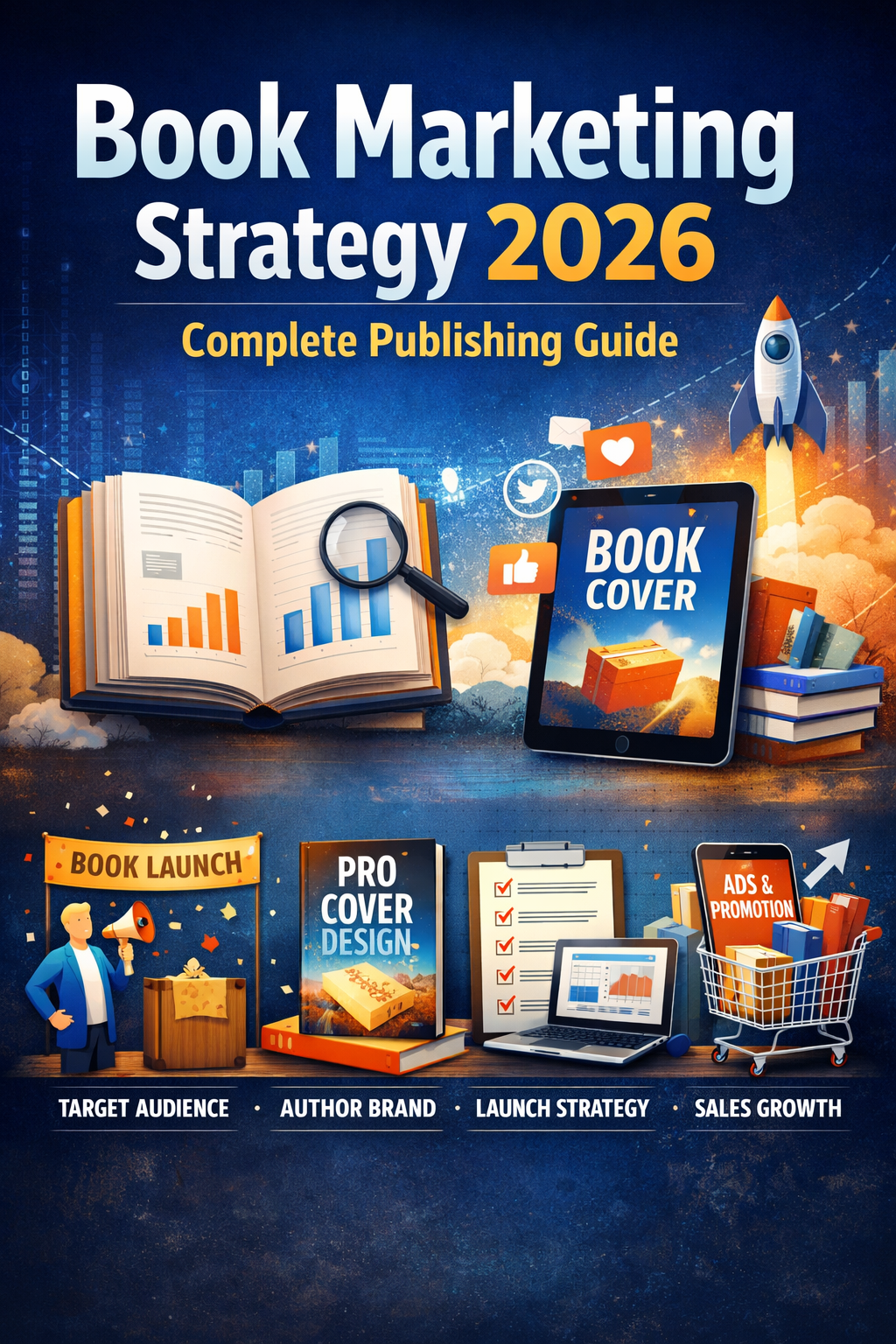
Book Marketing Strategy 2026: Complete Publishing Guide
Introduction
Publishing a book is no longer the hardest part of being an author. Getting people to notice, buy, and talk about your book is the real challenge. Thousands of books are released every day, which means competition is stronger than ever.
This is where a strong Book Marketing Strategy 2026 becomes essential. A smart strategy helps your book stand out, reach the right audience, and generate steady sales long after launch.
This guide explains every step you need to publish and market your book successfully in 2026. Whether you are self-publishing or working with a publisher, you will learn practical methods, proven tactics, and expert tips.
What Is a Book Marketing Strategy 2026?
A book marketing strategy is a structured plan to promote your book before, during, and after publication. In 2026, marketing is more data-driven and audience-focused than ever.
A strong strategy includes:
-
Audience research
-
Branding
-
Pre-launch promotion
-
Launch campaigns
-
Post-launch visibility
Without a clear plan, even a great book can fail to gain attention. With the right system, even new authors can achieve strong results.
Why Marketing Matters More Than Ever
The publishing industry has changed rapidly. Digital platforms allow anyone to publish, which increases competition. Readers now have unlimited choices, and attention spans are shorter.
Marketing helps you:
-
Reach the right readers
-
Build credibility
-
Increase sales
-
Grow your author brand
-
Create long-term visibility
In short, marketing is not optional. It is part of publishing.
Step-by-Step Book Marketing Strategy 2026
Step 1: Define Your Target Audience
Before promotion begins, you must know who your book is for. Many authors skip this step and market to everyone. That approach rarely works.
Identify:
-
Age group
-
Interests
-
Reading habits
-
Problems your book solves
-
Preferred platforms
The clearer your audience, the more effective your marketing becomes.
Step 2: Build Your Author Brand
Readers do not just buy books. They follow authors. Your brand is how readers recognize and remember you.
Create a consistent identity:
-
Author website
-
Professional photo
-
Clear bio
-
Social media profiles
-
Visual style
Consistency builds trust. Trust leads to sales.
Step 3: Optimize Your Book Metadata
Metadata determines how easily readers find your book online. It includes:
-
Title
-
Subtitle
-
Description
-
Keywords
-
Categories
Use search-friendly terms readers actually type. A strong description should be clear, emotional, and benefit-focused.
Step 4: Design a Professional Cover
People judge books by their covers. A weak design signals low quality, even if the writing is excellent.
A professional cover should:
-
Match your genre
-
Be readable as a thumbnail
-
Use clean typography
-
Stand out visually
Investing in cover design significantly improves click-through and sales.
Step 5: Pre-Launch Marketing Plan
Successful books start marketing months before release. Pre-launch builds anticipation and demand.
Effective tactics include:
-
Cover reveal campaigns
-
Email list building
-
Advance reader copies
-
Countdown posts
-
Early reviews
Early buzz helps algorithms promote your book once it launches.
Step 6: Launch Week Strategy
Launch week is critical. Strong early sales tell platforms your book is popular.
Focus on:
-
Email announcements
-
Social media campaigns
-
Discount promotions
-
Review requests
-
Live sessions or events
A coordinated launch creates momentum.
Step 7: Post-Launch Promotion
Marketing does not stop after release. In fact, most sales happen weeks or months later.
Continue promotion through:
-
Ads campaigns
-
Content marketing
-
Guest posts
-
Podcast interviews
-
Reader communities
Long-term promotion turns a book into a lasting asset.
Benefits of a Structured Book Marketing Strategy
Authors who follow a structured Book Marketing Strategy 2026 gain several advantages.
Higher Visibility
Consistent promotion ensures your book appears repeatedly in front of readers.
Stronger Credibility
Professional marketing signals quality and seriousness.
Better Sales Stability
Instead of short spikes, you get steady monthly sales.
Audience Growth
Each book builds your readership for the next release.
Best Practices for Book Marketing in 2026
Marketing trends evolve every year. The following practices are especially effective right now.
Focus on Short-Form Content
Short videos, quick posts, and bite-sized tips attract attention faster than long posts.
Build an Email List
Social platforms change algorithms, but email remains reliable. Your list is your direct audience.
Use Data to Improve
Track metrics such as:
-
Click rates
-
Conversion rates
-
Sales sources
Adjust strategies based on results.
Collaborate With Other Authors
Joint promotions help you reach new readers quickly. Cross-promotion works especially well within the same genre.
Common Mistakes to Avoid
Many authors fail not because of poor writing but because of avoidable marketing mistakes.
Launching Without a Plan
Publishing without preparation leads to low visibility and weak sales.
Targeting Everyone
Broad marketing wastes time and money. Specific targeting works better.
Ignoring Reviews
Reviews influence purchase decisions. Actively request honest feedback.
Stopping Promotion Too Soon
Many authors stop marketing after launch week. This is when promotion should actually continue.
Underestimating Branding
Inconsistent branding confuses readers and weakens recognition.
Traditional vs Digital Marketing Approaches
Both methods can work, but understanding the difference helps you choose wisely.
Traditional Methods
-
Book signings
-
Print ads
-
Media coverage
-
Library events
These build credibility but can be slow.
Digital Methods
-
Social media campaigns
-
Online ads
-
Influencer promotion
-
Email marketing
These scale faster and provide measurable results.
The best strategy combines both.
Why Choose a Professional Publishing or Marketing Service
While some authors manage marketing alone, professional services provide advantages that are hard to match independently.
Expertise
Professionals understand industry trends, algorithms, and reader behavior.
Time Savings
Marketing requires constant effort. Outsourcing allows you to focus on writing.
Better Tools
Companies use premium tools for analytics, design, advertising, and audience research.
Higher ROI
Experienced marketers know which tactics produce results and which waste money.
Services Professionals Typically Offer
-
Book launch campaigns
-
Advertising management
-
Cover design
-
Metadata optimization
-
Author branding
-
Distribution support
These services increase your chances of success.
How to Choose the Right Publishing Partner
Not all companies offer the same quality. Evaluate carefully before choosing.
Look for:
-
Proven track record
-
Transparent pricing
-
Real testimonials
-
Clear communication
-
Marketing support
Avoid companies that promise guaranteed bestseller status. No one can guarantee that.
Building Long-Term Author Success
A single book can generate income, but a long-term career requires strategy.
To grow consistently:
-
Publish regularly
-
Build reader relationships
-
Maintain branding
-
Track performance
-
Improve each launch
Think of your writing as a business, not just a creative hobby.
Advanced Marketing Techniques for 2026
Authors who want faster growth should consider advanced strategies.
Retargeting Ads
These ads show your book to people who already visited your page. They often convert better than standard ads.
Community Building
Create private reader groups or clubs. Loyal communities promote your book for you.
Content Repurposing
Turn one idea into multiple formats:
-
Blog post
-
Video
-
Quote graphic
-
Newsletter tip
This saves time while increasing reach.
Seasonal Campaigns
Promote your book around holidays or relevant events. Timing increases visibility.
Measuring Success Metrics
Tracking performance ensures your strategy works.
Key metrics to monitor:
-
Sales volume
-
Conversion rate
-
Email subscribers
-
Engagement levels
-
Review count
Analyze results monthly and adjust tactics.
Budget Planning for Book Marketing
Marketing does not need to be expensive, but it does require planning.
Divide your budget into:
-
Design
-
Advertising
-
Promotion tools
-
Professional services
Start small, test results, and scale what works.
Practical Checklist Before Publishing
Use this checklist to confirm you are ready.
-
Target audience defined
-
Cover designed
-
Description optimized
-
Keywords selected
-
Email list prepared
-
Launch plan scheduled
-
Review copies sent
Completing these steps greatly improves success chances.