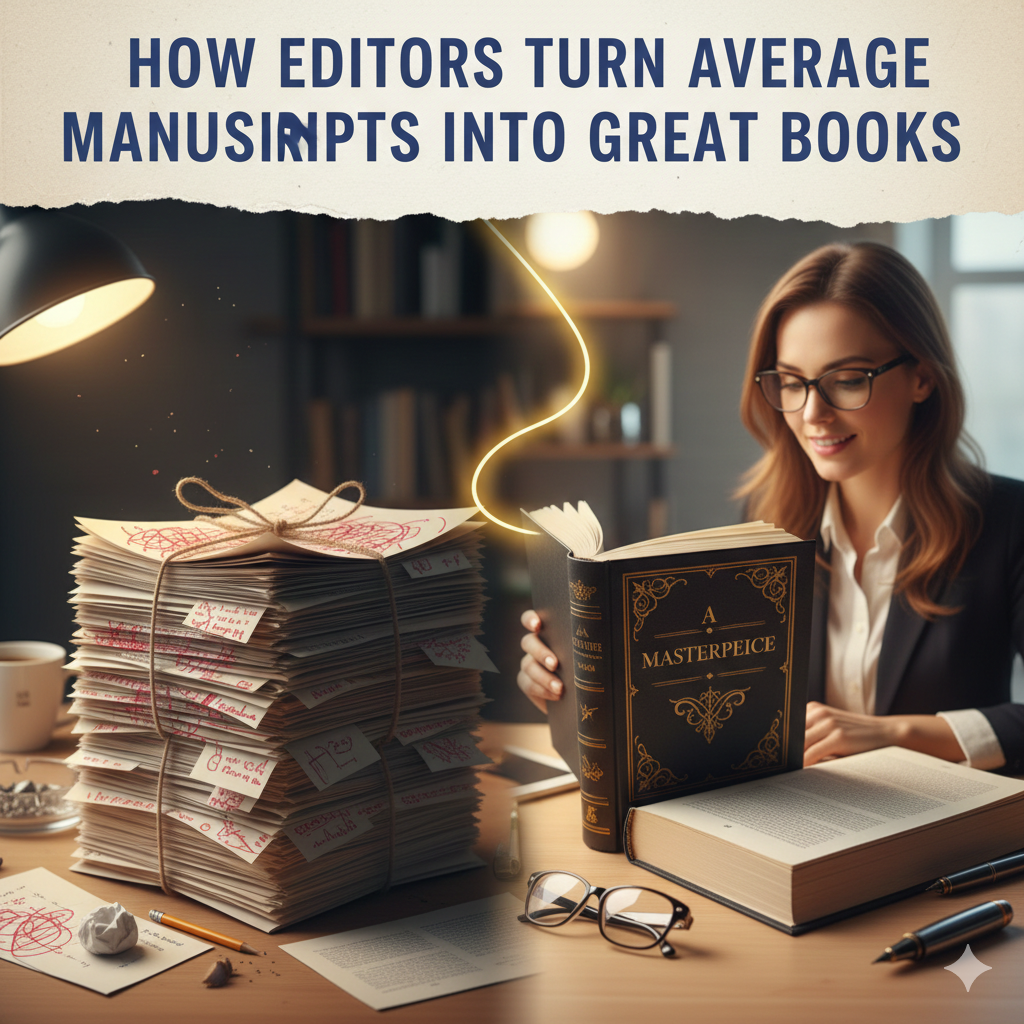
How Editors Transform Manuscripts Through the Book Editing Process
Introduction: Why Good Writing Isn’t Always a Great Book
Many authors believe that once a manuscript is finished, the hardest part of writing a book is over. In reality, that draft is only the beginning. Even strong ideas and decent writing often fall short of becoming a great book without expert refinement.
This is where the book editing process plays a crucial role. Professional editors do more than fix grammar. They reshape structure, sharpen clarity, strengthen storytelling, and elevate the overall reading experience.
In this guide, you’ll learn exactly how editors transform average manuscripts into polished, market-ready books—step by step—and why professional editing is essential for publishing success.
Understanding the Book Editing Process
Before diving into the transformation, it’s important to understand what the book editing process actually includes.
Editing is not a single task. It is a structured system that improves a manuscript at multiple levels.
Key Stages of the Book Editing Process
The process usually includes:
-
Developmental editing
-
Line editing
-
Copyediting
-
Proofreading
Each stage focuses on different problems and improvements. Skipping any one of them can weaken the final book.
Step 1: Developmental Editing – Fixing the Foundation
Developmental editing is the most impactful stage of the book editing process. It focuses on the big picture.
What Developmental Editors Look For
Editors evaluate:
-
Overall structure and flow
-
Plot or argument strength
-
Chapter organization
-
Character development (for fiction)
-
Logic and clarity (for nonfiction)
-
Target audience alignment
At this stage, an editor may suggest rewriting sections, reordering chapters, or removing content that doesn’t serve the book’s purpose.
How This Transforms an Average Manuscript
An average manuscript often:
-
Wanders without direction
-
Repeats ideas
-
Lacks a clear beginning, middle, and end
Developmental editing creates a strong backbone that holds the entire book together.
Step 2: Line Editing – Improving Style and Voice
Once the structure is solid, the book editing process moves into line editing.
Line editing focuses on how the text sounds and feels to the reader.
What Line Editors Improve
Editors refine:
-
Sentence flow and rhythm
-
Word choice and tone
-
Paragraph clarity
-
Consistency of voice
-
Emotional impact
The goal is not to change the author’s voice, but to enhance it.
Why Line Editing Matters
Readers may not notice line editing when it’s done well—but they will notice when it’s missing. Smooth, engaging prose keeps readers turning pages.
Step 3: Copyediting – Ensuring Accuracy and Consistency
Copyediting is where precision becomes critical in the book editing process.
What Copyeditors Correct
Copyediting focuses on:
-
Grammar and punctuation
-
Spelling errors
-
Sentence structure
-
Factual inconsistencies
-
Timeline and continuity errors
-
Style guide compliance
This stage ensures the manuscript meets professional publishing standards.
How Copyediting Elevates Quality
An average manuscript often contains small mistakes that break reader trust. Copyediting removes distractions so readers can focus on the content.
Step 4: Proofreading – The Final Quality Check
Proofreading is the last stage of the book editing process before publication.
What Proofreaders Do
They check for:
-
Typographical errors
-
Formatting issues
-
Missed punctuation
-
Spacing and layout problems
Proofreading ensures the final version is clean and polished.
Why Proofreading Is Essential
Even a single typo can damage credibility. Proofreading protects the professional image of the book and the author.
How Editors Add Value Beyond Corrections
Great editors do more than correct errors. They bring perspective, experience, and industry knowledge.
Objective Feedback
Authors are often too close to their work. Editors provide unbiased insight into what works and what doesn’t.
Reader-Centered Approach
Editors think like readers. They identify confusion, boredom, or gaps that authors may overlook.
Market Awareness
Professional editors understand:
-
Genre expectations
-
Reader preferences
-
Publishing standards
This insight helps position the book for success.
Benefits of a Strong Book Editing Process
A well-executed book editing process delivers measurable benefits.
Key Advantages
-
Clear and compelling structure
-
Stronger storytelling or messaging
-
Improved readability
-
Fewer negative reviews
-
Higher reader satisfaction
-
Greater publishing credibility
In short, editing turns potential into performance.
Best Practices for Working With Editors
To get the most from the book editing process, authors should approach it as a collaboration.
Follow These Best Practices
-
Be open to feedback
-
Ask questions when suggestions are unclear
-
Focus on long-term quality, not ego
-
Allow time for revisions
-
Trust professional expertise
Editing works best when both sides share the same goal: a great book.
Common Mistakes Authors Make During Editing
Many manuscripts remain average because of avoidable mistakes.
Mistake 1: Skipping Editing to Save Money
This often results in poor reviews and weak sales. Editing is an investment, not an expense.
Mistake 2: Relying Only on Grammar Checks
Tools cannot replace professional judgment, structure analysis, or reader insight.
Mistake 3: Ignoring Editorial Feedback
Defensive reactions prevent improvement. Editors suggest changes for a reason.
Mistake 4: Rushing the Process
The book editing process requires time. Speed sacrifices quality.
Why Choose a Professional Book Editing Service
Not all editing services are equal. Choosing the right company makes a significant difference.
What a Professional Editing Company Offers
-
Experienced subject-matter editors
-
Multi-stage editing systems
-
Clear communication and timelines
-
Style guide consistency
-
Confidential handling of manuscripts
Professional services follow industry-tested workflows that individual freelancers may not provide.
How Professional Editors Elevate Publishing Success
Books that go through a structured book editing process:
-
Receive better reader feedback
-
Perform stronger in competitive markets
-
Build author credibility
-
Increase long-term sales potential
Publishers and readers recognize professionally edited books immediately.
Final Thoughts: Editing Is Where Great Books Are Made
Writing creates the manuscript. Editing creates the book.
The book editing process is what separates average drafts from great published works. It strengthens ideas, sharpens language, and delivers a polished reading experience that readers expect.
For authors serious about their writing career, professional editing is not optional—it is essential. A well-edited book doesn’t just tell a story or share information. It earns trust, respect, and lasting impact.
When editors and authors work together, average manuscripts become great books that truly stand out.