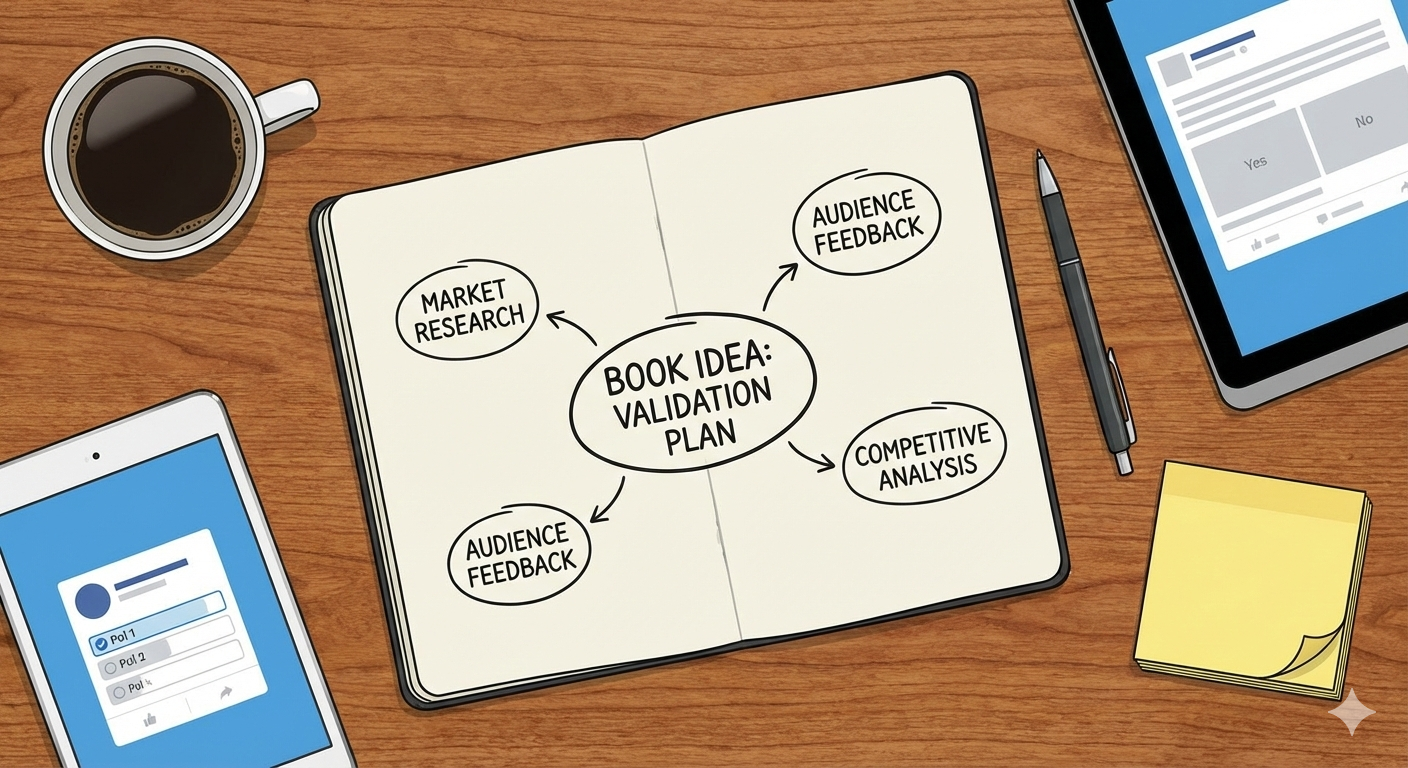
How to Validate Your Book Idea Before Writing
Introduction
Many aspiring authors spend months or even years writing a book, only to discover that readers are not interested. This can be frustrating and discouraging. The problem is not always the writing quality. Often, the real issue is that the author did not validate the book idea before starting.
Writing a book is a big investment of time, energy, and effort. Therefore, it is important to make sure your idea has value and demand.
The solution is simple. You need to validate your book idea before writing. Validation helps you confirm that your idea is strong, relevant, and attractive to your target audience.
In this guide, you will learn practical steps to test your idea, avoid common mistakes, and increase your chances of publishing a successful book.
What Does It Mean to Validate Your Book Idea?
To validate your book idea means to test and confirm that your idea is worth writing and publishing.
It answers important questions like:
-
Will people want to read your book?
-
Does your book solve a real problem?
-
Is your topic relevant and useful?
-
Is there demand for your idea?
Validation reduces risk and increases success.
It helps you write with confidence.
Why You Must Validate Your Book Idea Before Writing
Validating your idea provides many benefits.
Save Time and Effort
Writing a book takes months. Validation ensures your effort is not wasted.
Increase Chances of Success
When your idea has demand, your book has a higher chance of success.
Understand Your Audience
Validation helps you know your readers better.
You learn:
-
Their needs
-
Their problems
-
Their expectations
Improve Your Book Quality
You can refine your idea based on feedback.
This improves your content.
Step-by-Step Guide to Validate Your Book Idea
Follow these simple steps to validate your book idea effectively.
Step 1: Clearly Define Your Book Idea
Start with clarity.
Write down:
-
Your book topic
-
Your purpose
-
Your target audience
Be specific.
Instead of:
"Self-help book"
Write:
"Self-help book for students to improve focus and productivity"
Clear ideas are easier to validate.
Step 2: Identify Your Target Audience
Your book is for readers.
You must know who they are.
Ask yourself:
-
Who will read my book?
-
What age group?
-
What profession?
-
What problems do they face?
Examples:
-
Students
-
Entrepreneurs
-
Professionals
-
Beginners
Understanding your audience is essential.
Step 3: Check If Your Book Solves a Problem
Successful books solve problems.
Ask:
-
What problem does my book solve?
-
How does it help readers?
-
Why will readers care?
Books that provide value attract readers.
Step 4: Research Similar Books
Search for books similar to your idea.
This helps you understand:
-
Market demand
-
Competition
-
Reader interest
If similar books exist, it means there is demand.
Competition is not bad.
It confirms your idea has value.
What to Look for During Research
Check:
-
Book titles
-
Topics covered
-
Reviews
-
Popular themes
Reviews reveal what readers like and dislike.
This helps you improve your idea.
Step 5: Get Feedback From Real People
Feedback is powerful.
Ask people in your target audience.
You can ask:
-
Would you read this book?
-
Does this idea interest you?
-
What would you expect from it?
Listen carefully.
Feedback helps refine your idea.
Step 6: Create a Basic Book Outline
Create a simple outline.
Include:
-
Chapter titles
-
Main topics
Then review it.
Ask yourself:
-
Is this useful?
-
Is this clear?
-
Is this valuable?
This improves your book structure.
Step 7: Test Your Idea With a Sample Chapter
Write one sample chapter.
Share it with:
-
Friends
-
Mentors
-
Target readers
Ask for honest feedback.
This helps confirm your idea strength.
Step 8: Evaluate Your Confidence and Passion
Ask yourself:
-
Am I excited to write this book?
-
Can I complete it?
-
Do I believe in this idea?
Passion is important.
It helps you stay motivated.
Signs Your Book Idea Is Strong
Your idea is strong if:
-
People show interest
-
Your book solves a problem
-
Feedback is positive
-
You feel confident writing it
-
Similar books exist in the market
These signs confirm validation.
Signs Your Book Idea Needs Improvement
Your idea needs improvement if:
-
People are not interested
-
Feedback is negative
-
Idea is unclear
-
No clear audience
Do not worry.
You can improve your idea.
Refine and validate again.
Best Practices to Validate Your Book Idea
Follow these best practices for better results.
Be Open to Feedback
Feedback improves your idea.
Avoid ignoring criticism.
Use it to improve.
Focus on Reader Needs
Do not write only for yourself.
Write for readers.
Understand their problems.
Stay Flexible
You may need to modify your idea.
Flexibility improves success.
Take Your Time
Do not rush validation.
Careful validation saves time later.
Common Mistakes to Avoid When Validating Your Book Idea
Avoid these mistakes.
Ignoring Market Research
Research helps you understand demand.
Do not skip it.
Not Asking for Feedback
Feedback reveals important insights.
Always ask readers.
Choosing Too Broad Topics
Broad topics lack clarity.
Choose specific topics.
Writing Without Validation
This increases risk of failure.
Always validate first.
Ignoring Reader Needs
Readers are your priority.
Understand them.
How Validation Helps First-Time Authors
Validation builds confidence.
It helps you:
-
Write clearly
-
Stay motivated
-
Avoid failure
-
Increase success chances
You write with purpose.
Why Choose a Professional Book Publishing Company
Professional publishing companies help validate your book idea effectively.
They provide expert guidance.
Professional Market Research
Experts analyze your book idea.
They evaluate:
-
Demand
-
Competition
-
Audience interest
This improves success chances.
Expert Feedback
Publishing professionals provide valuable feedback.
They help refine your idea.
Professional Editing
Editors improve your manuscript.
They enhance quality.
Book Development Support
Experts help with:
-
Book structure
-
Content development
-
Planning
This improves your book.
Publishing Guidance
Publishing companies guide you through:
-
Editing
-
Formatting
-
Cover design
-
Publishing
This ensures professional results.
Benefits of Validating Your Book Idea With Professionals
Professional validation provides:
-
Expert advice
-
Market insights
-
Stronger book ideas
-
Higher success chances
This increases your confidence.
How Validation Saves Time and Money
Writing an unsuccessful book wastes resources.
Validation prevents this.
It ensures your effort is valuable.
It increases your return on investment.
Validation Is the Foundation of Successful Books
Every successful book starts with a strong idea.
Validation confirms strength.
It builds confidence.
It improves quality.
It increases success chances.