Manuscript Editing Checklist Every Author Must Follow
Introduction: Why Most Manuscripts Fail Without Proper Editing
Writing a manuscript is a major achievement. However, finishing the draft is only half the journey. Many authors submit or publish manuscripts that are unpolished, inconsistent, and full of avoidable errors.
This is where a manuscript editing checklist becomes essential.
Without a structured editing process, even strong stories or valuable nonfiction ideas can lose credibility, confuse readers, and get rejected by publishers or receive poor reviews after publication.
The good news is simple: following a clear, step-by-step manuscript editing checklist can dramatically improve your book’s quality and market readiness.
This guide walks you through everything every author must check before publishing—so your manuscript meets professional standards and earns reader trust.
What Is a Manuscript Editing Checklist?
A manuscript editing checklist is a systematic guide that helps authors review, revise, and refine their manuscripts before submission or publication.
Instead of editing randomly, the checklist ensures that:
-
Content is clear and complete
-
Language is correct and consistent
-
Structure flows logically
-
Formatting meets publishing standards
Most importantly, it helps authors avoid costly mistakes that could damage their reputation.
Step-by-Step Manuscript Editing Checklist
1. Content and Structure Review
Before focusing on grammar or formatting, start with the big picture.
Check for clarity and purpose
Ask yourself:
-
Is the main idea of the book clear?
-
Does every chapter support that idea?
-
Is the target audience clearly defined?
Remove or rewrite sections that feel confusing, repetitive, or unnecessary.
Evaluate chapter structure
Ensure that:
-
Chapters are logically ordered
-
Each chapter has a clear beginning, middle, and end
-
Transitions between chapters feel smooth
A strong structure keeps readers engaged from start to finish.
2. Language and Readability Check
This step ensures your manuscript is easy and enjoyable to read.
Simplify sentences
-
Avoid overly long or complex sentences
-
Use simple, direct language
-
Keep paragraphs short (2–3 lines max)
Maintain consistent tone
Your tone should remain consistent throughout the book:
-
Fiction: voice and mood stay stable
-
Nonfiction: professional, informative, and friendly
Inconsistency in tone can confuse or distract readers.
3. Grammar, Spelling, and Punctuation
This is one of the most critical parts of any manuscript editing checklist.
Check for common errors
-
Spelling mistakes
-
Incorrect punctuation
-
Subject-verb agreement issues
-
Incorrect word usage
Even small errors can make a manuscript appear unprofessional.
Maintain consistency
Ensure consistency in:
-
Spelling style (British or American English)
-
Capitalization rules
-
Hyphen usage
Consistency builds trust with readers and publishers alike.
4. Style and Formatting Review
Formatting errors are one of the top reasons manuscripts are rejected.
Follow standard formatting
-
Uniform font style and size
-
Proper margins and spacing
-
Consistent headings and subheadings
Check dialogue and quotations
-
Proper quotation marks
-
Clear speaker attribution
-
Correct punctuation
Well-formatted text improves readability and visual appeal.
5. Fact-Checking and Accuracy
This step is especially important for nonfiction manuscripts.
Verify all facts
-
Names
-
Dates
-
Statistics
-
References
Even one incorrect fact can damage your credibility.
Avoid outdated information
Make sure the content reflects current knowledge and trends relevant to your topic.
6. Character and Plot Consistency (For Fiction)
Fiction authors should pay special attention here.
Character consistency
Check that:
-
Names are spelled consistently
-
Personal traits remain stable
-
Motivations make sense
Plot logic
-
No unexplained events
-
No timeline errors
-
No unresolved plot points
Readers quickly notice inconsistencies, and they reduce immersion.
7. Voice and Flow Enhancement
This step polishes the manuscript and improves reader experience.
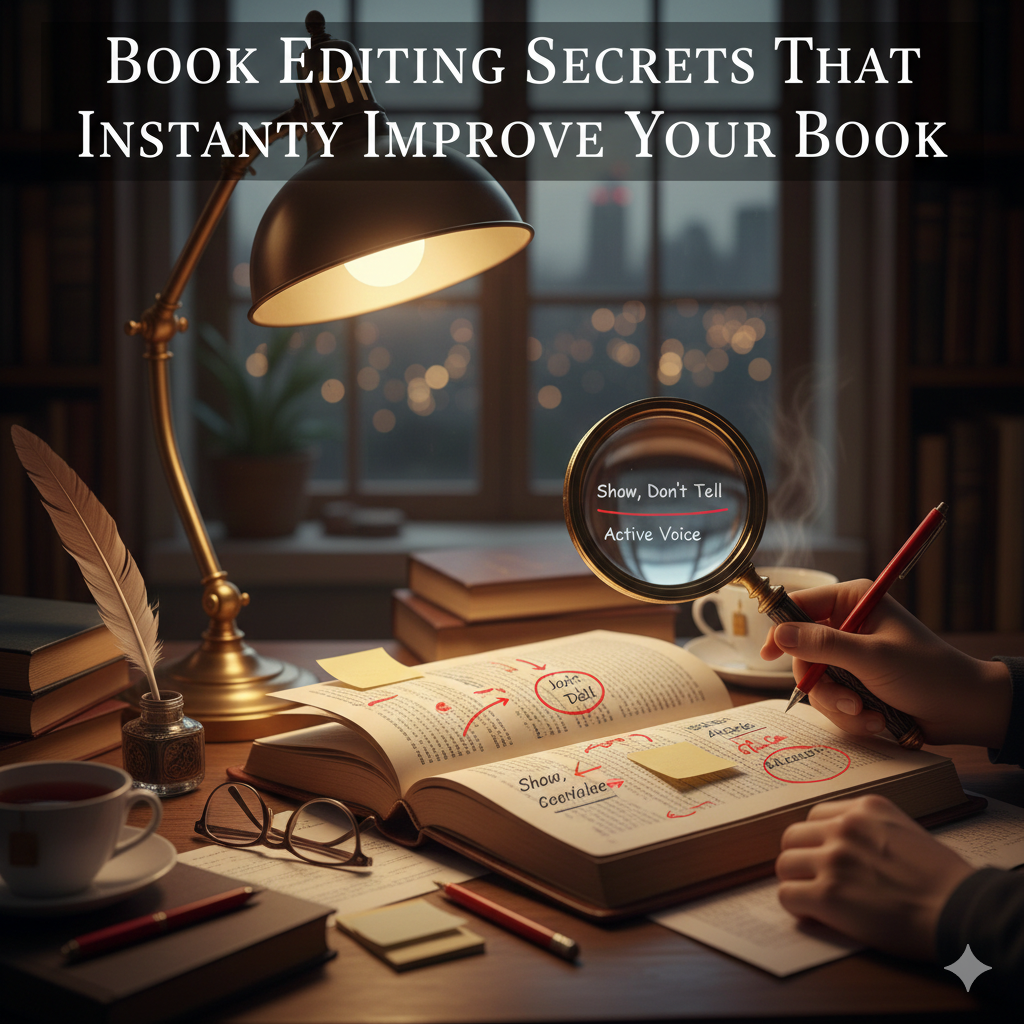
Read aloud
Reading your manuscript aloud helps you:
-
Catch awkward phrasing
-
Identify unnatural dialogue
-
Improve rhythm and pacing
Eliminate repetition
Repeated words, phrases, or ideas weaken the writing. Replace or remove them where possible.
8. Final Proofreading Pass
The final stage of your manuscript editing checklist should focus on small details.
Check for overlooked errors
-
Extra spaces
-
Missing words
-
Formatting inconsistencies
Review page elements
-
Title page
-
Table of contents
-
Chapter numbering
This final pass ensures nothing slips through before submission or publishing.
Benefits of Following a Manuscript Editing Checklist
Using a manuscript editing checklist offers several key advantages:
-
Improves overall book quality
-
Reduces rejection from publishers
-
Enhances reader satisfaction
-
Builds author credibility
-
Saves time and revision costs
A well-edited manuscript reflects professionalism and respect for your readers.
Best Practices for Effective Manuscript Editing
To get the best results, keep these best practices in mind:
-
Take breaks between editing rounds
-
Edit in stages, not all at once
-
Use feedback from beta readers
-
Avoid editing while emotionally attached to the text
Editing is most effective when approached with a clear and objective mindset.
Common Manuscript Editing Mistakes to Avoid
Many authors make the same mistakes during editing.
Skipping professional standards
Relying only on self-editing often leads to missed errors.
Editing too quickly
Rushing the editing process increases the chance of mistakes.
Ignoring feedback
Constructive feedback helps strengthen weak areas.
Over-editing
Excessive editing can remove the natural voice of the author.
Avoiding these mistakes will significantly improve your final manuscript.
Why Choose a Professional Manuscript Editing Service
Even the most experienced authors benefit from professional editing.
Expert perspective
Professional editors identify issues authors often overlook.
Industry standards
Editing professionals ensure your manuscript meets publishing expectations.
Time efficiency
Authors save valuable time and avoid repeated revisions.
Higher publishing success
Professionally edited manuscripts have a higher acceptance and reader satisfaction rate.
A professional service complements your manuscript editing checklist by adding expert precision.
Final Thoughts: Your Checklist Is Your Publishing Advantage
A manuscript is not ready just because it is finished.
By following a detailed manuscript editing checklist, authors can transform rough drafts into polished, professional books that stand out in the competitive publishing world.
Editing is not a shortcut—it is a necessary step toward success.
Whether you plan to self-publish or submit to a publishing house, a thorough manuscript editing checklist is your strongest tool for delivering a book readers trust and enjoy.