Traditional Publishing vs Self Publishing: Who Earns More
Introduction: The Income Question Every Author Asks
One of the biggest questions authors face today is not just how to publish a book, but how much they can realistically earn from it. The debate around traditional publishing vs self publishing earnings has become more intense as more writers explore independent publishing options.
For decades, traditional publishers controlled access to bookstores, marketing, and reader trust. Today, self publishing platforms allow authors to publish globally, set their own prices, and keep higher royalties.
But which path actually pays more?
This article breaks down the earning potential of traditional publishing and self publishing step by step. You will learn how money flows in each model, what factors affect income, and which option makes more financial sense for different types of authors.
Understanding Traditional Publishing vs Self Publishing Earnings
Before comparing income, it is important to understand how both publishing models work at a basic level.
What Is Traditional Publishing?
Traditional publishing involves submitting your manuscript to a publishing house. If accepted, the publisher handles editing, design, printing, distribution, and marketing.
In return, the publisher:
-
Owns or controls many rights to your book
-
Pays you royalties on each sale
-
May offer an advance payment
What Is Self Publishing?
Self publishing means the author publishes the book independently. The author controls the entire process or hires professionals as needed.
In self publishing, the author:
-
Owns full rights to the book
-
Pays upfront costs
-
Earns a much higher share per sale
Both models can generate income, but the structure of earnings is very different.
How Authors Make Money in Traditional Publishing
Advance Payments Explained
Many traditional publishers offer an advance against royalties. This is a one-time payment paid before the book is released.
Key points about advances:
-
Ranges from very small to very large
-
Paid in stages, not all at once
-
Must be “earned back” through sales
If a book does not sell enough copies to cover the advance, the author usually does not receive additional royalties.
Royalty Rates in Traditional Publishing
Traditional publishing royalties are typically:
-
5%–10% for paperbacks
-
10%–15% for hardcovers
-
15%–25% for ebooks
These percentages are calculated after discounts and distribution costs, which reduces the author’s actual earnings.
Long-Term Income Limitations
Even successful traditionally published authors face challenges such as:
-
Low royalty percentages
-
Delayed payments
-
Limited pricing control
This directly affects traditional publishing vs self publishing earnings, especially over time.
How Authors Make Money in Self Publishing
Higher Royalty Percentages
Self published authors typically earn:
-
60%–70% on ebooks
-
40%–60% on print-on-demand books
This means the author earns more per copy sold compared to traditional publishing.
Pricing Control
Self publishing allows authors to:
-
Set their own prices
-
Run discounts and promotions
-
Adjust pricing based on demand
This flexibility can significantly increase total earnings.
Multiple Income Streams
Self publishing also opens doors to:
-
Audiobooks
-
Translations
-
Direct sales
-
Bundled offers
These options are rarely available or profitable under traditional contracts.
Step-by-Step Income Comparison
Step 1: Earnings Per Book Sold
Traditional publishing:
-
Lower earnings per copy
-
Higher reliance on volume
Self publishing:
-
Higher earnings per copy
-
Profitable even at lower volumes
Step 2: Speed of Payments
Traditional publishing:
-
Payments every 6–12 months
-
Complex royalty statements
Self publishing:
-
Monthly payments
-
Real-time sales tracking
Step 3: Career Growth Potential
Traditional publishing:
-
Slower growth
-
Gatekeeper approval required
Self publishing:
-
Faster scaling
-
Direct reader relationship
Over time, self publishing often results in stronger income growth.
Benefits of Traditional Publishing Income Model
Traditional publishing still offers some financial advantages for specific authors.
Credibility and Prestige
-
Easier access to major media
-
Strong bookstore presence
-
Industry recognition
Lower Financial Risk
-
No upfront publishing costs
-
Professional team included
For authors who secure strong deals, traditional publishing can still be profitable.
Benefits of Self Publishing Income Model
When analyzing traditional publishing vs self publishing earnings, self publishing offers several clear advantages.
Higher Profit Margins
-
More money per sale
-
No middlemen taking large cuts
Creative and Financial Control
-
Full ownership of rights
-
Long-term earning potential
Scalable Income
-
Multiple books increase earnings
-
Backlist continues generating income
Self publishing rewards consistency and smart strategy.
Common Mistakes That Reduce Author Earnings
Mistakes in Traditional Publishing
-
Signing contracts without understanding royalty clauses
-
Giving away too many rights
-
Relying fully on the publisher for marketing
Mistakes in Self Publishing
-
Skipping professional editing
-
Poor cover design
-
No marketing strategy
Avoiding these mistakes is essential to maximize income in either model.
Why Professional Publishing Services Matter
Regardless of the publishing path, professional support plays a major role in earnings.
Quality Impacts Sales
Professional services help with:
-
Editing
-
Cover design
-
Formatting
-
Marketing strategy
Books that look professional sell more and earn more.
Strategic Guidance
A professional publishing company helps authors:
-
Choose the right publishing model
-
Price books correctly
-
Build long-term income
This guidance can significantly improve traditional publishing vs self publishing earnings outcomes.
Which Authors Earn More in the Long Run?
Authors Who Earn More with Traditional Publishing
-
Celebrity authors
-
High-profile nonfiction writers
-
Authors with strong industry connections
Authors Who Earn More with Self Publishing
-
Genre fiction writers
-
Niche nonfiction experts
-
Authors building personal brands
Most modern authors fall into the second category.
Final Thoughts: Traditional Publishing vs Self Publishing Earnings
When comparing traditional publishing vs self publishing earnings, the answer depends on your goals, genre, and long-term vision.
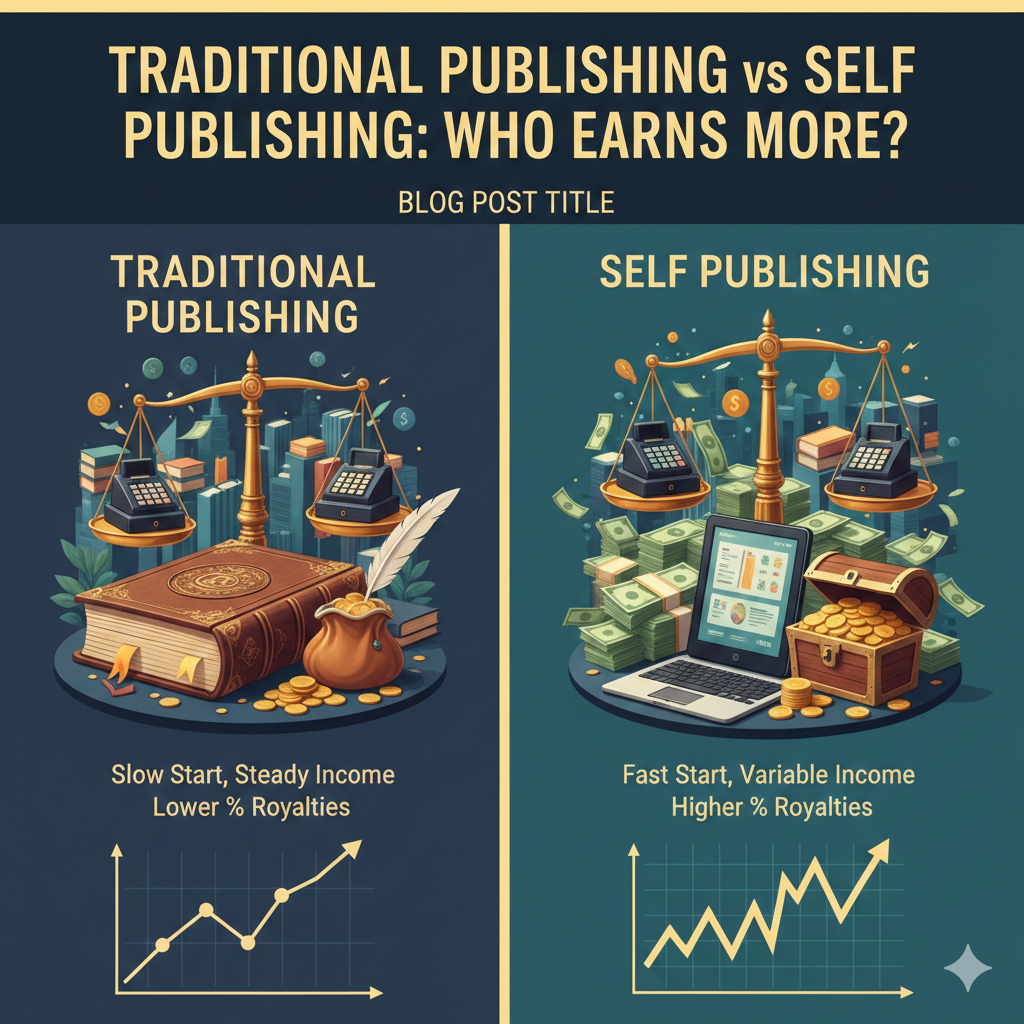
Traditional publishing can offer stability and prestige, but income is often limited and slow. Self publishing requires more effort upfront but provides higher royalties, faster payments, and unlimited growth potential.
For authors who want control, scalability, and long-term income, self publishing often leads to greater earnings. With the right professional support, it can become a sustainable and rewarding publishing career.
The smartest choice is not about trends, but about choosing the model that aligns with your financial goals and publishing vision.