Why Professional Editing Makes or Breaks a Book
Introduction: A Great Idea Isn’t Enough
Every successful book begins with a strong idea.
But a strong idea alone does not guarantee a successful book.
Many authors believe that once the story is written, the hard work is done. In reality, writing is only half the journey. The difference between a book that earns trust and one that gets ignored often comes down to professional book editing.
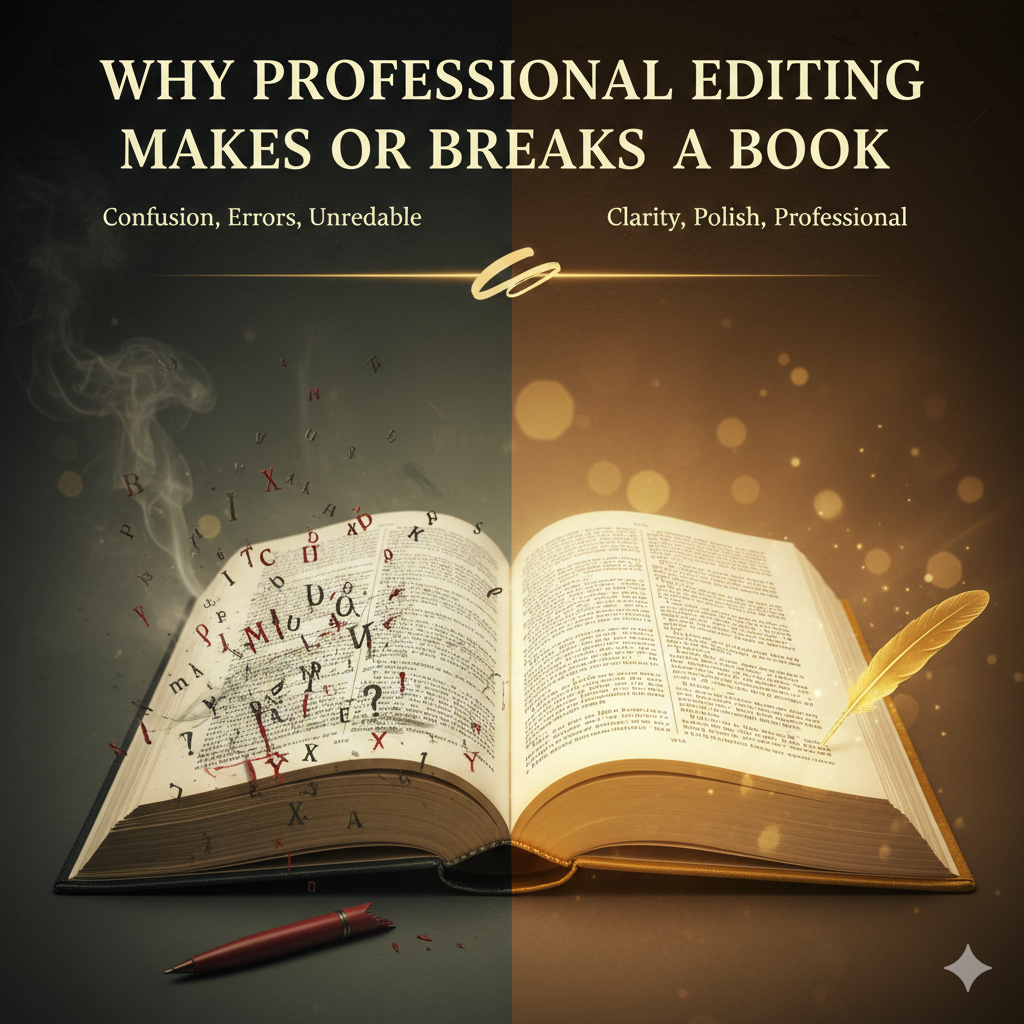
Poor grammar, unclear structure, and weak flow can ruin even the most powerful message. Readers notice these issues quickly—and they rarely give second chances. On the other hand, a well-edited book feels smooth, polished, and credible.
Professional book editing is not an optional luxury. It is a critical step that can make or break a book’s reputation, reviews, and sales.
What Is Professional Book Editing?
Professional book editing is a structured process that improves a manuscript’s clarity, quality, and readability. It focuses on both what is written and how it is written.
Unlike casual proofreading, professional editing is done by trained editors who understand language, storytelling, and publishing standards.
Why Professional Book Editing Matters
-
It improves readability and flow
-
It removes errors that damage credibility
-
It aligns the book with reader expectations
-
It prepares the manuscript for publication
Without professional book editing, even talented writers risk publishing an unfinished product.
Step-by-Step: How Professional Book Editing Works
Professional book editing is not a single action. It happens in clear stages, each with a specific purpose.
Step 1: Developmental Editing
Developmental editing focuses on the big picture.
This stage examines:
-
Story structure or content organization
-
Plot, pacing, and logical flow
-
Character development or argument strength
-
Target audience alignment
For nonfiction, it ensures ideas are presented clearly and logically.
For fiction, it strengthens the story’s foundation.
Without this step, a book may feel confusing or incomplete.
Step 2: Line Editing
Line editing improves how the text reads at the sentence level.
Editors focus on:
-
Sentence clarity
-
Word choice and tone
-
Flow between paragraphs
-
Removing repetition
This step makes the writing engaging and smooth without changing the author’s voice.
Step 3: Copy Editing
Copy editing addresses technical accuracy.
It fixes:
-
Grammar mistakes
-
Spelling errors
-
Punctuation issues
-
Consistency in style and formatting
Professional book editing at this stage ensures the manuscript meets publishing standards.
Step 4: Proofreading
Proofreading is the final quality check before publishing.
It catches:
-
Minor typos
-
Formatting issues
-
Missed punctuation errors
Skipping this step can leave embarrassing mistakes in the final book.
How Professional Book Editing Improves Book Quality
Readers may not understand editing, but they instantly feel the difference.
Clear and Confident Writing
Professional book editing removes confusion.
Ideas become easy to understand and enjoyable to read.
Stronger First Impression
Readers decide within the first few pages whether to continue.
Clean editing creates trust from the start.
Better Reviews and Ratings
Books with poor editing often receive negative reviews—regardless of content quality.
Professional book editing reduces:
-
Complaints about grammar
-
Reader frustration
-
Low star ratings
The Business Impact of Professional Book Editing
Editing does more than improve language. It directly affects sales and author credibility.
Increased Sales Potential
Readers recommend books that feel professional.
A polished book performs better on online marketplaces and bookstores.
Author Credibility and Brand Building
Your book represents you.
Professional book editing helps you:
-
Build authority in your niche
-
Establish long-term trust
-
Position yourself as a serious author
One poorly edited book can damage your reputation for years.
Common Mistakes Authors Make with Editing
Many authors unintentionally hurt their books by making avoidable mistakes.
Skipping Professional Editing to Save Money
This is the most common mistake.
Poor editing leads to:
-
Negative reviews
-
Refund requests
-
Lost credibility
Fixing mistakes after publishing costs more than editing upfront.
Relying Only on Friends or Beta Readers
Friends can provide feedback, but they are not trained editors.
They often:
-
Miss technical errors
-
Avoid giving honest criticism
-
Focus on opinion rather than structure
Professional book editing requires expertise, not just opinions.
Using Only Automated Tools
Software can help, but it cannot replace human judgment.
Automated tools:
-
Miss context-based errors
-
Cannot fix structure or flow
-
Do not understand storytelling
Professional editors bring experience and insight that tools cannot match.
Best Practices for Working with Professional Editors
To get the most value from professional book editing, authors should follow best practices.
Finish the Manuscript First
Editing an unfinished manuscript leads to wasted time and cost.
Complete your draft before starting professional book editing.
Be Open to Feedback
Editors improve your work, not criticize you.
Trust the process and remain open to suggestions.
Choose the Right Type of Editing
Not every manuscript needs every stage at once.
A professional service will guide you on:
-
What level of editing you need
-
How to prioritize stages
-
How to stay within budget
Why Professional Book Editing Is Essential for Self-Publishing
In traditional publishing, editors are provided.
In self-publishing, the responsibility falls on the author.
Professional book editing ensures:
-
Your book competes with traditionally published titles
-
Industry standards are met
-
Readers take your work seriously
Self-published books without professional editing often struggle to gain visibility.
Why Choose a Professional Editing Service or Company
Not all editors are equal. Choosing a professional editing service offers key advantages.
Experienced Industry Editors
Professional companies work with editors who:
-
Understand publishing standards
-
Know reader expectations
-
Have experience across genres
Structured Editing Process
A professional service follows a clear workflow, ensuring nothing is missed.
This includes:
-
Manuscript evaluation
-
Appropriate editing stages
-
Quality control checks
Consistency and Accountability
Professional companies provide:
-
Timelines and deadlines
-
Clear communication
-
Reliable results
This level of accountability protects your investment.
How Professional Book Editing Protects Your Investment
Writing a book takes time, effort, and emotion.
Professional book editing protects that investment by ensuring:
-
Your message is delivered clearly
-
Your work meets market standards
-
Your book has long-term value
Publishing without editing risks wasting months—or years—of work.
Final Thoughts: Professional Editing Is Not Optional
Professional book editing is not about perfection.
It is about respect—for your readers and for your work.
A professionally edited book:
-
Builds trust
-
Enhances readability
-
Strengthens your author brand
Whether you are a first-time author or an experienced writer, professional book editing can be the difference between a book that struggles and a book that succeeds.
In the competitive publishing world, quality matters.
And professional book editing is what turns a manuscript into a publishable, respected book.