Why Self Publishing Is Winning Over Traditional Publishing
Introduction: The Publishing Shift Authors Can’t Ignore
For decades, traditional publishing was considered the only “real” way to become an author. Writers dreamed of landing a literary agent, signing with a major publisher, and seeing their book in stores.
But times have changed.
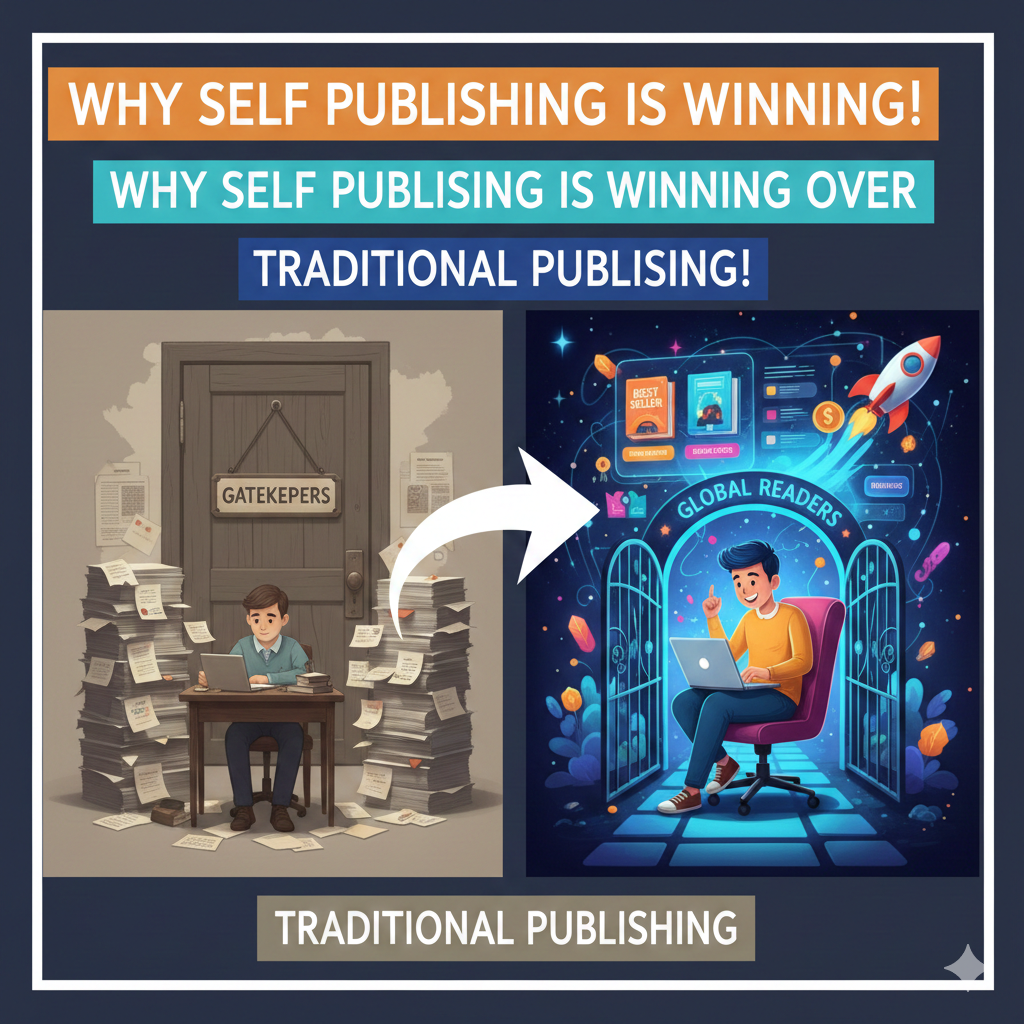
Today, more authors are questioning whether the traditional route is still worth it. Long delays, low royalties, limited control, and frequent rejections have pushed writers to explore alternatives.
This is where the debate of self publishing vs traditional publishing becomes important.
Self publishing is no longer a backup option. It has become a powerful, professional, and profitable choice for authors worldwide. In this article, we will break down exactly why self publishing is winning—and how authors can make the most of it.
Understanding Self Publishing vs Traditional Publishing
Before choosing a path, authors must clearly understand how both models work.
What Is Traditional Publishing?
Traditional publishing involves submitting your manuscript to a publishing house. If accepted, the publisher handles:
-
Editing and formatting
-
Cover design
-
Printing and distribution
-
Some level of marketing
However, the publisher also controls the rights, pricing, timelines, and major decisions.
What Is Self Publishing?
Self publishing allows authors to publish their books independently using platforms or professional services. Authors retain full control and decide:
-
When the book is published
-
How it looks and reads
-
Where it is sold
-
How it is marketed
This independence is the main reason the self publishing vs traditional publishing conversation has shifted in favor of self publishing.
Step-by-Step: How Self Publishing Works
Step 1: Writing and Editing the Manuscript
Authors write their book and hire professional editors if needed. High-quality editing is essential for credibility and reader trust.
Step 2: Book Formatting and Design
The manuscript is formatted for print and digital platforms. Cover design is customized to fit the book’s genre and audience.
Step 3: ISBN, Copyright, and Setup
Authors obtain ISBNs and register copyrights. This ensures ownership and global recognition.
Step 4: Publishing and Distribution
The book is published across online marketplaces, print-on-demand services, or bookstores.
Step 5: Marketing and Promotion
Authors control marketing strategies such as social media, ads, email lists, and author branding.
This streamlined process makes self publishing faster and more flexible than traditional publishing.
Why Self Publishing Is Winning the Publishing Battle
1. Full Creative Control
In traditional publishing, authors often lose control over:
-
Book titles
-
Cover design
-
Content edits
-
Pricing decisions
Self publishing puts all creative decisions in the author’s hands. This freedom is a major advantage in the self publishing vs traditional publishing comparison.
2. Higher Royalty Earnings
Traditional publishers typically offer:
-
5–10% royalties for print books
-
10–15% for ebooks
Self publishing allows authors to earn:
-
35–70% royalties depending on the platform
Higher royalties mean long-term income and financial independence.
3. Faster Time to Market
Traditional publishing can take 1–3 years from acceptance to release.
Self publishing allows books to be published in weeks or months, making it ideal for authors who want speed and relevance.
4. Ownership of Rights
Traditional publishers often own publishing rights for years.
Self published authors keep full rights and can:
-
Republish editions
-
License translations
-
Adapt books into audiobooks or courses
Ownership is a key reason self publishing continues to grow.
Best Practices for Successful Self Publishing
Invest in Professional Services
Quality matters. Authors should work with professionals for:
-
Editing
-
Cover design
-
Formatting
-
Publishing setup
This ensures the book meets industry standards.
Understand Your Target Audience
Successful authors know who they are writing for. Research helps in:
-
Choosing the right genre
-
Designing attractive covers
-
Writing effective book descriptions
Build an Author Brand
Self publishing success is not just about one book. Authors should focus on:
-
Consistent online presence
-
Email lists
-
Reader engagement
Branding builds trust and long-term sales.
Common Mistakes Authors Should Avoid
Skipping Professional Editing
Poorly edited books damage credibility and reviews. Editing is not optional.
Weak Cover Design
Readers judge books by covers. A low-quality cover reduces sales instantly.
No Marketing Plan
Publishing alone does not guarantee success. Marketing must be planned before launch.
Unrealistic Expectations
Self publishing is a business. Success requires patience, learning, and consistency.
Avoiding these mistakes helps authors win in the self publishing vs traditional publishing journey.
Why Traditional Publishing Is Losing Its Appeal
Traditional publishing still works for some authors, but it comes with serious drawbacks:
-
High rejection rates
-
Long approval timelines
-
Limited marketing support
-
Loss of creative control
Publishers now focus on authors who already have audiences, shifting risk back to writers.
As a result, more authors are choosing independence.
Why Choose a Professional Self Publishing Company
While self publishing offers freedom, it also requires expertise. A professional publishing company provides:
-
Industry-standard editing and design
-
Hassle-free ISBN and copyright setup
-
Global distribution support
-
Marketing guidance
This combination gives authors the best of both worlds: independence with professional quality.
Final Thoughts: The Future Belongs to Independent Authors
The publishing industry is evolving fast. Authors today want control, speed, transparency, and fair earnings.
When comparing self publishing vs traditional publishing, the advantages of self publishing are clear:
-
More freedom
-
Higher profits
-
Faster publishing
-
Long-term ownership
Self publishing is no longer an alternative—it is the future of authorship.
For writers serious about building a sustainable publishing career, self publishing is not just winning—it is leading the way.