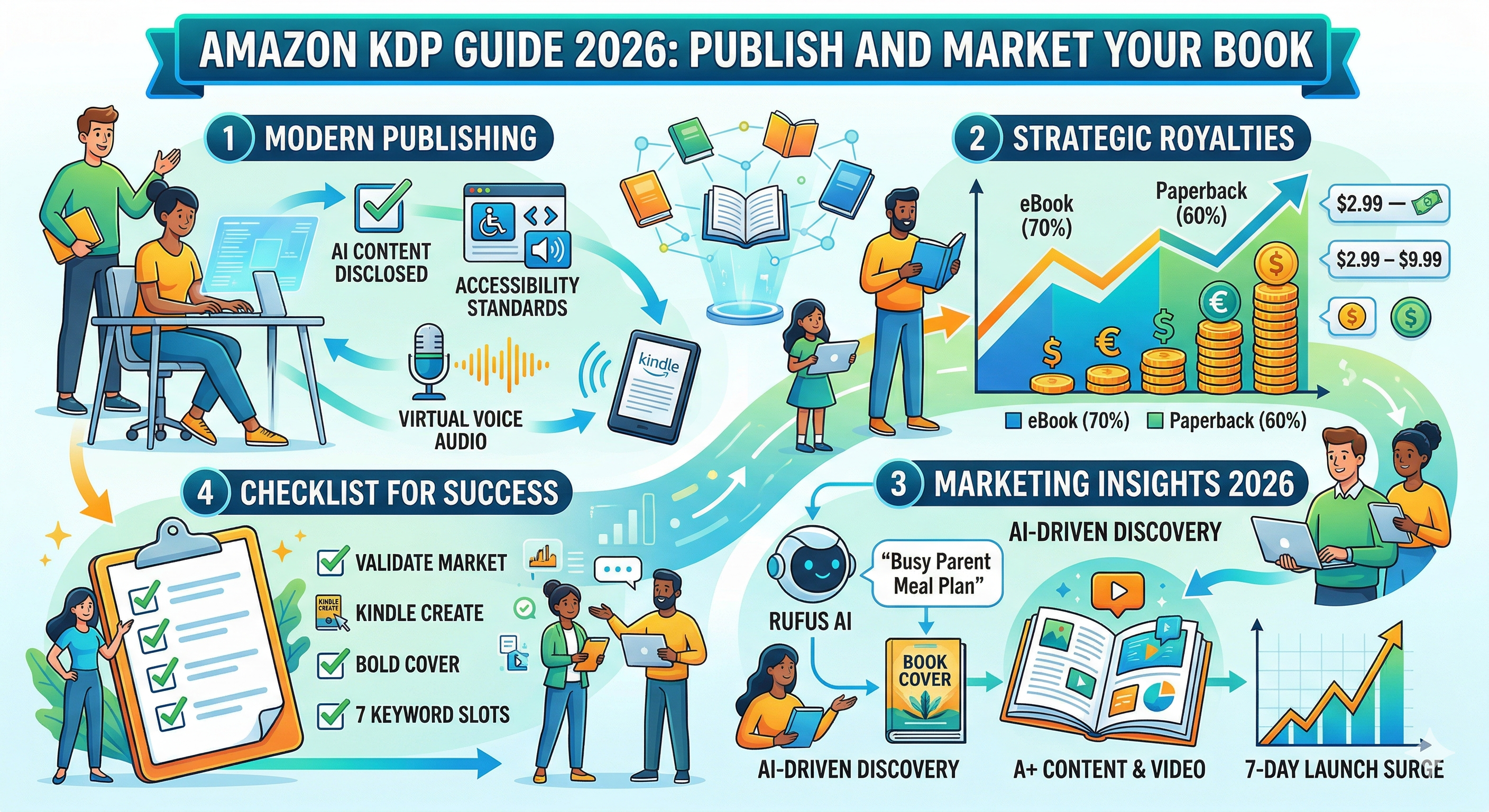
Amazon KDP Guide 116: Complete Strategy to Successfully Publish and Market Your Book in 2026
Publishing a book today is easier than ever. However, succeeding on Amazon is more competitive than ever. Thousands of books are uploaded daily to Kindle Direct Publishing (KDP). Many authors publish, but only a small percentage earn steady sales.
That’s where this Amazon KDP Guide comes in.
If you want to publish professionally, rank higher, and market your book effectively in 2026, you need more than just a finished manuscript. You need a clear system.
This guide will walk you through:
-
Preparing your manuscript
-
Publishing on Amazon KDP step by step
-
Optimizing for visibility
-
Marketing strategically
-
Avoiding costly mistakes
-
Knowing when to work with professionals
Let’s begin.
Why You Need an Amazon KDP Guide in 2026
Amazon continues to refine its algorithm. In 2026, discoverability depends on:
-
Metadata optimization
-
Keyword relevance
-
Category selection
-
Reviews and engagement
-
Advertising performance
Simply uploading a file is not enough.
A strong Amazon KDP Guide helps you treat your book like a business asset, not just a creative project.
Step-by-Step: How to Publish Using This Amazon KDP Guide
Step 1: Prepare Your Manuscript Professionally
Before uploading anything, ensure your manuscript is fully polished.
Editing and Proofreading
You need:
-
Developmental editing (structure and clarity)
-
Line editing (flow and style)
-
Proofreading (grammar and typos)
Even small errors can damage reviews. In 2026, readers expect clean formatting and flawless writing.
Formatting for KDP
KDP supports:
-
EPUB (recommended)
-
DOCX
-
PDF (for print)
Formatting must include:
-
Clickable table of contents
-
Proper chapter spacing
-
Consistent fonts
-
Page breaks between chapters
For print books, margins and trim sizes must follow KDP standards.
Step 2: Create a High-Converting Book Cover
Your cover is your most powerful marketing tool.
On Amazon, readers see your book as a small thumbnail first. If it doesn’t stand out, they won’t click.
Cover Best Practices
-
Clear, bold title
-
Genre-appropriate design
-
Strong contrast
-
Readable typography
-
Professional layout
Study bestselling books in your niche. Notice trends in colors, fonts, and layout. Your cover should fit the market while remaining unique.
Step 3: Optimize Metadata (Critical for Ranking)
Metadata determines discoverability.
Title and Subtitle
Include your main keyword naturally. Avoid stuffing.
Example structure:
-
Main Title
-
Subtitle with benefit or niche clarity
Book Description
Your description should:
-
Start with a strong hook
-
Focus on benefits
-
Use short paragraphs
-
Include subtle keywords
-
End with a call to action
Use formatting tools (bold, spacing, bullet points) to improve readability.
Keyword Research
Choose 7 backend keywords carefully.
Target:
-
Reader search phrases
-
Specific niches
-
Long-tail keywords
-
Low-to-medium competition terms
Think like your reader. What would they type into Amazon’s search bar?
Step 4: Select the Right Categories
Categories influence visibility.
Instead of choosing broad categories, aim for niche ones.
For example:
-
Instead of “Fiction,” choose a specific subgenre.
-
Instead of “Business,” choose a focused industry or topic.
Narrow categories increase your chance of earning a bestseller badge.
Step 5: Set Strategic Pricing
Pricing affects:
-
Conversion rates
-
Royalties
-
Advertising performance
Royalty Options
KDP offers:
-
35% royalty
-
70% royalty (with pricing limits)
Research similar books in your niche before setting a price.
Many authors launch at a lower promotional price to drive early sales and reviews.
Publishing Formats You Should Consider
Kindle eBook
Low production cost
Fast publishing
High scalability
Paperback
Builds credibility
Great for events and gifts
Higher perceived value
Hardcover (Optional but Growing)
Premium positioning
Higher profit margins
Stronger brand authority
A multi-format strategy increases visibility and earnings.
Marketing Strategy: The Heart of This Amazon KDP Guide
Publishing is only half the journey. Marketing drives results.
Pre-Launch Strategy
Start marketing before release.
Build an Email List
Offer:
-
Free sample chapters
-
Bonus content
-
A short reader magnet
An email list gives you direct access to readers.
ARC Team (Advance Review Copies)
Send early copies to trusted readers.
More early reviews increase credibility and ranking potential.
Launch Week Strategy
The first 7 days matter most.
Focus on:
-
Email blasts
-
Social media announcements
-
Promotional pricing
-
Amazon Ads
A strong launch helps trigger Amazon’s recommendation engine.
Amazon Advertising in 2026
Ads are no longer optional for competitive niches.
Types of Ads
-
Sponsored Products
-
Sponsored Brands (if eligible)
-
Lockscreen Ads (for eBooks)
Start with automatic campaigns to gather data. Then create manual campaigns targeting:
-
High-performing keywords
-
Competitor book ASINs
-
Niche phrases
Monitor:
-
ACoS (Advertising Cost of Sale)
-
Click-through rate
-
Conversion rate
Optimize weekly.
Long-Term Marketing Strategy
Sustainable success requires consistency.
Content Marketing
-
Blog posts related to your niche
-
YouTube content
-
Short-form videos
-
Podcast interviews
Publish More Books
Nothing markets a book like another book.
A series increases:
-
Read-through rate
-
Author visibility
-
Overall revenue
Benefits of Following This Amazon KDP Guide
When done correctly, KDP offers:
-
Global distribution
-
Passive income potential
-
Creative control
-
Faster publishing timeline
-
Higher royalty percentages compared to traditional publishing
You control pricing, marketing, and updates.
That flexibility is powerful in 2026’s publishing landscape.
Common Mistakes to Avoid
Many authors fail not because of bad writing, but because of poor strategy.
1. Publishing Without Editing
Negative reviews can permanently damage a book’s ranking.
2. Ignoring Keyword Research
Without optimization, your book becomes invisible.
3. Poor Cover Design
Amateur covers reduce clicks instantly.
4. No Marketing Plan
Publishing without promotion leads to low sales.
5. Overpricing at Launch
New authors must build trust first.
6. Giving Up Too Early
Amazon rewards consistency. Many books gain traction months after release.
Why Choose a Professional Publishing Service?
Self-publishing does not mean doing everything alone.
Working with a professional team can help with:
-
Professional editing
-
Cover design
-
Formatting
-
Keyword research
-
Category selection
-
Advertising management
-
Launch strategy planning
A professional service saves time, reduces mistakes, and improves long-term profitability.
Instead of guessing, you follow a proven roadmap.
For serious authors, this investment often pays for itself through better positioning and higher sales.
Advanced Tips for 2026
To stay competitive, consider these advanced strategies:
Build Author Branding
Use consistent:
-
Color themes
-
Fonts
-
Messaging
-
Tone of voice
Readers should instantly recognize your books.
Leverage Data
Track:
-
Monthly sales trends
-
Keyword performance
-
Ad metrics
-
Conversion rates
Data-driven decisions outperform emotional decisions.
Update and Refresh
You can:
-
Improve covers
-
Rewrite descriptions
-
Change keywords
-
Adjust categories
Optimization is ongoing.