Book Cover Design Guide 2026: Complete Strategy to Successfully Publish and Market Your Book
Introduction: Why Most Books Fail at First Impression
Readers judge a book by its cover. That’s not a cliché—it’s a reality of the modern publishing market.
In 2026, competition is intense. Thousands of books are released daily across digital and print platforms. If your cover doesn’t stand out in a crowded marketplace, your book gets ignored.
A weak cover leads to:
- Low click-through rates online
- Poor sales despite good content
- Lack of credibility as an author
The solution is simple but strategic: follow a proven Book Cover Design Guide 2026 that aligns design, branding, and marketing goals.
This guide walks you step-by-step through creating a professional book cover that attracts attention and drives sales.
What Makes a Book Cover Successful in 2026
Before designing, understand what works today.
A successful cover is not just attractive—it’s strategic.
Key Elements of a High-Converting Cover
- Clarity: Easy to read even as a thumbnail
- Genre alignment: Matches reader expectations
- Visual hierarchy: Title stands out first
- Emotional impact: Creates curiosity or urgency
- Brand consistency: Fits your author identity
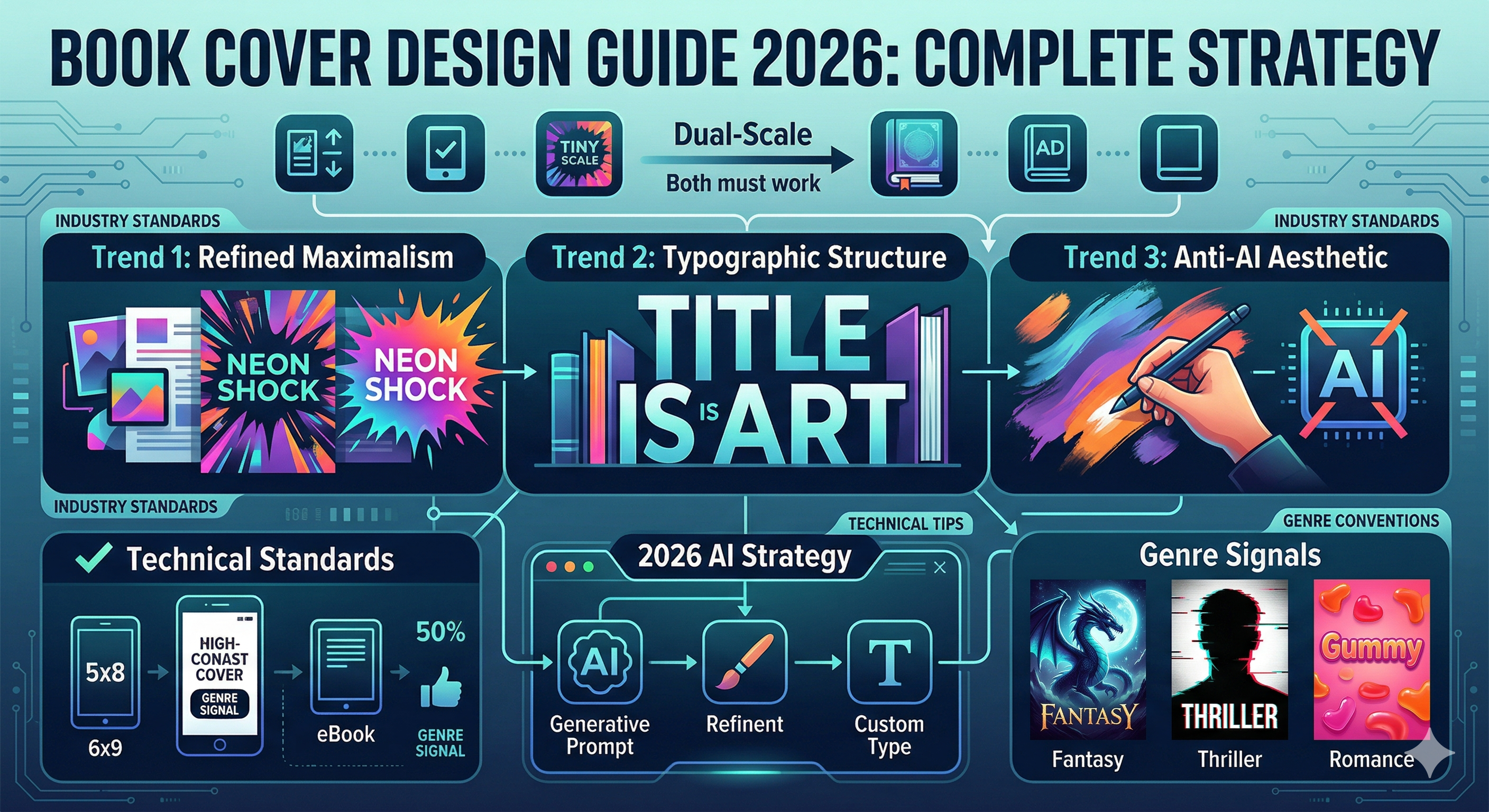
In 2026, most readers discover books through mobile devices. That means your cover must look sharp and readable even at small sizes.
Step-by-Step Book Cover Design Strategy
Step 1: Define Your Target Audience
Start with clarity.
Ask:
- Who is your ideal reader?
- What age group do they belong to?
- What kind of covers do they prefer?
For example:
- Romance readers prefer soft colors and emotional visuals
- Thriller readers expect bold typography and dark tones
Your cover should speak directly to your audience.
Step 2: Research Your Genre
Don’t design blindly.
Study top-selling books in your category:
- Look at color schemes
- Typography styles
- Layout patterns
This is not about copying. It’s about understanding what readers expect.
Breaking genre norms without understanding them leads to confusion—and lost sales.
Step 3: Create a Strong Title and Subtitle Layout
Your title is the most important element.
Best practices:
- Use large, bold fonts
- Ensure readability at thumbnail size
- Avoid overly decorative fonts
Subtitle tips:
- Keep it short and clear
- Support the main title
- Use smaller but readable fonts
Hierarchy matters:
- Title
- Subtitle
- Author name
Step 4: Choose the Right Typography
Fonts influence perception.
Recommended Font Styles:
- Serif fonts: Traditional, trustworthy (great for non-fiction)
- Sans-serif fonts: Modern and clean (great for business books)
- Script fonts: Emotional, elegant (ideal for romance)
Avoid:
- Using too many fonts
- Hard-to-read styles
- Overcrowded text
Stick to 2–3 fonts maximum.
Step 5: Select Colors That Sell
Color psychology plays a major role in book marketing.
Common Color Associations:
- Blue: Trust, professionalism
- Red: Urgency, passion
- Black: Mystery, authority
- White: Simplicity, clarity
Use contrast to improve readability.
Example:
- Light text on dark background
- Bold accent colors for emphasis
Step 6: Use High-Quality Images or Graphics
Low-quality visuals instantly reduce credibility.
You can use:
- Custom illustrations
- Professional photography
- Minimalist graphic designs
Make sure:
- Images are high resolution
- They match your genre
- They enhance—not distract from—the title
Step 7: Optimize for Digital and Print
In 2026, your cover must work across formats.
Digital Optimization:
- Thumbnail readability
- Clear title visibility
- Mobile-friendly design
Print Optimization:
- Spine alignment
- Back cover layout
- Proper bleed and margins
A good design looks perfect in both formats.
Step 8: Test Your Cover Before Publishing
Don’t assume your design works—test it.
Methods:
- Share with your target audience
- Run polls on social media
- Compare multiple versions
Ask:
- Which cover grabs attention?
- Which one looks more professional?
Testing reduces risk and improves performance.
Benefits of a Strong Book Cover Design
A professionally designed cover delivers measurable results.
Key Benefits:
- Higher sales conversions
- Better online visibility
- Stronger author brand
- Improved credibility
- More marketing opportunities
In many cases, improving the cover alone can significantly boost sales without changing the content.
Best Practices for Book Cover Design in 2026
Follow these proven practices to stay ahead.
Keep It Simple
Avoid clutter.
A clean design:
- Improves readability
- Looks modern
- Works better in thumbnails
Focus on One Core Idea
Don’t try to show everything.
Your cover should communicate one clear message.
Maintain Brand Consistency
If you’re writing multiple books:
- Use similar fonts
- Keep a consistent style
- Build a recognizable brand
This helps readers identify your work instantly.
Design for Your Platform
Different platforms have different requirements.
Examples:
- E-commerce thumbnails
- Print-on-demand specs
- Audiobook cover variations
Adapt your design accordingly.
Common Book Cover Design Mistakes to Avoid
Even good content fails due to poor design choices.
1. Overcrowded Layout
Too many elements confuse readers.
Fix:
- Use whitespace
- Limit text and visuals
2. Poor Font Choices
Unreadable fonts reduce impact.
Fix:
- Choose simple, bold typography
- Test readability at small sizes
3. Ignoring Genre Expectations
Mismatch leads to lost readers.
Fix:
- Research your category
- Align with reader expectations
4. Low-Quality Images
Blurry visuals look unprofessional.
Fix:
- Use high-resolution assets
- Avoid pixelated graphics
5. Weak Title Visibility
If readers can’t read the title, they won’t click.
Fix:
- Increase font size
- Improve contrast
6. DIY Without Design Knowledge
Trying to save money can cost sales.
Fix:
- Learn basics or hire professionals
Why Choose a Professional Book Cover Design Service
Designing a cover is not just about creativity—it’s about strategy.
What Professionals Offer:
- Market research expertise
- Advanced design tools
- Understanding of reader psychology
- Platform-specific optimization
Advantages of Hiring Experts
- Saves time and effort
- Ensures high-quality output
- Increases chances of success
- Aligns design with marketing strategy
A professional designer doesn’t just create a cover—they create a selling tool.
How a Publishing Company Adds Value
Working with a publishing company gives you an edge.
Services Typically Include:
- Custom cover design
- Branding consultation
- Market positioning
- Print and digital formatting
They ensure your cover aligns with your overall publishing and marketing plan.