Book Cover Design Guide 2026: Complete Strategy to Successfully Publish and Market Your Book
Introduction
A great book can fail if its cover does not grab attention. In today’s competitive publishing world, readers often judge a book within seconds. Your cover is not just decoration—it is your most powerful marketing tool.
Many authors struggle with designing a cover that looks professional and sells. They either choose poor visuals, ignore genre expectations, or try to do everything themselves without proper knowledge.
This Book Cover Design Guide 2026 solves that problem. You will learn a clear, step-by-step strategy to create a cover that attracts readers, builds trust, and increases sales.
Why Book Cover Design Matters More Than Ever in 2026
The publishing industry is more crowded than ever. Thousands of books are released daily across digital and print platforms.
A strong cover helps you:
- Stand out in crowded marketplaces
- Communicate genre instantly
- Build credibility and trust
- Increase click-through and conversion rates
- Support your marketing campaigns
In short, your cover directly affects your book’s success.
Step-by-Step Book Cover Design Strategy
Step 1: Understand Your Target Audience
Before designing anything, you must know who your readers are.
Ask yourself:
- What age group am I targeting?
- What genres do they prefer?
- What type of covers attract them?
For example:
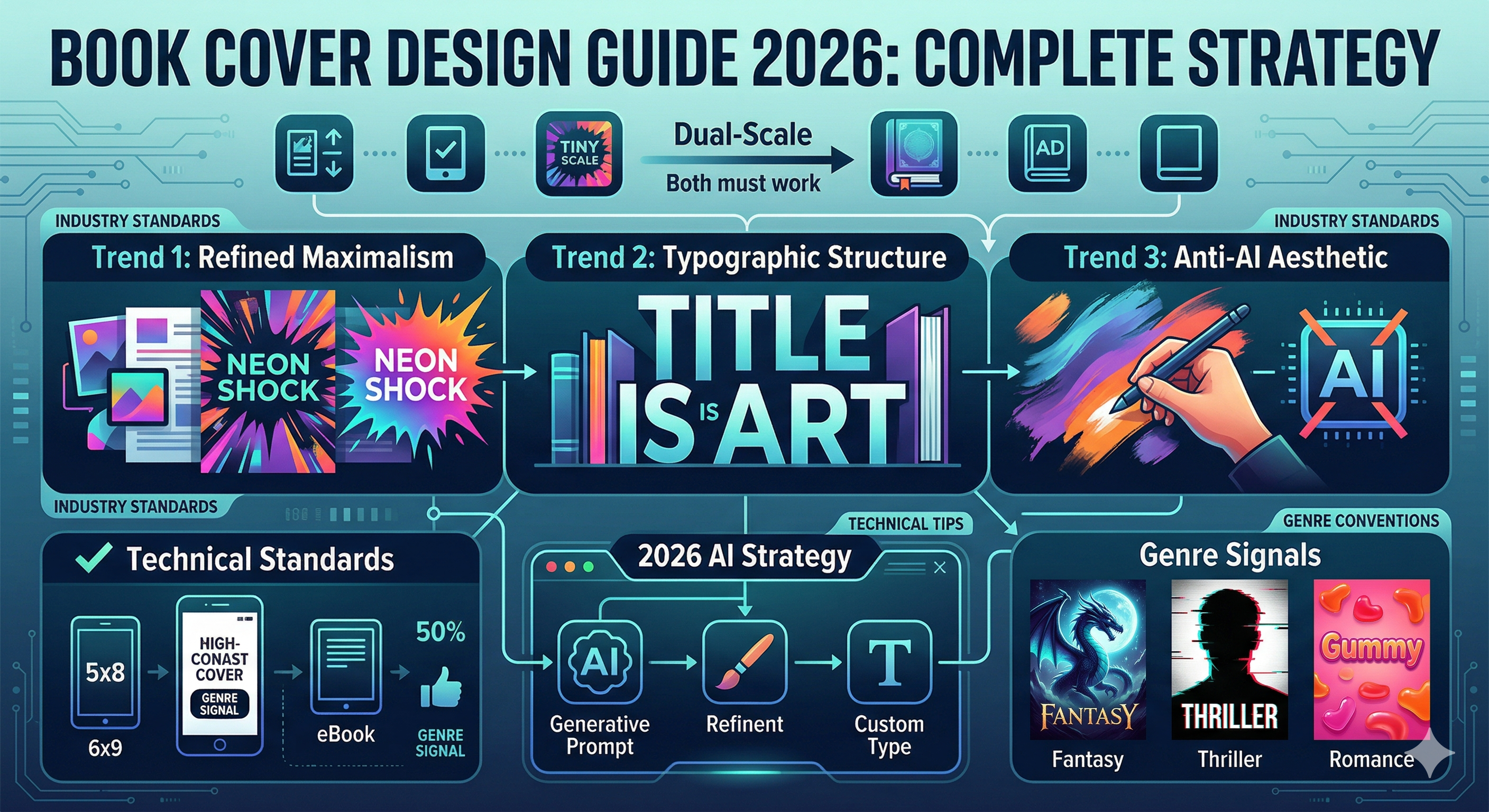
- Romance readers prefer emotional and soft visuals
- Thriller readers expect dark, bold, and suspenseful designs
- Business readers look for clean and professional layouts
Understanding your audience ensures your cover speaks directly to them.
Step 2: Study Your Genre Trends
Every genre has visual expectations. Ignoring them can confuse readers.
Research top-selling books in your category and observe:
- Color schemes
- Typography styles
- Image choices
- Layout patterns
For instance:
- Fantasy covers often include dramatic illustrations
- Self-help books use bold titles and simple designs
- Crime novels use dark tones and minimal text
Following trends does not mean copying. It means aligning with reader expectations.
Step 3: Create a Strong Visual Concept
Your cover should communicate the core idea of your book instantly.
Focus on:
- A central image or theme
- Clear emotional tone
- Simplicity over complexity
Avoid clutter. A simple design is easier to recognize, especially in thumbnail size on online stores.
A strong concept answers one question:
What should the reader feel when they see this cover?
Step 4: Choose the Right Typography
Typography is just as important as images.
Key tips:
- Use 1–2 fonts maximum
- Make the title large and readable
- Ensure contrast between text and background
- Match font style with genre
Examples:
- Serif fonts for classic or historical books
- Sans-serif fonts for modern or business books
- Script fonts for romance or personal stories
Poor typography can make even a good design look amateur.
Step 5: Use Colors Strategically
Colors influence emotions and buying decisions.
Here’s how to use them:
- Red: urgency, passion, danger
- Blue: trust, calm, professionalism
- Black: mystery, power, sophistication
- Yellow: energy, optimism
Choose a color palette that reflects your book’s tone and genre.
Also, ensure good contrast so the title is easy to read.
Step 6: Design for Digital and Print
In 2026, most readers discover books online. Your cover must work well in both formats.
Important considerations:
- Thumbnail visibility (small size clarity)
- High-resolution images for print
- Proper spine and back cover design for physical books
Test your cover by shrinking it. If it still looks clear and attractive, you are on the right track.
Step 7: Add Professional Finishing Touches
Small details make a big difference.
Focus on:
- Alignment and spacing
- Image quality (no pixelation)
- Consistent design elements
- Balanced layout
A polished design builds trust instantly.
Benefits of a Strong Book Cover Design
A well-designed cover delivers long-term value.
1. Higher Sales
An attractive cover increases clicks and purchases. Readers are more likely to choose your book over others.
2. Better Brand Identity
Consistent cover design helps build your author brand. This is especially important for series or multiple books.
3. Stronger Marketing Impact
Your cover will be used in:
- Social media promotions
- Ads
- Email campaigns
- Book listings
A strong design improves performance across all channels.
4. Increased Credibility
A professional cover signals quality. Readers assume the content is also well-written.
Best Practices for Book Cover Design in 2026
To stay competitive, follow these proven practices:
- Keep designs clean and minimal
- Focus on one clear message
- Prioritize readability over decoration
- Use high-quality visuals only
- Test designs with real users
- Stay updated with design trends
Also, always think from a reader’s perspective, not just your own.
Common Mistakes to Avoid
Even experienced authors make design mistakes. Avoid these:
1. Overcrowding the Cover
Too many elements confuse readers. Keep it simple and focused.
2. Using Low-Quality Images
Blurry or generic images reduce trust and professionalism.
3. Ignoring Genre Expectations
A mismatch between cover and genre can hurt sales.
4. Poor Font Choices
Unreadable or mismatched fonts make your book look unprofessional.
5. Designing Without Feedback
Always test your cover with others. Fresh perspectives help identify issues.
6. DIY Without Skills
Design tools are easy to access, but good design requires skill. Poor DIY efforts can damage your book’s success.
Why Choose a Professional Book Cover Design Service
While some authors try to design covers themselves, professional services offer clear advantages.
Expertise and Experience
Professional designers understand:
- Market trends
- Reader psychology
- Genre standards
They know what works and what does not.
High-Quality Output
You get:
- Custom designs
- High-resolution files
- Print-ready formats
This ensures your book looks professional everywhere.
Time Efficiency
Designing a cover takes time and effort. Professionals allow you to focus on writing and marketing.
Better Market Performance
A professionally designed cover improves:
- Visibility
- Click-through rates
- Sales conversions
This makes it a valuable investment, not an expense.
Custom Branding
Designers can help create a consistent look across your books, building a strong author identity.
How to Work Effectively with a Designer
To get the best results:
- Provide a clear brief
- Share examples you like
- Explain your target audience
- Be open to suggestions
- Request revisions if needed
Good communication leads to better outcomes.