Printing & Distribution Guide 113: Complete Strategy to Successfully Publish and Market Your Book in 2026
Publishing a book is a huge milestone. But printing and distribution decide whether your book simply exists—or actually sells.
Many authors finish writing and editing, only to struggle with printing costs, shipping delays, limited bookstore access, and poor distribution reach. Without a solid plan, even a great book can fail to reach readers.
This Book Printing and Distribution guide for 2026 gives you a complete, step-by-step strategy. You’ll learn how to choose the right printing method, select distribution channels, avoid costly mistakes, and position your book for long-term success.
Let’s get started.
Why Book Printing and Distribution Matter More Than Ever in 2026
The publishing landscape is evolving fast.
Readers now buy books in multiple formats:
-
Paperback
-
Hardcover
-
eBook
-
Audiobook
At the same time, they expect:
-
Fast shipping
-
Affordable pricing
-
Global availability
-
Professional print quality
Strong Book Printing and Distribution ensures:
-
Your book looks professional
-
It’s available worldwide
-
It reaches online retailers and bookstores
-
You maintain healthy profit margins
Without a clear plan, you risk overprinting, underpricing, or limiting your audience reach.
Step-by-Step Book Printing and Distribution Strategy
Step 1: Choose the Right Printing Method
Your first big decision is how your book will be printed.
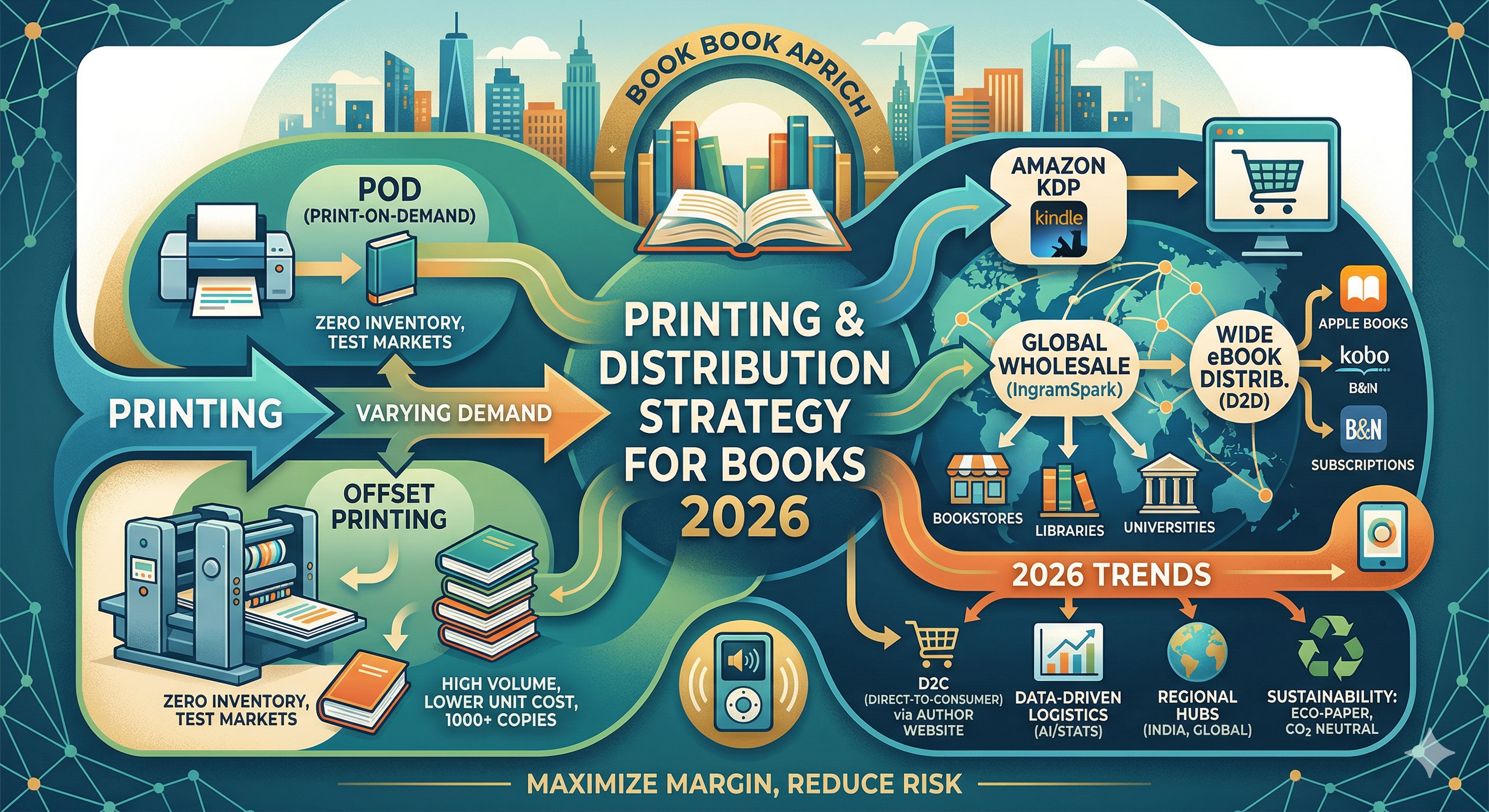
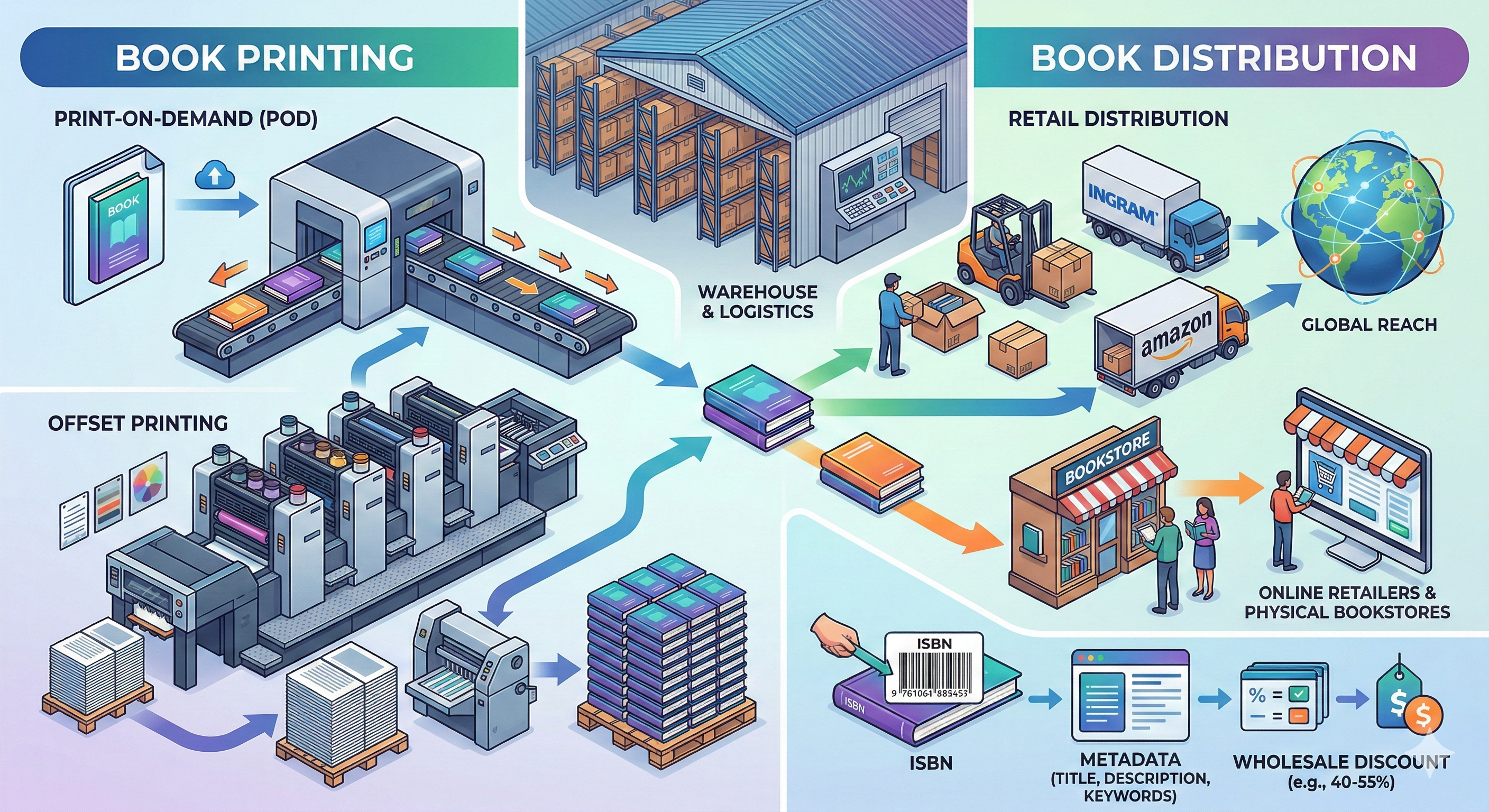
1. Print-on-Demand (POD)
Print-on-demand means copies are printed only when a customer orders them.
Best for:
-
First-time authors
-
Low upfront budgets
-
Testing market demand
Advantages:
-
No inventory storage
-
Low financial risk
-
Automatic fulfillment
-
Global reach
Disadvantages:
-
Lower profit per copy
-
Limited customization options
POD works well for authors focused on steady, long-term sales.
2. Offset Printing
Offset printing involves printing large quantities at once.
Best for:
-
Authors with strong pre-orders
-
Bulk sales (schools, events, corporations)
-
High-margin strategies
Advantages:
-
Lower cost per unit (at scale)
-
Premium quality
-
Greater customization
Disadvantages:
-
High upfront investment
-
Storage and shipping management required
If you expect large sales volume, offset printing can significantly increase profit margins.
Step 2: Select the Right Book Format
The format affects cost, appeal, and distribution eligibility.
Common Trim Sizes
-
5” x 8” (fiction)
-
6” x 9” (non-fiction standard)
-
8.5” x 11” (workbooks or textbooks)
Choose a size that matches your genre and audience expectations.
Binding Options
-
Perfect bound (paperback)
-
Case laminate (hardcover)
-
Dust jacket hardcover
Professional formatting ensures your book meets printer and distributor requirements.
Step 3: Prepare Print-Ready Files
Before printing, your files must meet technical standards.
Interior File Requirements
-
Correct margins
-
Bleed settings (if images touch edges)
-
Embedded fonts
-
High-resolution images (300 DPI)
Cover Requirements
-
Accurate spine width
-
CMYK color mode
-
Proper barcode placement
-
Back cover space for ISBN
Mistakes here can delay production and increase costs.
Step 4: Secure ISBN and Barcode
An ISBN is essential for professional distribution.
You need:
-
A unique ISBN per format (paperback, hardcover, eBook)
-
A scannable barcode for retail sales
Without a valid ISBN, major distributors and bookstores may reject your book.
This step directly impacts your Book Printing and Distribution success.
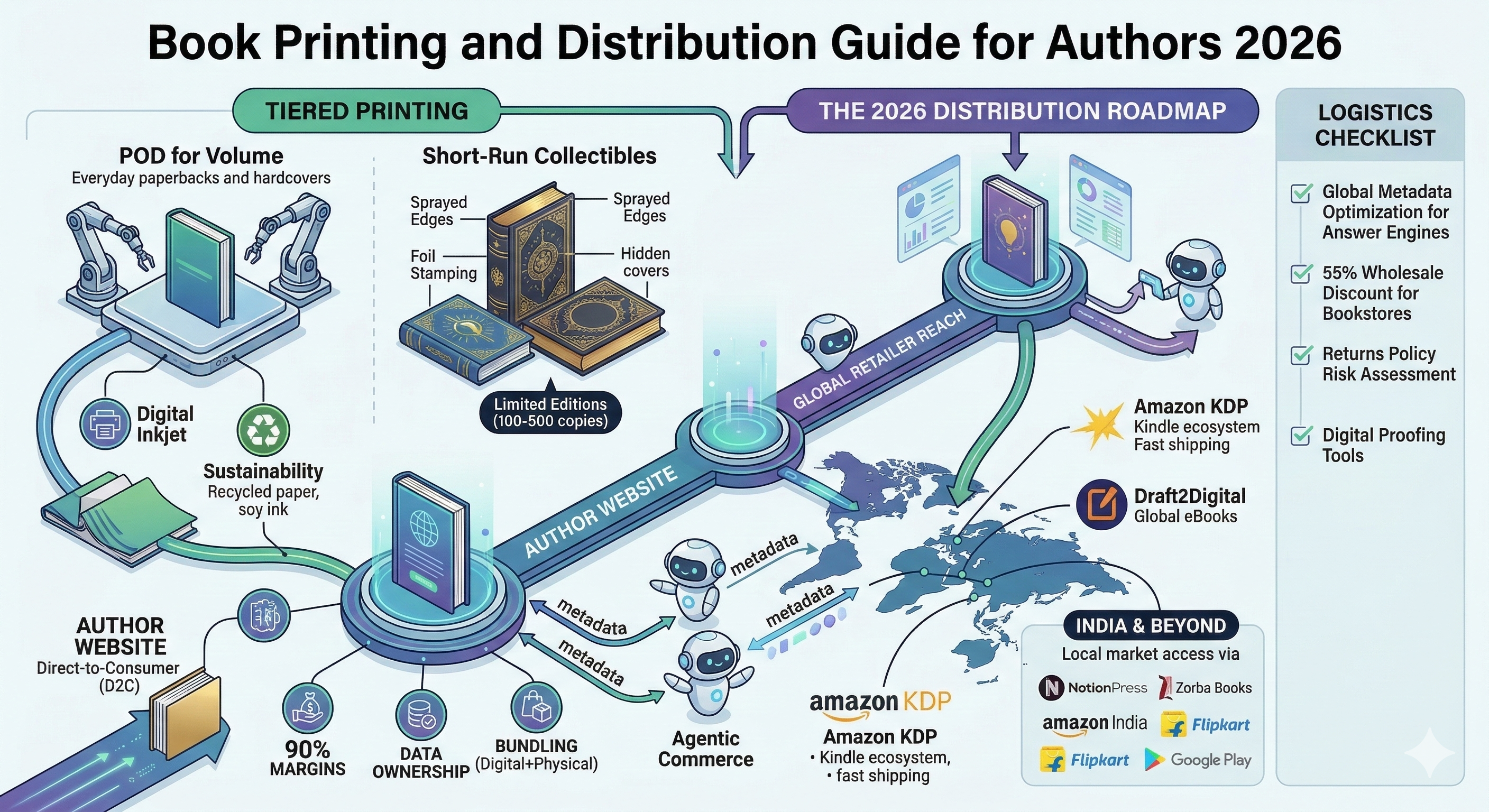
Step 5: Choose Distribution Channels
Distribution determines where your book is sold.
In 2026, authors typically combine multiple channels.
1. Online Retail Distribution
This includes:
-
Amazon
-
Global online bookstores
-
International marketplaces
Online distribution ensures global visibility.
2. Wholesale Distribution
Wholesale networks allow bookstores and libraries to order your book.
Benefits include:
-
Access to physical bookstores
-
Library placement
-
Academic institutions
However, you must offer standard wholesale discounts and return policies.
3. Direct Sales
Selling directly through:
-
Your website
-
Speaking events
-
Workshops
-
Social media
Direct sales increase profit margins since there are no retailer commissions.
Step 6: Set Smart Pricing
Pricing affects both sales and profitability.
Consider:
-
Printing cost
-
Distribution fees
-
Wholesale discount (typically 40–55%)
-
Competitor pricing
In 2026, readers are price-sensitive but still value quality.
A strategic pricing approach ensures sustainable income.
Step 7: Plan Inventory and Logistics
If using offset printing, you must manage:
-
Storage
-
Packaging
-
Shipping
-
Returns
Professional distribution services often handle this for you.
If using POD, logistics are automated—but margins are smaller.
Choose based on your growth strategy.
Benefits of a Strong Book Printing and Distribution Strategy
When done correctly, you gain:
1. Global Reach
Your book becomes available in multiple countries and currencies.
2. Professional Credibility
Retail-ready books build trust with readers and bookstores.
3. Higher Profit Potential
Smart printing decisions increase per-copy margins.
4. Scalability
As demand grows, you can expand formats and regions.
5. Long-Term Availability
Good distribution keeps your book accessible for years.
Best Practices for 2026
Publishing is more competitive than ever. Follow these best practices to stand out.
Use a Hybrid Printing Model
Many authors now combine:
-
POD for online orders
-
Offset printing for bulk sales
This reduces risk while increasing profit margins.
Focus on Quality Control
Always order proof copies before final release.
Check:
-
Color accuracy
-
Paper quality
-
Spine alignment
-
Cover finish
Readers notice production flaws immediately.
Offer Multiple Formats
Increase reach by offering:
-
Paperback
-
Hardcover
-
eBook
-
Audiobook
Different readers prefer different formats.
Optimize Metadata
Strong metadata improves discoverability.
Include:
-
Clear title and subtitle
-
Compelling book description
-
Relevant categories
-
Targeted keywords
Metadata impacts both online sales and distribution visibility.
Common Book Printing and Distribution Mistakes to Avoid
Even experienced authors make costly errors.
1. Printing Too Many Copies Too Soon
Large print runs without demand validation can lead to unsold inventory.
Start small unless you have confirmed pre-orders.
2. Ignoring Wholesale Requirements
Bookstores expect:
-
Industry-standard discounts
-
Return options
Without these, stores may refuse to stock your book.
3. Poor Cover Quality
A low-quality cover reduces perceived value instantly.
Invest in professional design and printing specifications.
4. Incorrect File Formatting
Formatting errors can cause:
-
Production delays
-
Extra charges
-
Rejection by distributors
Professional file preparation prevents these issues.
5. Overlooking International Distribution
Many authors focus only on domestic sales.
However, digital retail makes global reach easier than ever.
Expand your distribution footprint early.
Why Choose a Professional Printing and Distribution Service?
Managing everything alone can be overwhelming.
A professional publishing service offers:
-
Print-ready file validation
-
ISBN management
-
Access to global distribution networks
-
Wholesale setup
-
Inventory logistics
-
Ongoing support
Most importantly, professionals help you avoid expensive mistakes.
In 2026, competition is high. Working with experts increases speed, efficiency, and profitability.
Integrating Printing with Marketing Strategy
Printing and marketing must work together.
Before launching, ensure:
-
Your pre-order campaign is active
-
Review copies are printed early
-
Influencers receive advance copies
-
Launch inventory is ready
Strong Book Printing and Distribution supports:
-
Launch events
-
Media coverage
-
Bulk corporate sales
-
Speaking engagements
A weak printing plan can damage marketing momentum.
How to Scale After Launch
Once sales grow, expand strategically.
You can:
-
Release hardcover editions
-
Offer special editions
-
Print international versions
-
Translate into other languages
As demand increases, shift from POD-only to hybrid or offset models.
Scaling requires planning—but it multiplies revenue opportunities.