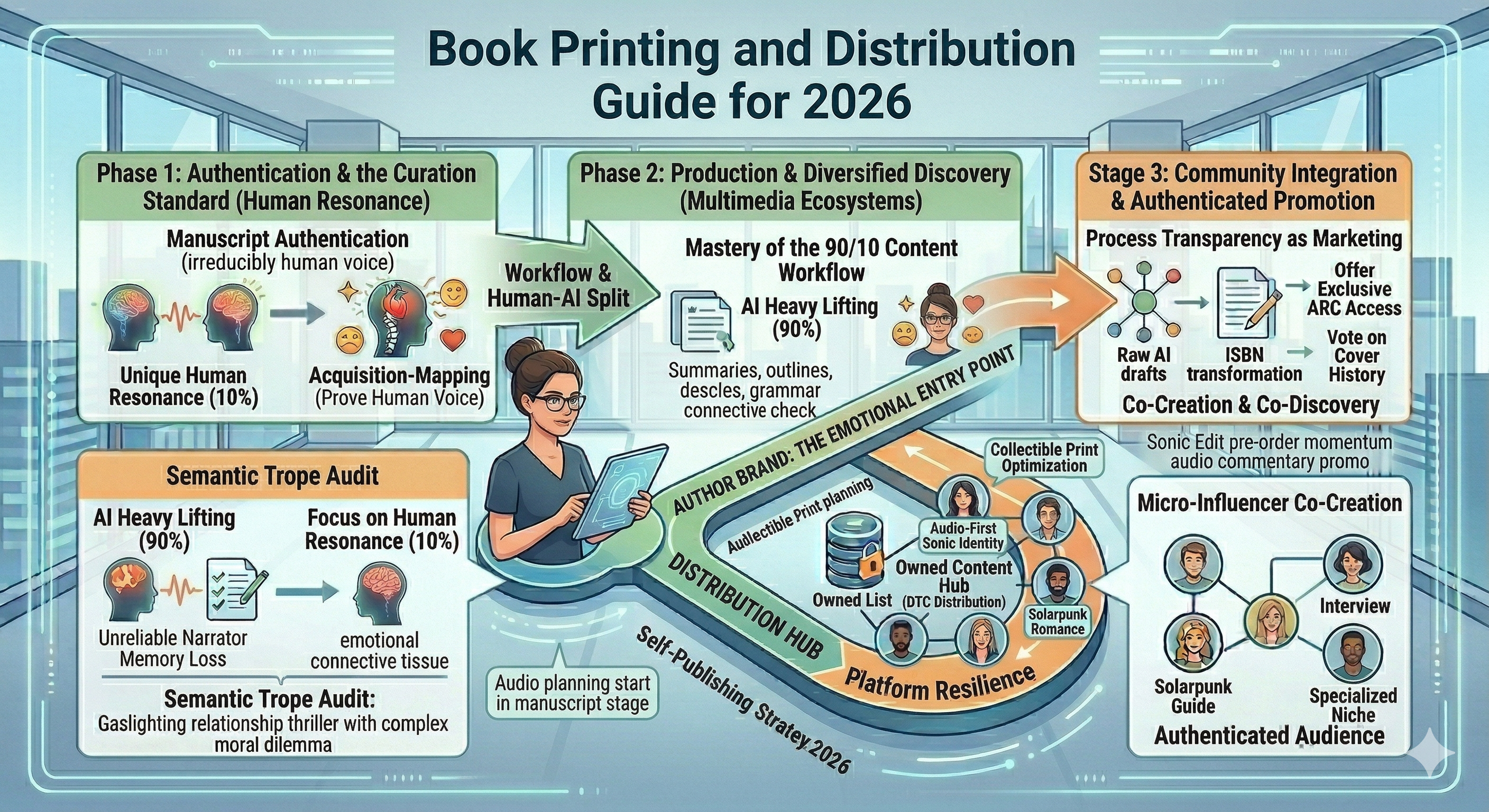
Book Printing and Distribution Guide for 2026
Introduction: The Printing and Distribution Challenge
Writing a book is only half the job. Many authors struggle with what comes next—printing and getting their book into readers’ hands.
Common problems include:
- Choosing the right print format
- Managing costs
- Reaching bookstores and online platforms
- Avoiding unsold inventory
Without a clear plan, even a great book can fail to sell.
This Book Printing and Distribution Guide gives you a complete strategy for 2026. You’ll learn how to print smartly, distribute widely, and maximize your book’s reach without wasting money.
Step-by-Step Book Printing and Distribution Strategy
Step 1: Choose the Right Printing Method
Your printing method affects cost, quality, and scalability.
1. Print-on-Demand (POD)
Best for most new authors.
How it works:
- Books are printed only when ordered
- No upfront inventory needed
Benefits:
- Low risk
- No storage costs
- Easy global distribution
Limitations:
- Higher cost per copy
- Limited customization
2. Offset Printing
Best for bulk printing.
How it works:
- Large quantity printed at once
Benefits:
- Lower cost per unit
- High-quality output
Limitations:
- High upfront cost
- Risk of unsold stock
Recommendation:
Use POD for testing demand. Switch to offset when sales are consistent.
Step 2: Select Book Format and Specifications
Your book’s physical quality influences buying decisions.
Key elements to decide:
- Trim size (e.g., 5”x8”, 6”x9”)
- Paper type (cream or white)
- Binding (paperback or hardcover)
- Cover finish (matte or glossy)
Popular formats in 2026:
- Paperback (most common)
- Hardcover (premium feel)
- Ebooks (essential for digital readers)
Tip:
Match your format with your genre. For example:
- Fiction → Paperback
- Business/Non-fiction → Paperback + Ebook
- Collector editions → Hardcover
Step 3: Prepare Files for Printing
Before printing, your manuscript must be properly formatted.
Requirements:
- Print-ready PDF (interior)
- High-resolution cover (300 DPI)
- Correct margins and bleed settings
Common issues to avoid:
- Text too close to edges
- Incorrect spine width
- Low-quality images
Tip:
Always review a printed proof before final approval.
Step 4: Set Your Pricing Strategy
Pricing directly affects sales and profit.
Factors to consider:
- Printing cost
- Distribution fees
- Royalties
- Market competition
Example pricing approach:
- Cost per book: ₹150
- Selling price: ₹399
- Profit margin: Balanced for growth
Tip:
Don’t price too low. Readers often associate price with quality.
Step 5: Choose Distribution Channels
Distribution determines how easily readers can find your book.
1. Online Marketplaces
- Largest reach
- Easy setup
Examples:
- Amazon
- Flipkart
2. Global Distribution Networks
These connect your book to:
- Online stores
- Libraries
- International retailers
3. Offline Distribution
- Bookstores
- Events
- Author signings
Challenge:
Getting into physical stores is harder and often requires a distributor.
Step 6: Use Aggregators for Wider Reach
Aggregators help distribute your book across multiple platforms.
Benefits:
- Single upload, multiple stores
- Simplified management
- Wider global reach
What they handle:
- Listing
- Metadata
- Distribution logistics
This is especially useful for first-time authors.
Step 7: Manage Inventory and Logistics
If you choose bulk printing, logistics becomes important.
Key areas:
- Storage space
- Shipping costs
- Order fulfillment
Options:
- Self-storage
- Third-party fulfillment services
Tip:
Avoid overprinting unless demand is proven.
Step 8: Track Sales and Optimize
Publishing doesn’t end after distribution.
Monitor:
- Sales performance
- Best-selling regions
- Customer feedback
Improve based on data:
- Adjust pricing
- Update cover design
- Optimize book description
Benefits of a Strong Printing and Distribution Strategy
A well-planned system offers clear advantages.
1. Wider Reach
Your book becomes available across multiple platforms and regions.
2. Lower Risk
Using POD reduces upfront investment.
3. Better Profit Control
You can manage costs and pricing effectively.
4. Scalability
Start small and expand as demand grows.
5. Professional Image
High-quality printing builds trust with readers.
Best Practices for Book Printing and Distribution in 2026
Follow these proven practices to stay ahead.
Focus on Hybrid Formats
Offer both print and digital versions.
Optimize Metadata
Include:
- Keywords
- Categories
- Strong book descriptions
This improves discoverability.
Invest in Cover Design
Your cover directly impacts sales.
Use Pre-Orders
Generate early demand before printing bulk copies.
Test Before Scaling
Start with POD, then move to offset printing.
Keep Distribution Flexible
Don’t rely on a single platform.
Common Mistakes to Avoid
Many authors lose time and money due to avoidable errors.
1. Printing Too Many Copies
Leads to unsold inventory and losses.
2. Ignoring Print Quality
Poor quality reduces credibility and reviews.
3. Weak Distribution Plan
A book not available widely will not sell.
4. Incorrect Pricing
Too high → low sales
Too low → low profit
5. Skipping Proof Copies
This often results in printing errors.
6. Limited Platform Presence
Relying on one store limits growth.
Why Choose a Professional Printing and Distribution Service
Handling everything alone can be overwhelming.
A professional service simplifies the process and improves results.
What a professional company offers:
1. End-to-End Support
From formatting to final distribution.
2. Industry Expertise
They understand:
- Market trends
- Pricing strategies
- Distribution networks
3. Quality Assurance
Ensures:
- Proper formatting
- High print quality
- Error-free output
4. Faster Distribution
Access to established networks saves time.
5. Reduced Risk
Avoid costly mistakes in printing and logistics.
When You Should Consider Professional Help
- First-time publishing
- Large print runs
- Global distribution goals
- Limited time or technical knowledge
A professional partner allows you to focus on writing and marketing.