Printing & Distribution Guide 128: Complete Strategy to Successfully Publish and Market Your Book in 2026
Publishing a book is a major achievement. However, many authors quickly discover that writing the book is only half the journey. The real challenge often begins after the manuscript is finished: printing and distributing the book effectively.
Without the right book printing and distribution strategy, even a great book may struggle to reach readers. Poor printing quality, limited distribution channels, or inefficient logistics can significantly reduce a book’s success.
The good news is that modern publishing offers more options than ever before. In 2026, authors can combine traditional printing methods, print-on-demand services, and global distribution networks to reach readers across the world.
This guide explains how book printing and distribution work, the best options available today, and how authors can choose the right strategy to maximize visibility and sales.
Understanding Book Printing and Distribution
Before diving into strategies, it is important to understand what book printing and distribution actually involve.
Book printing refers to the physical production of your book. This includes selecting paper type, binding style, cover finish, and printing method.
Book distribution refers to how the book reaches retailers and readers. This includes bookstores, online marketplaces, libraries, and direct sales.
Together, these two steps determine:
-
The availability of your book
-
Production cost
-
Retail pricing
-
Reader experience
-
Sales potential
A strong printing and distribution plan ensures that your book is both high-quality and widely accessible.
Step-by-Step Book Printing Strategy for 2026
Step 1: Choose the Right Printing Method
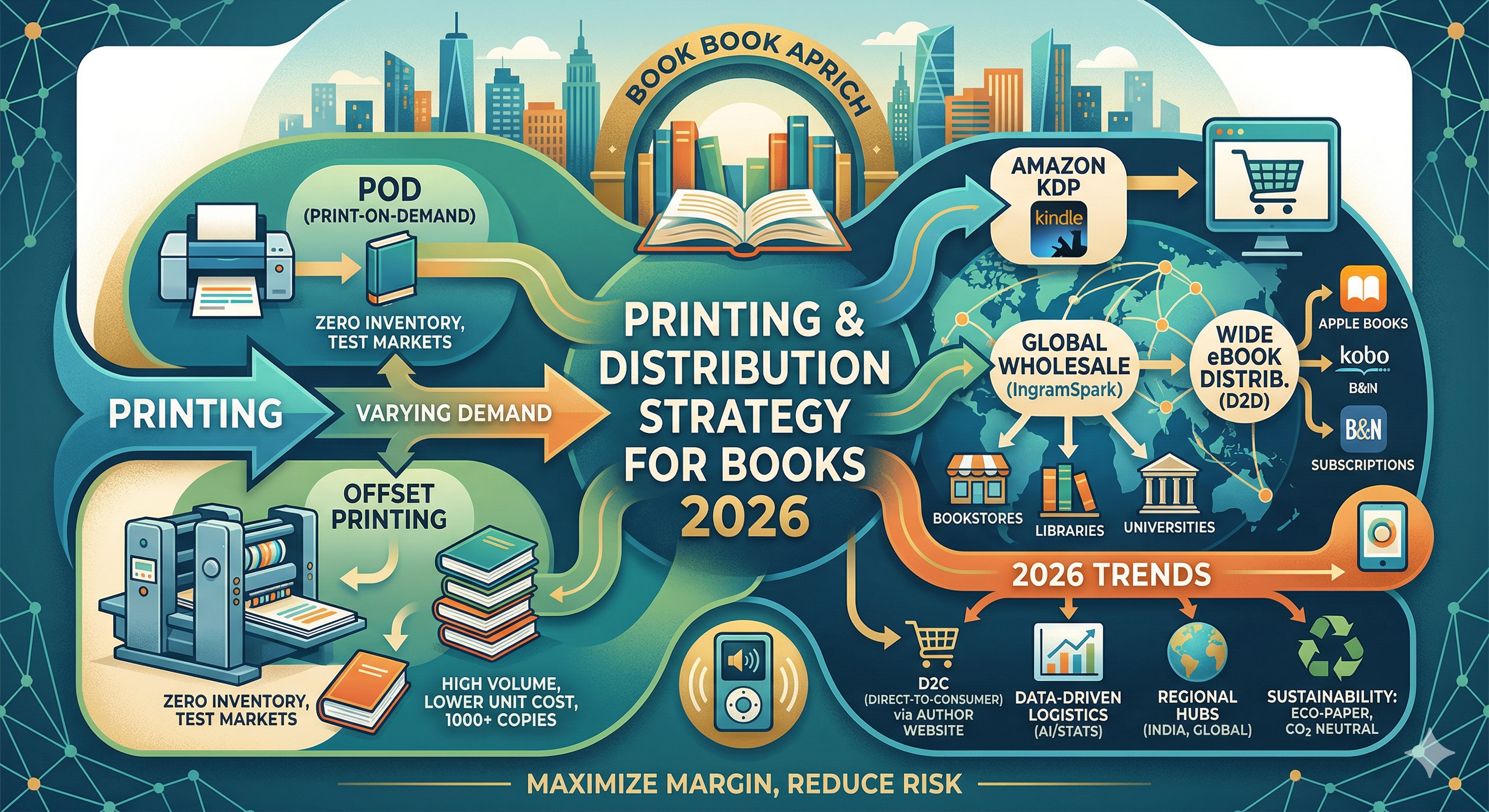
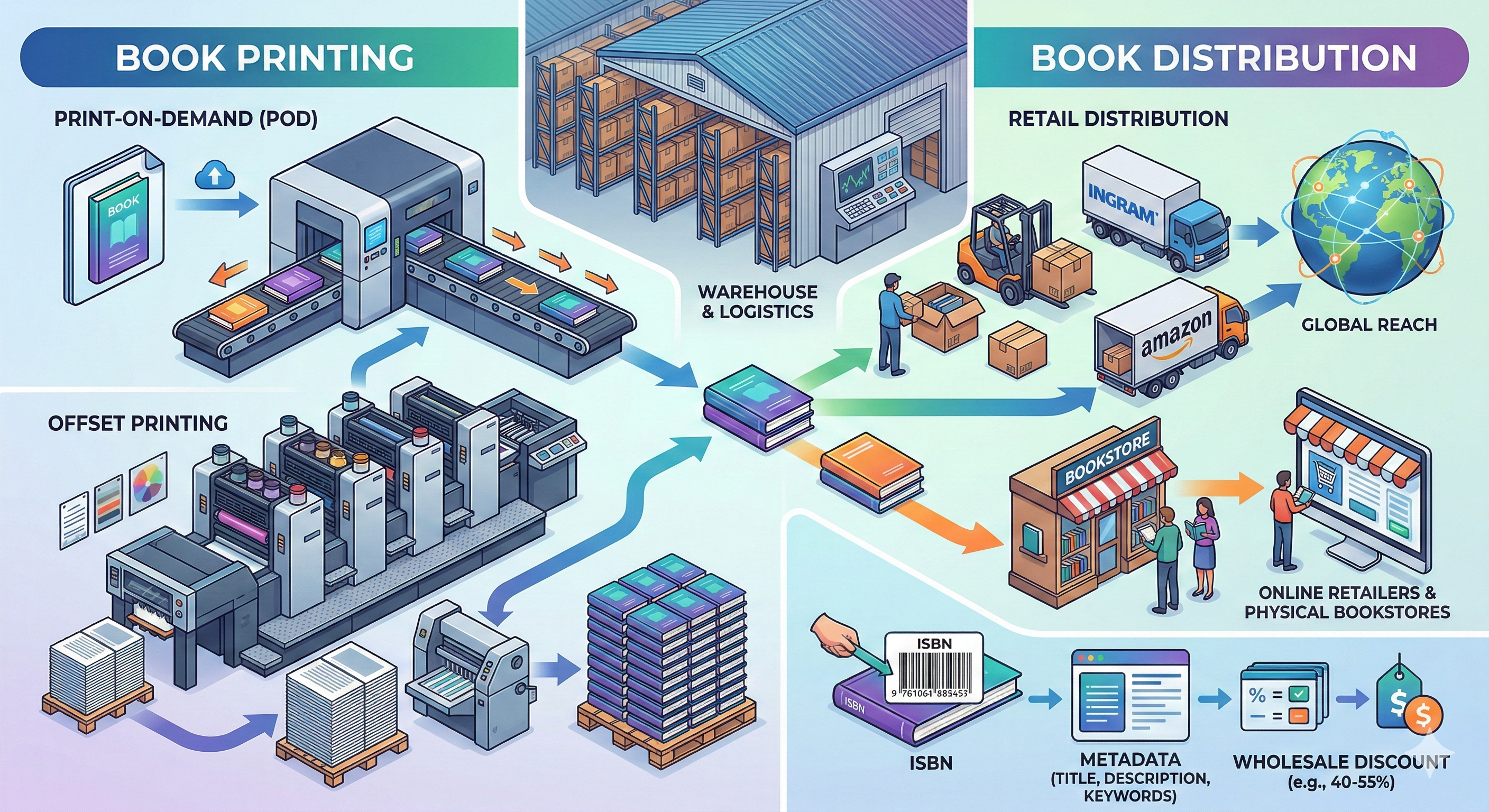
One of the first decisions authors must make is choosing between offset printing and print-on-demand (POD).
Offset Printing
Offset printing is the traditional method used by large publishers.
It involves printing a large number of copies at once.
Best for:
-
Large print runs
-
Established authors
-
Bulk bookstore distribution
Advantages
-
Lower cost per book for large quantities
-
High print quality
-
Greater control over materials
Limitations
-
Higher upfront cost
-
Storage requirements
-
Risk of unsold inventory
Print-on-Demand (POD)
Print-on-demand has become extremely popular in modern publishing.
Books are printed only when an order is placed.
Best for:
-
New authors
-
Self-publishing
-
Online marketplaces
Advantages
-
No inventory required
-
Lower upfront costs
-
Automatic fulfillment
Limitations
-
Slightly higher cost per book
-
Limited customization options
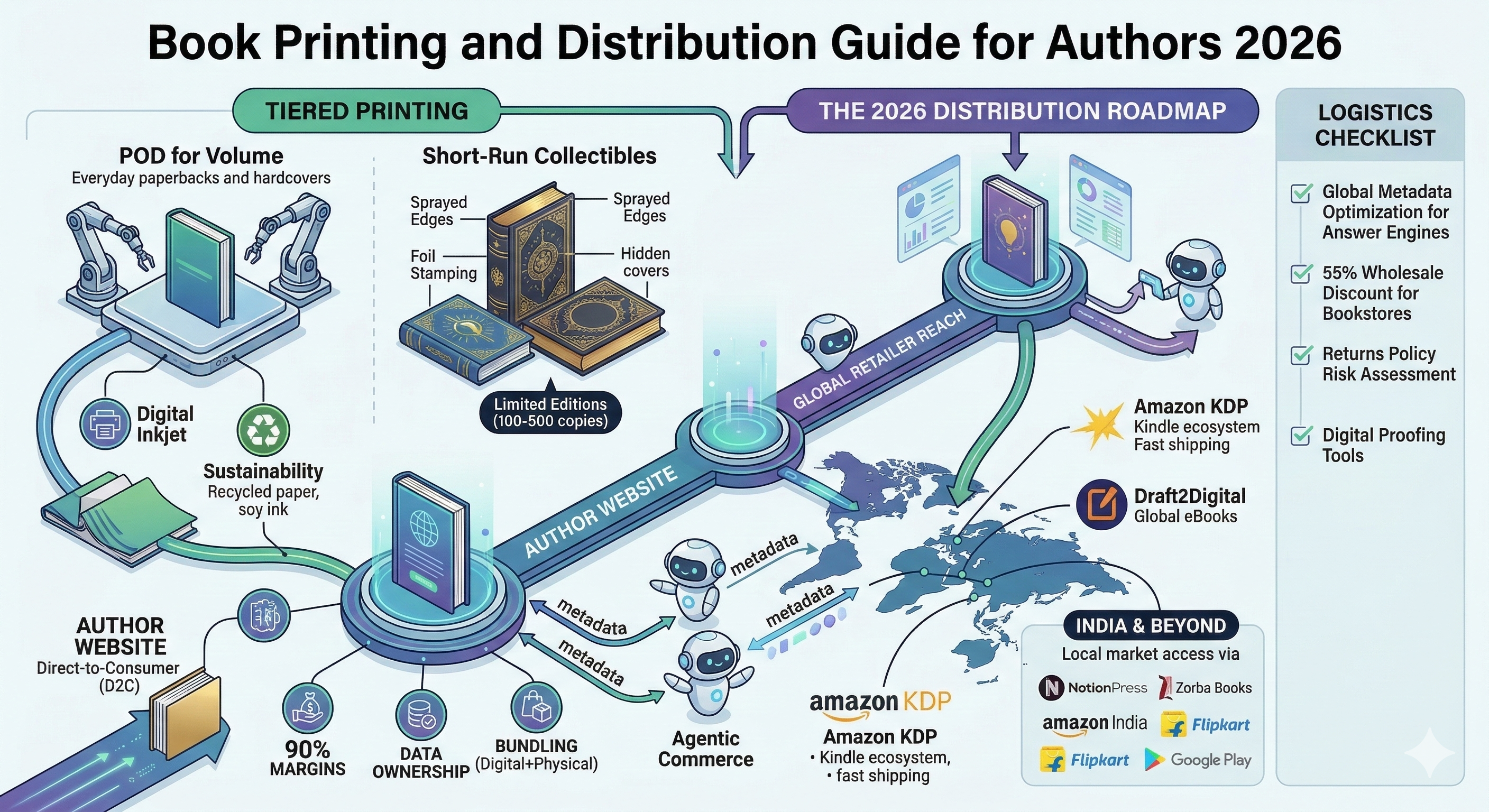
Many authors in 2026 use a hybrid strategy, combining POD for online orders and offset printing for events or bulk sales.
Step 2: Select Book Specifications
The physical design of your book directly affects printing cost and reader experience.
Key specifications include:
Trim Size
Trim size refers to the final size of the book after printing and cutting.
Common options include:
-
5" x 8"
-
6" x 9"
-
8.5" x 11"
Choosing the right trim size depends on the book genre.
For example:
-
Novels typically use 5" x 8" or 6" x 9"
-
Workbooks use larger formats
-
Coffee table books require premium sizing
Paper Quality
Paper type influences durability and readability.
Common options include:
-
Cream paper for novels
-
White paper for nonfiction
-
Glossy paper for photography books
Binding Style
Binding affects both cost and appearance.
Popular options include:
-
Perfect binding (paperback)
-
Case binding (hardcover)
-
Spiral binding (workbooks)
A well-chosen binding improves the book’s professional look and longevity.
Step 3: Ensure Professional Print Quality
High-quality printing reflects the professionalism of the author and publisher.
Important elements include:
-
High-resolution cover design
-
Proper margins and bleed settings
-
Consistent typography
-
Correct color profiles
Before final printing, always request a proof copy.
A proof allows you to check:
-
Printing alignment
-
Cover clarity
-
Page spacing
-
Paper feel
Skipping this step can lead to costly mistakes.
Step-by-Step Book Distribution Strategy
Printing the book is only the beginning. Distribution determines how easily readers can find and purchase it.
Step 4: Choose Distribution Channels
A strong book printing and distribution strategy includes multiple sales channels.
Online Retailers
Online bookstores dominate book sales today.
Common platforms include:
-
Global online marketplaces
-
Large digital bookstores
-
Author storefronts
Advantages include:
-
Worldwide reach
-
Automated order processing
-
Higher visibility
Physical Bookstores
Traditional bookstores still play an important role, especially for local authors.
However, bookstores typically require:
-
Wholesale discounts
-
Returnable inventory
-
Reliable distributors
Professional distribution services help authors meet these requirements.
Libraries
Libraries remain an important channel for reader discovery.
Library distribution increases:
-
Credibility
-
Visibility
-
Long-term readership
Many publishers include library distribution in their service packages.
Direct Sales
Selling directly to readers can increase profit margins.
Examples include:
-
Author websites
-
Speaking events
-
Workshops
-
Book launches
Direct sales also allow authors to build stronger relationships with readers.
Step 5: Enable Global Distribution
Modern publishing allows books to reach readers worldwide.
Global distribution typically includes:
-
International online retailers
-
Regional printing networks
-
Cross-border shipping
-
Multi-market availability
Global distribution ensures your book is accessible in multiple countries without expensive shipping costs.
This is especially important for authors targeting international audiences.
Step 6: Optimize Pricing Strategy
Pricing plays a major role in sales performance.
Factors affecting book price include:
-
Printing cost
-
Retailer commission
-
Distribution fees
-
Genre expectations
-
Author reputation
A balanced price ensures:
-
Competitive market positioning
-
Sustainable profit margins
-
Attractive value for readers
Professional publishers often help authors set optimal pricing.
Benefits of an Effective Printing and Distribution Strategy
A well-planned book printing and distribution approach offers several benefits.
Wider Market Reach
Your book becomes available through multiple channels, increasing potential readership.
Professional Quality
High-quality printing improves reader trust and brand perception.
Lower Financial Risk
Using print-on-demand or hybrid printing reduces inventory risks.
Higher Sales Potential
Strategic distribution improves discoverability and accessibility.
Strong Author Brand
Professionally printed books enhance the author’s reputation and credibility.
Best Practices for Book Printing and Distribution
Successful authors follow proven best practices when planning their publishing strategy.
Plan Early
Printing and distribution decisions should be made before the book launch.
This ensures smooth production timelines.
Use Hybrid Printing
Combining offset printing and POD provides flexibility.
It allows authors to manage both online orders and bulk sales effectively.
Maintain Consistent Branding
Book design, packaging, and printing quality should reflect the author's brand identity.
Test Before Large Print Runs
Always review proof copies before committing to large printing orders.
Choose Reliable Distribution Networks
Professional distribution partners ensure your book reaches retailers smoothly.
Common Book Printing and Distribution Mistakes
Many authors unknowingly make mistakes that limit their book’s reach.
Avoiding these issues can significantly improve publishing success.
Printing Too Many Copies
Large print runs may seem cost-effective but can create inventory problems.
Start with realistic quantities.
Ignoring Distribution Requirements
Bookstores and retailers often have specific requirements such as barcodes, ISBNs, and wholesale discounts.
Failing to meet these standards can limit sales opportunities.
Poor Print Quality
Low-resolution covers or incorrect formatting can harm reader experience.
Professional design and formatting are essential.
Limited Sales Channels
Relying on only one sales platform reduces visibility.
Multiple distribution channels improve reach.
No Pricing Strategy
Pricing without considering market expectations can reduce competitiveness.
Research your genre before setting the price.
Why Choose a Professional Printing and Distribution Service
While some authors attempt to manage printing and distribution independently, working with professional publishing services often leads to better results.
Professional companies offer expertise and infrastructure that simplify the process.
Industry Expertise
Publishing professionals understand:
-
Printing standards
-
Distribution logistics
-
Retail requirements
Their knowledge helps avoid costly mistakes.
Established Distribution Networks
Professional publishers already have relationships with:
-
Retailers
-
distributors
-
libraries
-
global marketplaces
This ensures wider book availability.
Production Quality Control
Experienced teams manage:
-
print specifications
-
color accuracy
-
binding quality
-
packaging
This ensures your book meets professional standards.
Time Efficiency
Managing printing and distribution independently can take significant time.
Professional services allow authors to focus on writing and marketing instead.
The Future of Book Printing and Distribution in 2026
Publishing continues to evolve with technology and changing reader habits.
Key trends shaping the future include:
-
Expansion of print-on-demand technology
-
Faster global distribution networks
-
Integrated publishing platforms
-
Sustainable printing materials
-
Data-driven sales tracking
Authors who adapt to these trends will gain a competitive advantage in the modern publishing landscape.