Printing & Distribution Guide 98: Complete Strategy to Successfully Publish and Market Your Book in 2026
Introduction: The Biggest Challenge Authors Face Today
Writing a book is only half the journey. The real challenge begins after the manuscript is finished. Many authors struggle with printing quality, distribution reach, shipping logistics, and sales channels. Without a clear plan, even a great book can fail to reach readers.
That’s where a strong book printing and distribution strategy makes the difference. When you understand how printing methods work and how distribution networks operate, you can control costs, increase availability, and maximize profits.
This guide explains the full process step by step. It also shares practical tips, common mistakes, and proven best practices to help you publish and market your book successfully in 2026.
Understanding Book Printing and Distribution
Before diving into tactics, it helps to understand what these two terms really mean.
What Is Book Printing?
Book printing is the production stage where your manuscript becomes a physical book. It includes:
-
Paper selection
-
Binding style
-
Ink quality
-
Cover finish
-
Trim size
Printing determines how your book looks, feels, and lasts.
What Is Book Distribution?
Distribution is how your book reaches readers. It includes:
-
Warehousing
-
Shipping
-
Retail placement
-
Online listings
-
Global availability
A book can be perfectly printed but still fail if it’s not distributed well.
Step-by-Step Book Printing and Distribution Strategy
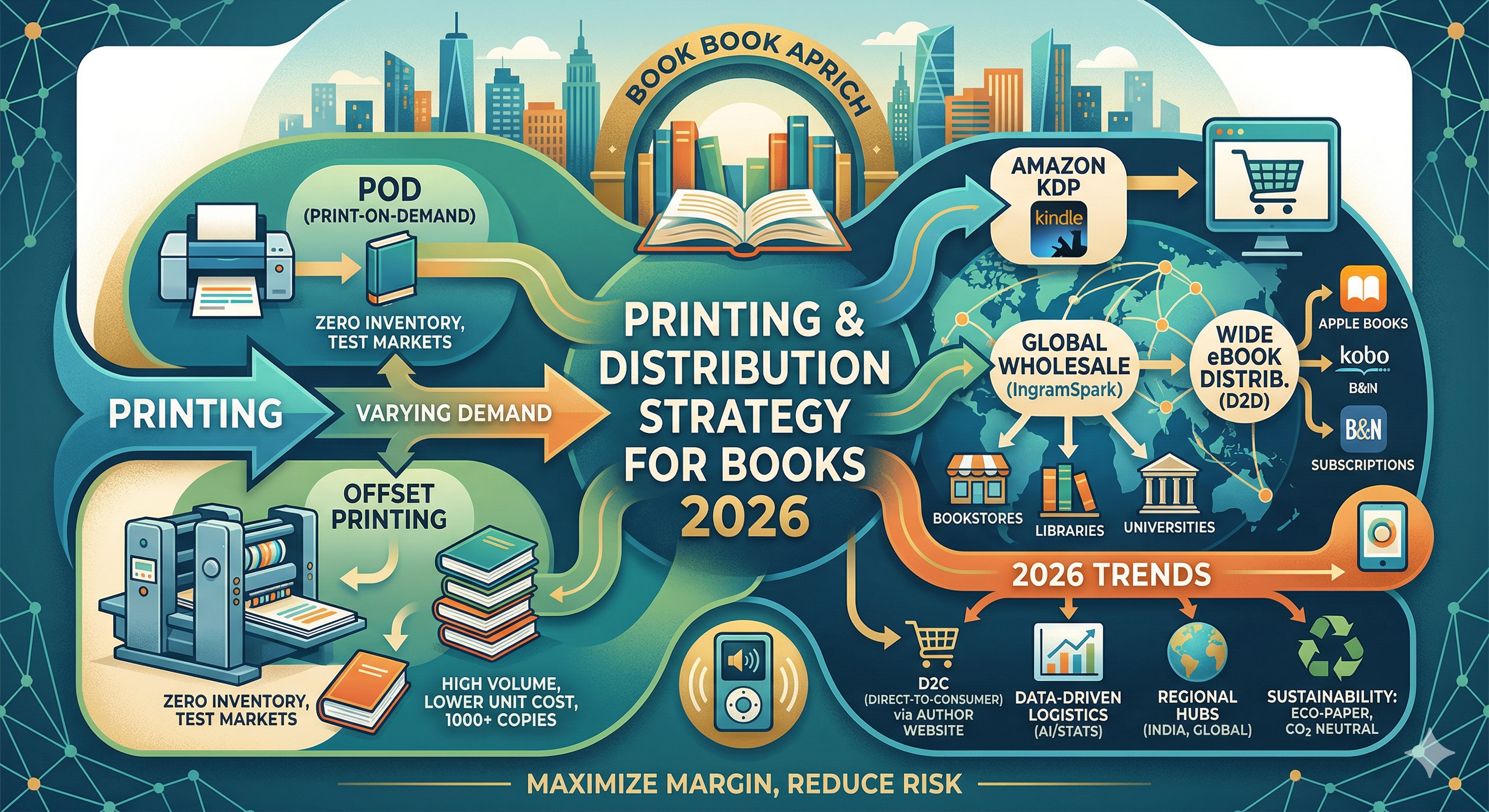
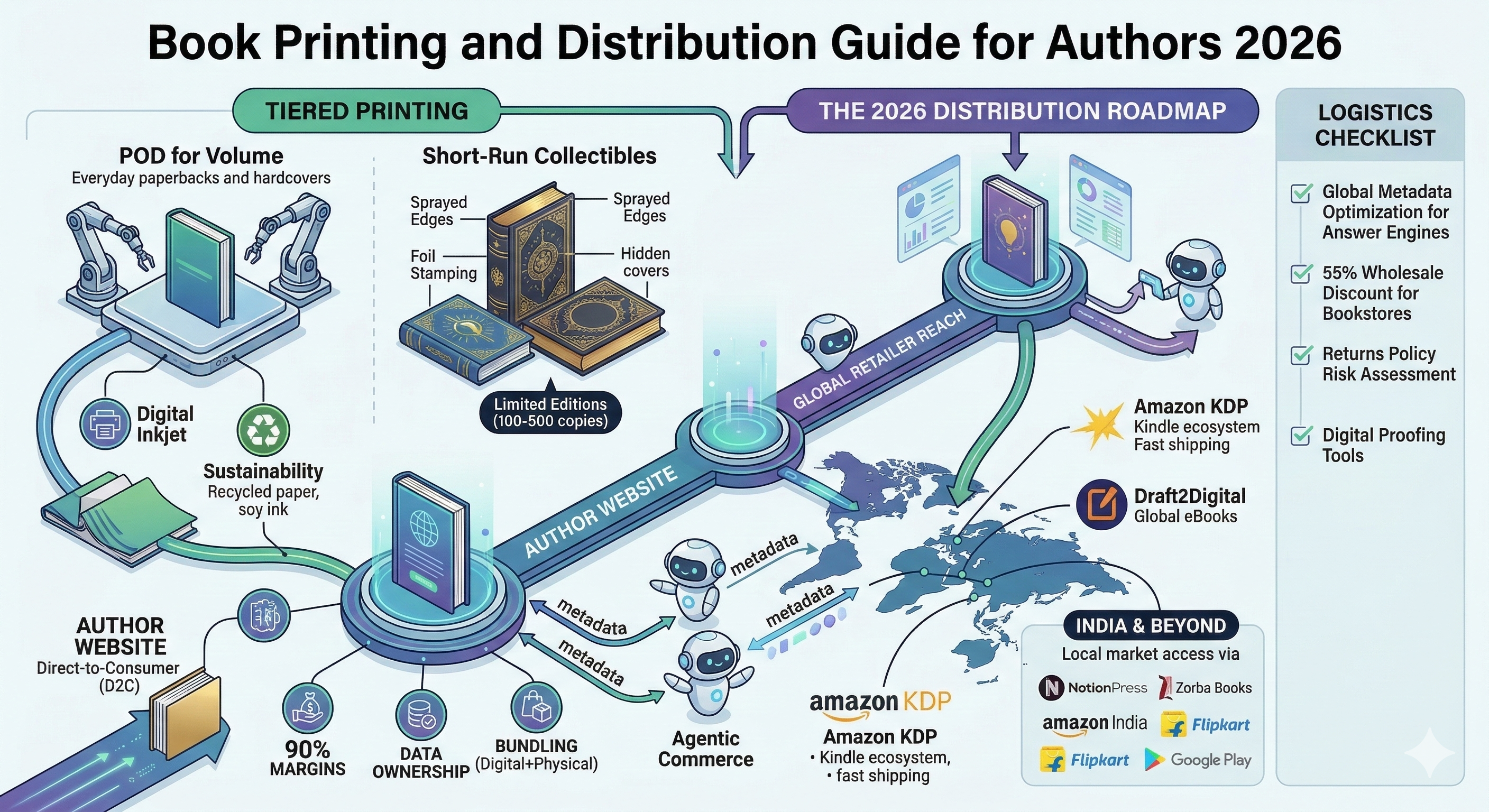
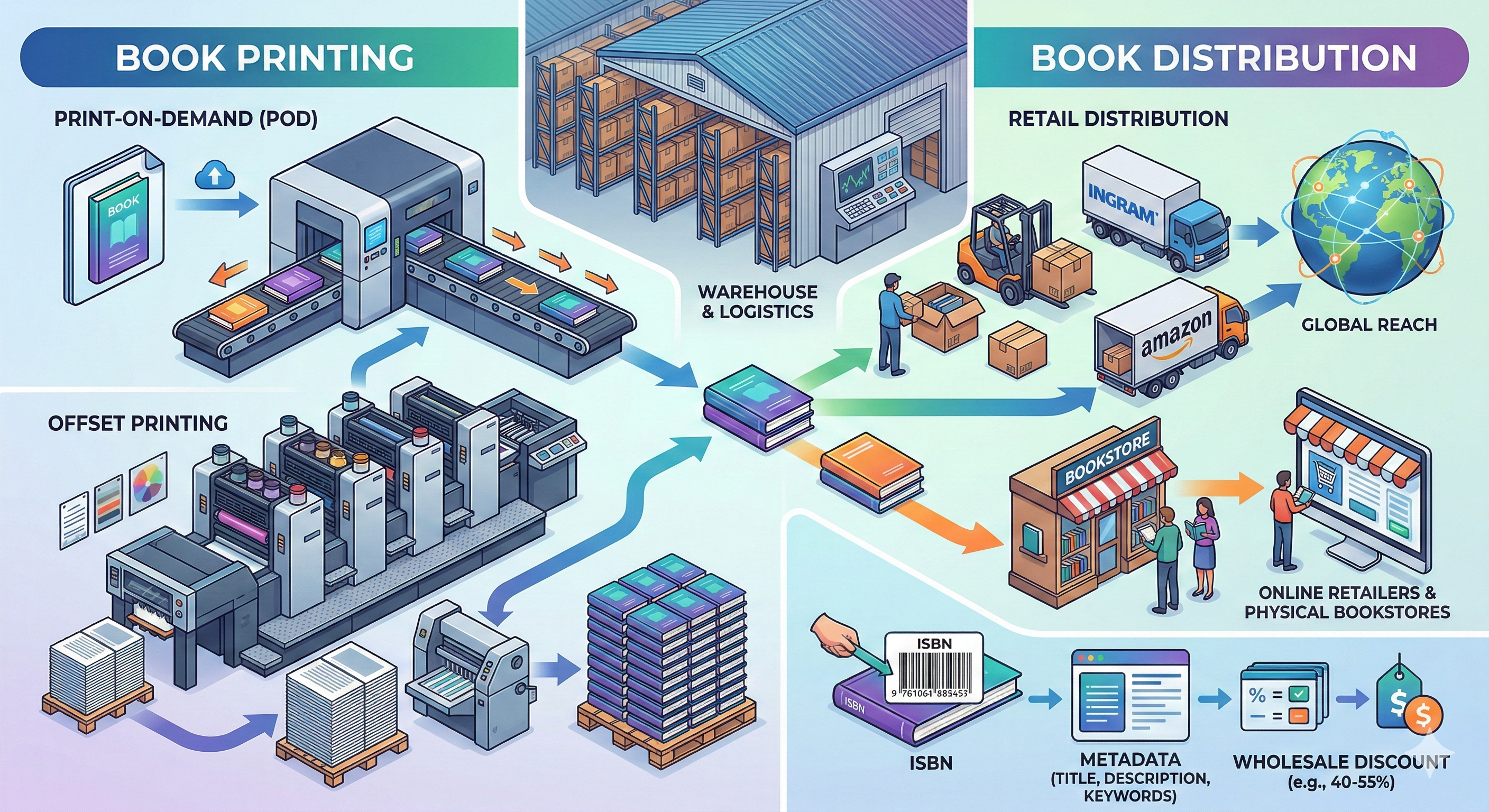
Step 1: Choose the Right Printing Method
There are three main printing options. Each works best for different goals.
Print on Demand (POD)
Books are printed only when ordered.
Best for:
-
New authors
-
Low budget launches
-
Testing demand
Pros:
-
No inventory cost
-
No storage needed
-
Low risk
Cons:
-
Higher per-book cost
-
Limited customization
Offset Printing
Large batches printed at once.
Best for:
-
Established authors
-
Bulk sales
-
Bookstore distribution
Pros:
-
Lower cost per copy
-
Premium quality
-
More paper options
Cons:
-
High upfront cost
-
Storage required
Short-Run Printing
A middle option between POD and offset.
Best for:
-
Small publishers
-
Special editions
-
Limited runs
Step 2: Select the Ideal Book Format
Format affects printing cost, reader experience, and distribution eligibility.
Important format decisions:
-
Trim size (5×8, 6×9, etc.)
-
Paperback or hardcover
-
Black-and-white or color interior
-
Matte or glossy cover
-
Paper weight
Tip: Choose formats commonly accepted by retailers to avoid listing issues.
Step 3: Calculate Printing Costs Accurately
Many authors underestimate printing expenses. Always calculate:
-
Cost per copy
-
Bulk discount tiers
-
Shipping from printer
-
Storage fees
-
Damaged copies allowance
Create a cost breakdown spreadsheet before placing orders. This helps you set the correct retail price.
Step 4: Set a Competitive Book Price
Pricing must balance profit and sales volume.
Consider:
-
Printing cost
-
Retailer commission
-
Distribution fees
-
Author royalty goal
-
Competitor pricing
Rule of thumb:
Retail price should be 3–5× printing cost for sustainable margins.
Step 5: Choose Distribution Channels
The most successful publishing strategies combine multiple channels.
Online Retail Distribution
Sell through major online marketplaces.
Benefits:
-
Global reach
-
Automated sales
-
Easy listing
Bookstore Distribution
Physical stores still matter for credibility.
Requirements:
-
ISBN
-
Barcode
-
Standard discount (40–55%)
-
Returnable inventory
Direct Sales
Selling directly through your website or events.
Advantages:
-
Highest profit margin
-
Direct reader relationship
-
Full control of pricing
Step 6: Secure ISBN and Barcode
These identifiers are essential for professional distribution.
You need:
-
Unique ISBN for each format
-
Scannable barcode
-
Proper metadata listing
Without them, retailers may refuse your book.
Step 7: Plan Logistics and Fulfillment
Distribution isn’t only about listing books. You must plan delivery systems.
Decide:
-
Who ships orders?
-
Where inventory is stored?
-
How returns are handled?
Options include:
-
Self-fulfillment
-
Third-party fulfillment services
-
Distributor warehousing
Step 8: Prepare for Global Distribution
In 2026, readers expect worldwide access. Limiting distribution to one country reduces sales potential.
To expand globally:
-
Use international printers
-
Choose distributors with global networks
-
Set region-specific pricing
-
Offer local shipping rates
Step 9: Optimize Metadata for Sales
Metadata helps retailers recommend your book.
Include:
-
Strong title and subtitle
-
Target keywords
-
Accurate category
-
Compelling description
-
Author bio
Metadata is a major sales driver but is often overlooked.
Step 10: Monitor Performance and Adjust
Publishing is not a one-time process. Track results regularly.
Measure:
-
Sales by region
-
Channel performance
-
Print cost changes
-
Return rates
-
Customer feedback
Adjust pricing, distribution, or printing method based on real data.
Benefits of a Strong Book Printing and Distribution Strategy
A structured plan offers several advantages.
Higher Profit Margins
Strategic printing lowers costs and increases earnings per copy.
Wider Reach
Multi-channel distribution ensures your book is available everywhere readers shop.
Professional Credibility
High-quality printing improves reader perception and reviews.
Faster Delivery
Efficient logistics reduce shipping time and improve customer satisfaction.
Long-Term Scalability
A solid system allows you to publish more books without starting from scratch each time.
Best Practices for Printing and Distribution Success
Follow these proven practices used by successful publishers.
-
Always order a proof copy before full printing.
-
Test paper types for readability.
-
Use standard trim sizes for retail compatibility.
-
Offer both print and digital versions.
-
Keep backup print files ready.
-
Build relationships with distributors.
-
Monitor inventory weekly.
Consistency and preparation are key factors in long-term publishing success.
Common Mistakes to Avoid
Many authors lose money because of preventable errors.
Printing Too Many Copies
Large print runs without proven demand can create storage and cash-flow problems.
Ignoring Distribution Terms
Retailers often require specific discounts and return policies.
Poor Print Quality
Low-quality paper or weak binding leads to negative reviews.
Wrong Pricing Strategy
Pricing too high reduces sales. Pricing too low eliminates profit.
Skipping Proof Copies
Never approve printing without reviewing a physical sample.
Weak Metadata
Even a great book won’t sell if search systems can’t find it.
Why Choose a Professional Printing and Distribution Service
Some authors try to manage everything themselves. While possible, it can become overwhelming.
Professional services provide advantages such as:
-
Industry-grade printing equipment
-
Retail-ready formatting
-
Distribution partnerships
-
Warehousing solutions
-
Logistics management
-
Sales analytics
When Professional Help Is Worth It
Consider hiring experts if:
-
You plan wide distribution
-
You want bookstore placement
-
You’re launching multiple titles
-
You need global reach
-
You want premium print quality
Professionals reduce errors, save time, and often increase long-term profits.
Advanced Strategies for 2026 Publishing Success
Publishing continues to evolve. Staying updated gives you an advantage.
Hybrid Printing Models
Many publishers now combine offset printing for bulk orders and POD for ongoing sales. This balances cost and flexibility.
Region-Based Printing
Printing books in the same region as buyers reduces shipping costs and delivery time.
Data-Driven Distribution
Using sales analytics tools helps identify which locations and channels perform best.
Eco-Friendly Printing
Sustainable paper and soy-based inks are becoming popular. Environmentally friendly books appeal to modern readers.
Building a Long-Term Distribution Ecosystem
Successful publishers think beyond a single book launch.
Create systems that support future releases:
-
Maintain relationships with printers
-
Keep updated distribution contacts
-
Track vendor performance
-
Document processes
-
Standardize file formats
A repeatable workflow saves time and reduces costs for every new book.
Checklist: Pre-Launch Printing and Distribution Readiness
Before publishing, confirm the following:
-
Final manuscript proofread
-
Print files formatted
-
ISBN assigned
-
Barcode generated
-
Retail price calculated
-
Distribution channels selected
-
Printer tested with sample copy
-
Shipping method finalized
-
Metadata optimized
Completing this checklist prevents last-minute issues.