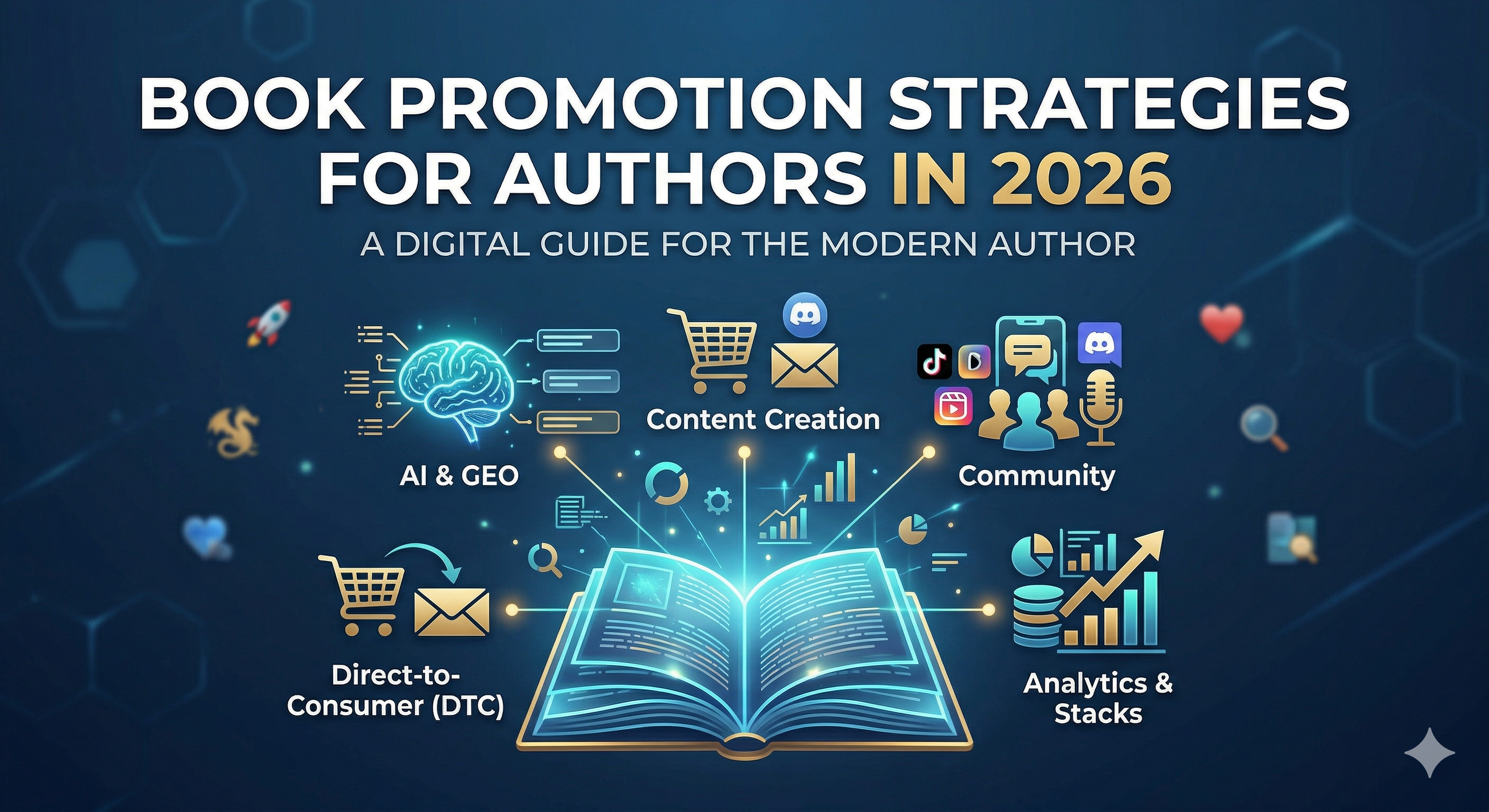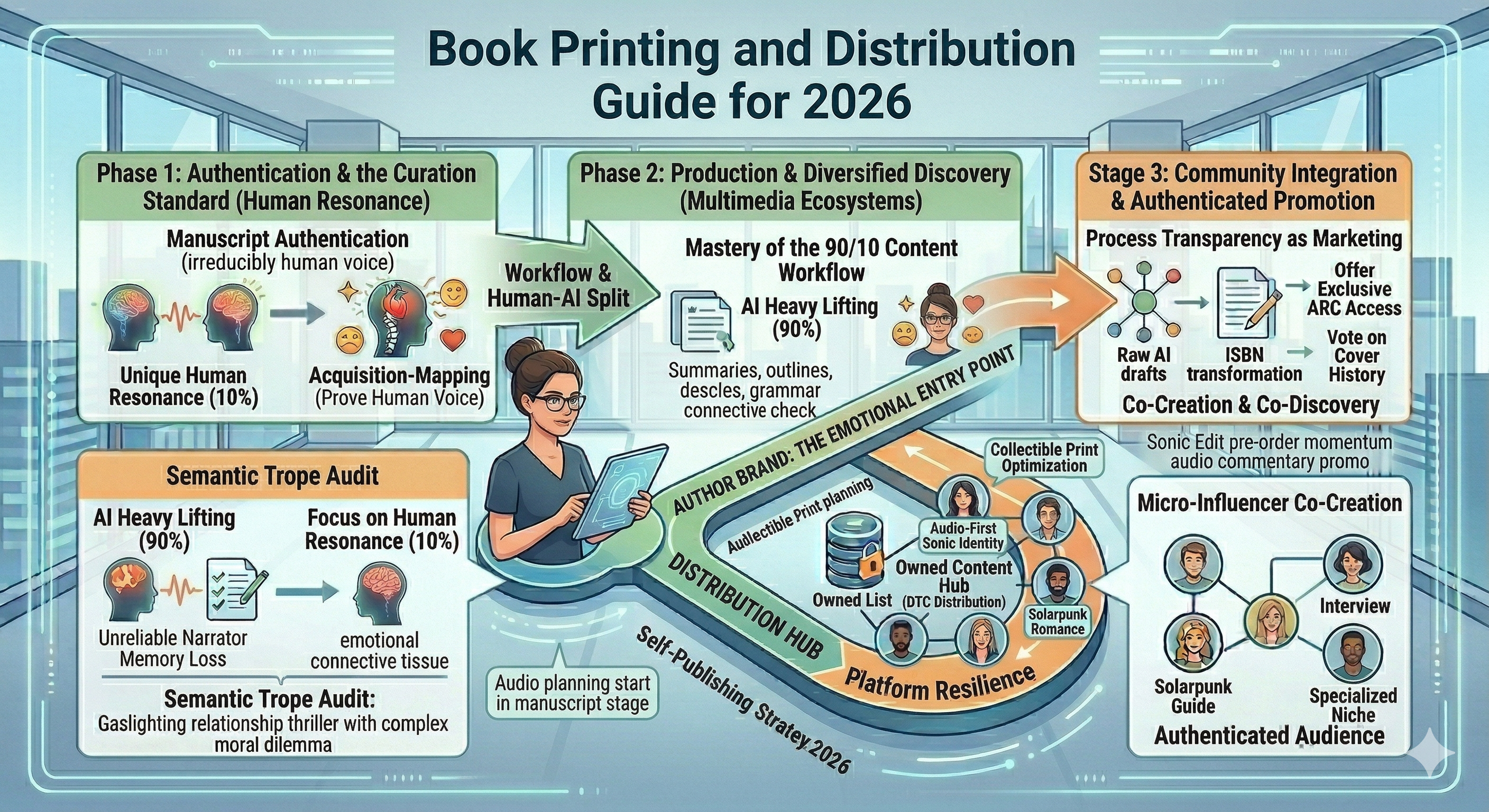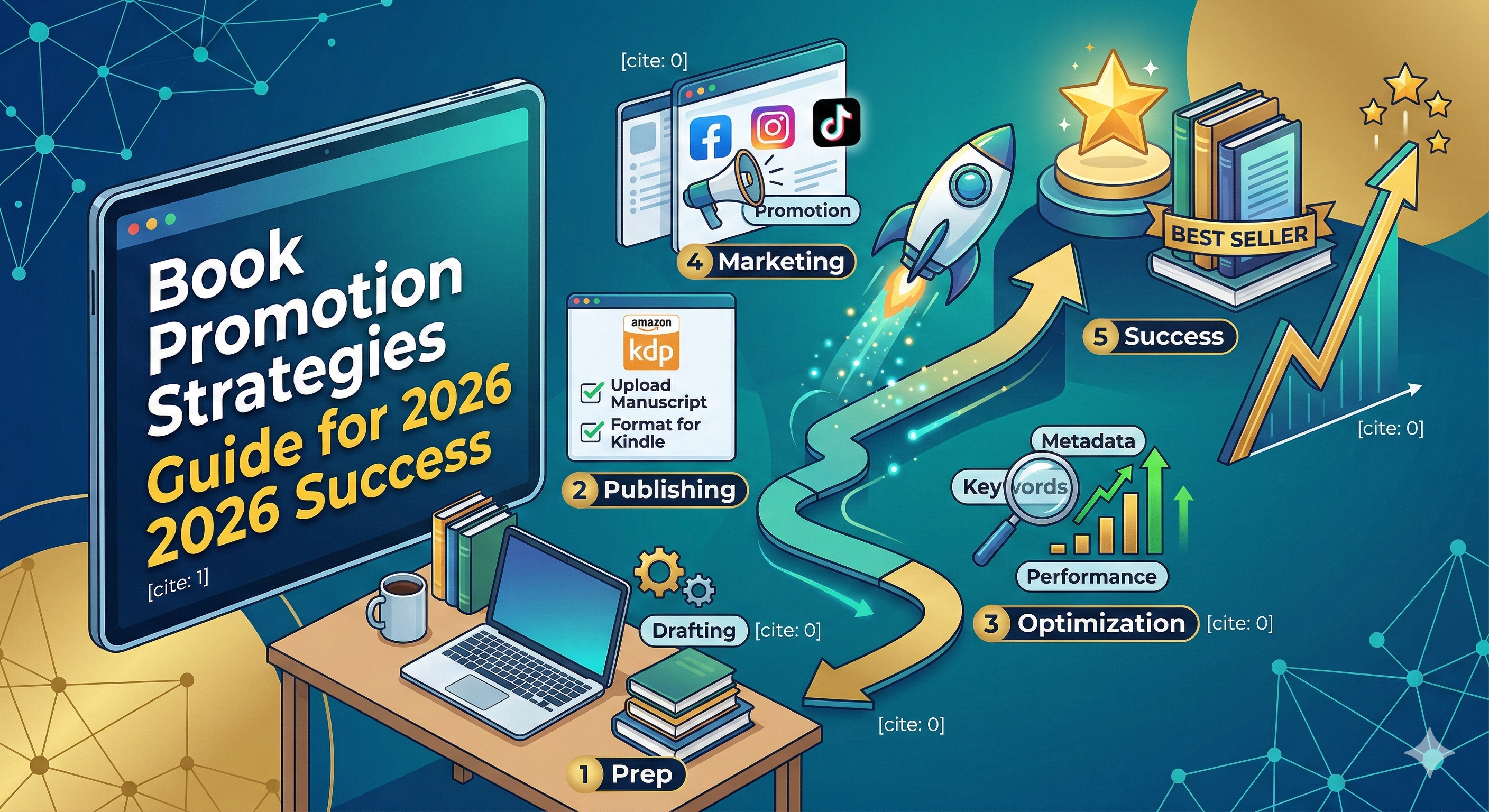
Book Promotion Strategies Guide 102: Complete Strategy to Successfully Publish and Market Your Book in 2026
Introduction: Why Most Books Fail to Sell — and How to Fix It
Publishing a book is easier than ever. Selling it is not.
Every year, millions of titles go live on platforms like Amazon, yet only a small percentage gain steady sales. Many authors believe writing a great book is enough. Unfortunately, quality alone does not guarantee visibility.
This is where strong book promotion strategies make the difference.
In 2026, the publishing world is more competitive, digital, and fast-moving. Readers discover books through search engines, social media, email newsletters, podcasts, and online communities. Without a clear promotion plan, even the best book can disappear.
This guide will walk you step-by-step through modern book promotion strategies that help you:
-
Build pre-launch excitement
-
Drive consistent traffic
-
Increase book sales
-
Build long-term author authority
Let’s begin.
Understanding Book Promotion Strategies in 2026
Book promotion strategies are planned marketing actions that increase visibility, attract readers, and drive sales.
In 2026, successful strategies focus on:
-
Audience-first marketing
-
Data-driven decisions
-
Multi-channel promotion
-
Author brand building
Promotion is no longer a one-week launch activity. It is a long-term system.
Step-by-Step Book Promotion Strategies for 2026
Step 1: Define Your Target Audience Clearly
Before marketing begins, you must know who your book is for.
Ask:
-
What age group will read this book?
-
What problems does it solve?
-
What genre expectations must it meet?
-
Where does this audience spend time online?
For example:
-
Business readers may use LinkedIn.
-
Fiction readers may gather on BookTok or Instagram.
-
Non-fiction readers may search on Google or YouTube.
When you define your reader, your promotion becomes focused and effective.
Step 2: Optimize Your Book for Discoverability
Strong book promotion strategies start before launch.
Optimize Your Book Title and Subtitle
Use searchable keywords. Think about what readers type into search bars on Amazon.
A clear subtitle improves discoverability and conversions.
Write a Conversion-Focused Book Description
Your description should:
-
Hook readers in the first 2–3 lines
-
Focus on benefits, not features
-
Include keywords naturally
-
End with a call to action
Choose the Right Categories and Keywords
Many authors choose broad categories.
Instead:
-
Target niche categories
-
Research competition levels
-
Aim for visibility, not vanity
This increases your chances of ranking higher.
Step 3: Build an Author Platform Before Launch
One of the most powerful book promotion strategies is building an audience before publishing.
Create an Author Website
Your website should include:
-
About the author page
-
Book details
-
Email signup form
-
Blog content
-
Media kit
Your website becomes your marketing headquarters.
Start an Email List Early
Email marketing delivers higher conversion rates than social media.
Offer:
-
A free chapter
-
A checklist
-
A bonus resource
Send consistent value-driven emails, not just sales messages.
Step 4: Pre-Launch Marketing Plan
The biggest mistake authors make is promoting only after publishing.
Instead, build anticipation.
60–90 Days Before Launch
-
Announce your upcoming book
-
Reveal the cover
-
Share behind-the-scenes writing updates
-
Collect early reviewers
ARC Strategy (Advance Review Copies)
Send digital copies to:
-
Bloggers
-
Influencers
-
Industry professionals
-
Loyal email subscribers
Early reviews increase credibility and algorithm visibility.
Step 5: Launch Week Strategy
Launch week matters for momentum and ranking.
Here’s a simple structure:
Day 1–2:
-
Email announcement
-
Social media posts
-
Special launch pricing
Day 3–5:
-
Live sessions (Instagram, YouTube, LinkedIn)
-
Podcast guest appearances
-
Author Q&A
Day 6–7:
-
Reminder emails
-
Share testimonials
-
Encourage reviews
Concentrated activity boosts visibility.
Step 6: Paid Advertising for Faster Growth
Organic reach is valuable, but paid ads accelerate results.
Amazon Ads
Advertising on Amazon allows you to target:
-
Similar books
-
Competitor titles
-
Keyword searches
Start small. Test ads. Scale what works.
Social Media Ads
Platforms like:
-
Facebook
-
Instagram
Allow detailed targeting based on:
-
Interests
-
Behaviors
-
Demographics
Retarget visitors who interacted with your content.
Step 7: Content Marketing for Long-Term Sales
Content marketing builds authority and organic traffic.
Blogging
Write articles around:
-
Topics related to your book
-
Frequently asked questions
-
Industry trends
Use SEO principles to rank on search engines.
YouTube or Podcasting
Video and audio content build deeper trust.
Share:
-
Book insights
-
Interviews
-
Educational content
Over time, this builds a loyal community.
Step 8: Leverage Social Proof
People buy what others recommend.
Strong book promotion strategies include:
-
Gathering reviews
-
Featuring testimonials
-
Sharing reader feedback
-
Highlighting endorsements
Encourage readers to leave honest reviews. Make it easy and simple.
Step 9: Partnerships and Collaborations
Collaborations expand your reach.
Partner with:
-
Other authors
-
Industry coaches
-
Influencers
-
Book clubs
Cross-promotion introduces your book to new audiences.
Benefits of Strategic Book Promotion
When done correctly, book promotion strategies deliver:
-
Higher book sales
-
Better platform ranking
-
Increased brand authority
-
Media opportunities
-
Speaking invitations
-
Long-term revenue growth
More importantly, they build career sustainability.
Best Practices for Book Promotion in 2026
To stay ahead, follow these best practices:
-
Focus on audience relationships, not quick sales
-
Track data and adjust strategy monthly
-
Repurpose content across platforms
-
Stay consistent for at least 6–12 months
-
Invest in professional design and editing
Consistency wins over intensity.
Common Book Promotion Mistakes to Avoid
Even strong books fail due to avoidable errors.
1. Promoting Only During Launch Week
Marketing must continue long after publication.
2. Ignoring Email Marketing
Social platforms change algorithms. Email lists remain stable assets.
3. Poor Book Cover Design
Readers judge quickly. Professional design increases conversions.
4. Targeting Everyone
When you market to everyone, you attract no one.
5. Not Tracking Performance
Without data, you cannot improve campaigns.
Avoiding these mistakes dramatically improves results.
Why Choose a Professional Publishing and Marketing Service?
While DIY marketing is possible, it requires time, expertise, and ongoing effort.
Professional services provide:
-
Market research
-
Keyword optimization
-
Category analysis
-
Advertising management
-
Launch planning
-
Branding strategy
An experienced publishing company understands algorithms, industry shifts, and reader behavior.
Instead of guessing, you follow proven systems.
This saves time and increases ROI.
Creating a Sustainable Promotion System
Successful authors think long term.
Build a repeatable system:
-
Plan your annual content calendar
-
Run quarterly promotions
-
Grow your email list continuously
-
Launch new formats (audiobook, workbook, special editions)
-
Expand into speaking and coaching
Book promotion strategies are not one-time tasks. They are ongoing business activities.
The Role of Branding in Book Promotion Strategies
Your book is a product. You are the brand.
In 2026, readers connect with authors, not just titles.
Develop:
-
A clear author message
-
Consistent visual identity
-
Recognizable tone of voice
-
Defined niche expertise
Brand clarity increases trust and repeat sales.