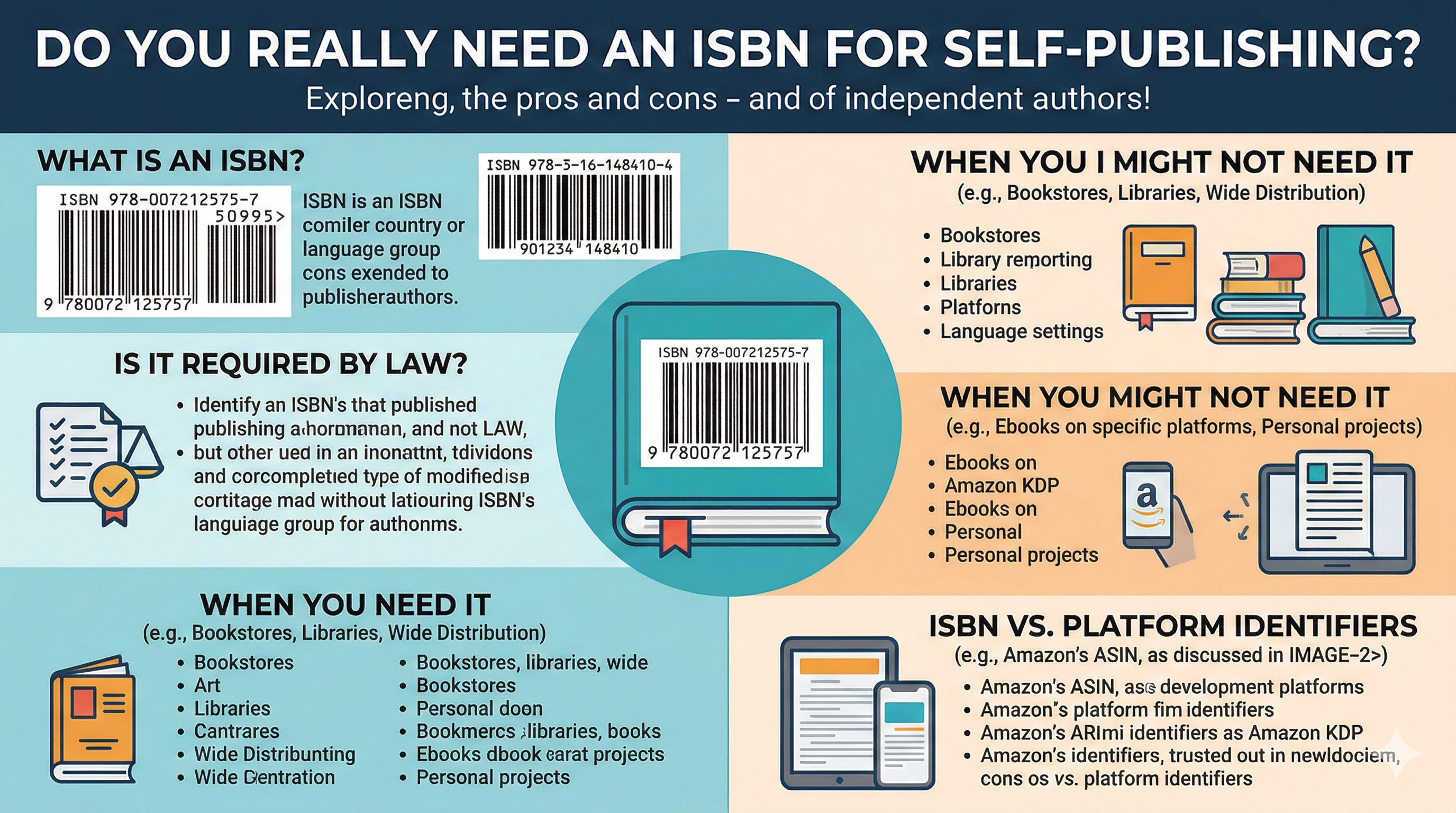
Do You Really Need ISBN for Self Publishing?
Introduction: The Big Question Every Author Asks
You’ve written your book.
You’re ready to publish.
But suddenly, you hear about something called an ISBN. And now you’re confused.
Do you really need an ISBN for self publishing?
Or is it just another expense?
Many new authors feel overwhelmed at this stage. They want to publish quickly and start selling. However, skipping important steps can limit your book’s reach and professionalism.
In this guide, you’ll learn:
-
What an ISBN really is
-
When you need it
-
When you might not need it
-
How to get one
-
Common mistakes to avoid
-
Why professional guidance matters
Let’s break it down step by step.
What Is an ISBN?
Understanding the Basics
ISBN stands for International Standard Book Number.
It is a unique 13-digit number assigned to a specific book edition and format.
Think of it as your book’s fingerprint. No two books share the same ISBN.
An ISBN helps:
-
Retailers identify your book
-
Libraries catalog it
-
Distributors track sales
-
Customers find the correct edition
Without it, your book may not be treated as a professional product in the publishing world.
Why ISBN Matters in Self Publishing
Self publishing gives you full control. But control also means responsibility.
When you publish traditionally, the publisher handles the ISBN.
When you self publish, you must decide.
Key Benefits of ISBN for Self Publishing
1. Wider Distribution
Most bookstores and libraries require an ISBN.
If you want your book available beyond a single online platform, you’ll need one.
2. Professional Credibility
Books with ISBNs look serious and established.
Retailers and reviewers take them more seriously.
3. Better Sales Tracking
An ISBN allows proper tracking of:
-
Sales numbers
-
Inventory
-
Distribution channels
This is crucial if you plan to scale.
4. Ownership and Control
If you buy your own ISBN, you become the official publisher of record.
This builds your author brand long term.
When Do You Need an ISBN for Self Publishing?
Now let’s answer the main question clearly.
You Need an ISBN If:
-
You want your book in bookstores
-
You plan to distribute through multiple platforms
-
You want library distribution
-
You’re publishing a print book
-
You want full publishing ownership
Each format needs a separate ISBN:
-
Paperback – 1 ISBN
-
Hardcover – 1 ISBN
-
eBook – 1 ISBN (optional on some platforms)
-
Audiobook – 1 ISBN (if distributed widely)
Yes, every version counts as a different product.
When You Might Not Need an ISBN
In some cases, you can skip it.
Platform-Specific Publishing
For example, platforms like:
-
Amazon Kindle Direct Publishing (KDP)
Amazon can assign a free ISBN for paperback books.
However, this ISBN lists Amazon as the publisher — not you.
If you only plan to sell on one platform and don’t care about publisher branding, this may work.
But there’s a catch.
You cannot use that free ISBN elsewhere.
It limits distribution flexibility.
Step-by-Step: How to Get an ISBN
Let’s make it simple.
Step 1: Decide Your Publishing Plan
Ask yourself:
-
Are you publishing only on one platform?
-
Do you want bookstore distribution?
-
Will you publish multiple formats?
Your answers determine how many ISBNs you need.
Step 2: Purchase ISBN from the Official Agency
In India, ISBNs are issued by the government agency under the Ministry of Education.
In the United States, they are issued by Bowker.
Each country has its own official ISBN agency.
Important:
Always get ISBN from official sources. Avoid third-party resellers.
Step 3: Register Your Book Details
You will provide:
-
Book title
-
Author name
-
Format
-
Language
-
Publisher name
Accuracy matters here.
Step 4: Generate Barcode
For print books, you need a barcode on the back cover.
This barcode contains your ISBN.
Most publishing services generate this professionally.
Costs of ISBN: What to Expect
Cost depends on your country.
In some countries like India, ISBN may be free.
In others, you may need to purchase it.
Buying in bulk is often cheaper.
For example:
-
1 ISBN – Higher cost
-
10 ISBNs – Lower per unit cost
If you plan to publish multiple books, buying a block makes sense.
Benefits of Owning Your Own ISBN
Now let’s go deeper.
Owning your ISBN gives long-term advantages.
Brand Authority
Your publishing imprint name appears in databases.
This builds credibility.
Business Growth
If you plan to:
-
Publish more books
-
Start a publishing company
-
Release different editions
Owning ISBNs strengthens your foundation.
Global Availability
With an ISBN, your book can enter:
-
International bookstores
-
Global distributors
-
Library systems
This expands your reach significantly.
Common Mistakes to Avoid
Many authors make costly errors when dealing with ISBN for self publishing.
Mistake 1: Using Free ISBN Without Understanding Terms
Free ISBNs limit control.
Always read platform policies.
Mistake 2: Buying from Unauthorized Sellers
Some websites resell ISBNs at inflated prices.
This can create ownership confusion.
Mistake 3: Using One ISBN for Multiple Formats
Each format requires a unique ISBN.
Never reuse.
Mistake 4: Registering Incorrect Metadata
Wrong:
-
Author spelling
-
Title formatting
-
Category
This affects discoverability.
Mistake 5: Ignoring Barcode Quality
Poor barcode placement can cause scanning issues in bookstores.
ISBN for eBooks: Is It Necessary?
This is a common confusion.
Technically:
-
Amazon does not require ISBN for Kindle eBooks.
-
It assigns an ASIN (Amazon Standard Identification Number).
However:
If you plan wide distribution beyond Amazon, an ISBN is recommended.
It ensures consistency across platforms.
ISBN vs ASIN: What’s the Difference?
| Feature | ISBN | ASIN |
|---|---|---|
| Global Standard | Yes | No |
| Used Outside Amazon | Yes | No |
| Required for Bookstores | Yes | No |
| Platform Specific | No | Yes |
ASIN works only inside Amazon’s ecosystem.
ISBN works everywhere.
Best Practices for ISBN in Self Publishing
To use ISBN smartly, follow these guidelines:
-
Buy your own ISBN if serious about publishing
-
Keep detailed records
-
Assign correctly to each edition
-
Maintain consistent author name
-
Register proper metadata
Planning ahead saves time and money.
Why Choose a Professional Publishing Service?
Handling ISBN may seem simple.
But publishing involves more than just a number.
Professional publishing companies help with:
-
ISBN registration
-
Barcode generation
-
Metadata optimization
-
Copyright page formatting
-
Distribution setup
This prevents technical mistakes.
Advantages of Professional Support
-
Accurate documentation
-
Better discoverability
-
Faster approvals
-
Compliance with publishing standards
-
Long-term strategy planning
If you’re building a serious author career, expert guidance ensures smooth execution.
Should First-Time Authors Invest in ISBN?
If you are testing a small eBook only on one platform, maybe not immediately.
But if you:
-
Want bookstore presence
-
Plan long-term publishing
-
Aim for brand authority
Then yes — investing in ISBN for self publishing is wise.
It’s not just a number.
It’s a business decision.
Final Thoughts: Do You Really Need ISBN for Self Publishing?
So, do you really need ISBN for self publishing?
The answer depends on your goals.
If you want:
-
Professional credibility
-
Wider distribution
-
Full ownership
-
Long-term growth
Then yes, you absolutely need it.
However, if you’re publishing only on a single platform with no expansion plans, you may skip it temporarily.