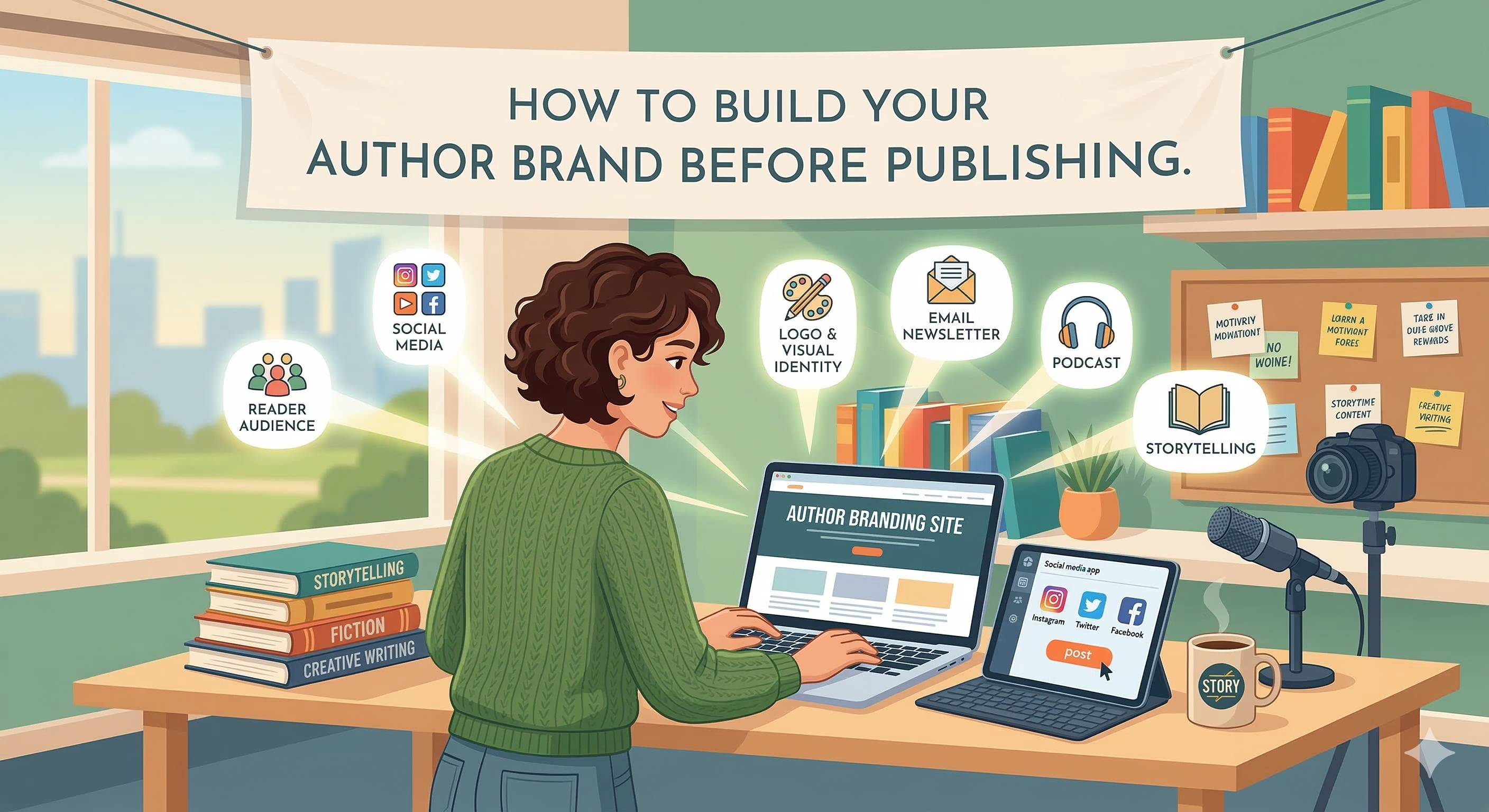
How to Build a Strong Author Brand Before Publishing
Introduction
Many new writers focus only on finishing their manuscript. While writing a great book is essential, it is only part of the journey. In today’s competitive publishing world, simply publishing a book is not enough. Readers want to connect with the person behind the book.
This is where an author brand becomes important.
An author brand represents your identity as a writer. It communicates your voice, expertise, themes, and personality to readers. A strong brand helps readers recognize your work, trust your content, and stay engaged with your future books.
Building an author brand before publishing gives you a major advantage. It helps you grow an audience, create credibility, and prepare the market for your book.
In this guide, you will learn step-by-step strategies to build a powerful author brand before publishing your first book.
Why Author Brand Matters Before Publishing
Before diving into strategies, it is important to understand why an author brand matters.
1. It Builds Trust with Readers
Readers are more likely to buy books from authors they recognize and trust. When your brand is consistent across platforms, people see you as a serious writer.
2. It Helps You Stand Out
Thousands of books are published every day. A strong brand makes you memorable and different from other writers in your niche.
3. It Creates a Loyal Audience
When readers connect with your personality and values, they are more likely to follow your work and support future books.
4. It Improves Book Marketing
Marketing becomes easier when your brand already exists. Instead of starting from zero, you already have readers interested in your content.
Step-by-Step Guide to Build Your Author Brand
Step 1: Define Your Author Identity
The first step in building an author brand is understanding who you are as a writer.
Ask yourself these questions:
-
What topics do I write about?
-
What message do I want to share?
-
Who is my target audience?
-
What emotions should readers feel when reading my work?
Your answers help shape your brand identity.
Examples of Clear Author Identities
-
A thriller writer focused on psychological suspense
-
A self-help author helping young professionals
-
A fantasy author creating immersive worlds
When your identity is clear, your audience understands what to expect from your books.
Step 2: Identify Your Target Readers
A successful author brand speaks directly to a specific audience.
Instead of writing for everyone, focus on readers who are most likely to enjoy your content.
Consider the following factors:
-
Age group
-
Interests
-
Reading habits
-
Problems they want to solve
-
Genres they enjoy
For example:
-
Romance readers may look for emotional storytelling.
-
Business readers prefer actionable advice.
-
Fantasy readers enjoy world-building and imagination.
Understanding your readers helps you create content that resonates with them.
Step 3: Create a Professional Author Website
Your website acts as the central hub of your author brand.
It is the place where readers, publishers, and media can learn about you.
Essential pages for an author website
Home Page
-
Introduce yourself
-
Share your writing mission
About the Author
-
Your background
-
Writing journey
-
Personal story
Blog Section
-
Writing tips
-
Behind-the-scenes insights
-
Topic-related articles
Books Page
-
Upcoming books
-
Book descriptions
-
Release updates
Contact Page
-
Media inquiries
-
Reader messages
-
Collaboration requests
A professional website strengthens your credibility and improves online visibility.
Step 4: Develop a Consistent Visual Identity
Visual branding is a major part of an author brand.
Consistency across platforms helps readers recognize your work instantly.
Important visual elements
-
Author logo or signature
-
Color palette
-
Typography style
-
Profile images
-
Book cover style
For example:
-
A horror writer may use darker tones and dramatic visuals.
-
A children’s author may choose bright colors and playful designs.
Consistency builds recognition and professionalism.
Step 5: Build Your Online Presence
Your online presence plays a major role in shaping your author brand.
Choose platforms where your target readers are most active.
Popular platforms for authors
Great for visual storytelling, quotes, and book updates.
Useful for connecting with writers, publishers, and readers.
Ideal for nonfiction authors and professional content.
YouTube
Perfect for storytelling, writing advice, or book discussions.
Content ideas for authors
-
Writing journey updates
-
Story inspiration
-
Character insights
-
Book recommendations
-
Writing tips
The goal is not constant promotion but genuine engagement.
Step 6: Start Creating Valuable Content
Content creation is a powerful way to strengthen your author brand.
When you consistently share useful or entertaining content, people begin to see you as an authority in your niche.
Types of content authors can create
-
Blog articles
-
Writing tips
-
Behind-the-scenes writing process
-
Genre discussions
-
Personal storytelling
Content helps you build an audience long before your book is published.
Step 7: Build an Email List
Email marketing is one of the most effective tools for growing an author brand.
Unlike social media, email allows direct communication with readers.
Benefits of an email list
-
Notify readers about book launches
-
Share exclusive content
-
Build stronger reader relationships
-
Promote new releases easily
Ways to grow your email list
-
Offer a free chapter
-
Share a short story
-
Provide writing resources
-
Give early book updates
A strong email list can become your most valuable marketing asset.
Benefits of Building an Author Brand Early
Building your author brand before publishing offers several advantages.
1. Faster Book Launch Success
When your book launches, you already have readers waiting for it.
2. Stronger Reader Loyalty
Readers feel connected to authors who share their journey.
3. Better Publishing Opportunities
Agents and publishers often look for authors who already have a platform.
4. Higher Long-Term Book Sales
A recognizable brand helps sell not just one book but multiple books.
Best Practices for Author Branding
To build a powerful author brand, follow these best practices.
Be Authentic
Readers connect with genuine voices. Share your real experiences and perspectives.
Stay Consistent
Your messaging, visuals, and tone should remain consistent across platforms.
Focus on Value
Provide useful or entertaining content instead of constant promotion.
Engage with Readers
Reply to comments, emails, and messages. Interaction strengthens loyalty.
Think Long-Term
Author branding is a continuous process, not a one-time effort.
Common Author Branding Mistakes to Avoid
Many writers make mistakes while building their author brand.
Avoid these common pitfalls.
Trying to Be Everywhere
Managing too many platforms can reduce content quality. Focus on a few effective channels.
Inconsistent Messaging
Changing themes or tone frequently confuses readers.
Ignoring Your Audience
Your brand should focus on reader interests, not only your own goals.
Over-Promotion
Constantly promoting your book without providing value can push readers away.
Neglecting Professional Design
Poor visuals or an outdated website can weaken your brand credibility.
Why Authors Should Consider Professional Publishing Support
Building a strong author brand often requires expertise in branding, marketing, and publishing strategy.
Professional publishing services can help authors succeed by providing:
Strategic Branding Guidance
Experts help define your identity, audience, and positioning.
Professional Website Development
A well-designed website enhances your credibility and discoverability.
Content and Marketing Support
Publishing professionals assist with blog content, promotional strategies, and reader engagement.
Book Launch Planning
A structured launch plan ensures your book reaches the right audience.
Working with experienced professionals allows authors to focus on writing while experts handle branding and marketing.
Final Thoughts
Publishing a book without a clear brand can make it difficult to reach readers. In today’s digital publishing landscape, authors need more than great writing. They need visibility, credibility, and connection with their audience.
Building your author brand before publishing creates a strong foundation for long-term success.
By defining your identity, understanding your audience, building an online presence, and consistently sharing valuable content, you can establish a recognizable brand that attracts loyal readers.
When your book is finally published, your audience will already know who you are—and they will be excited to read what you have written.
A strong author brand does not just help launch your first book. It supports your entire writing career.