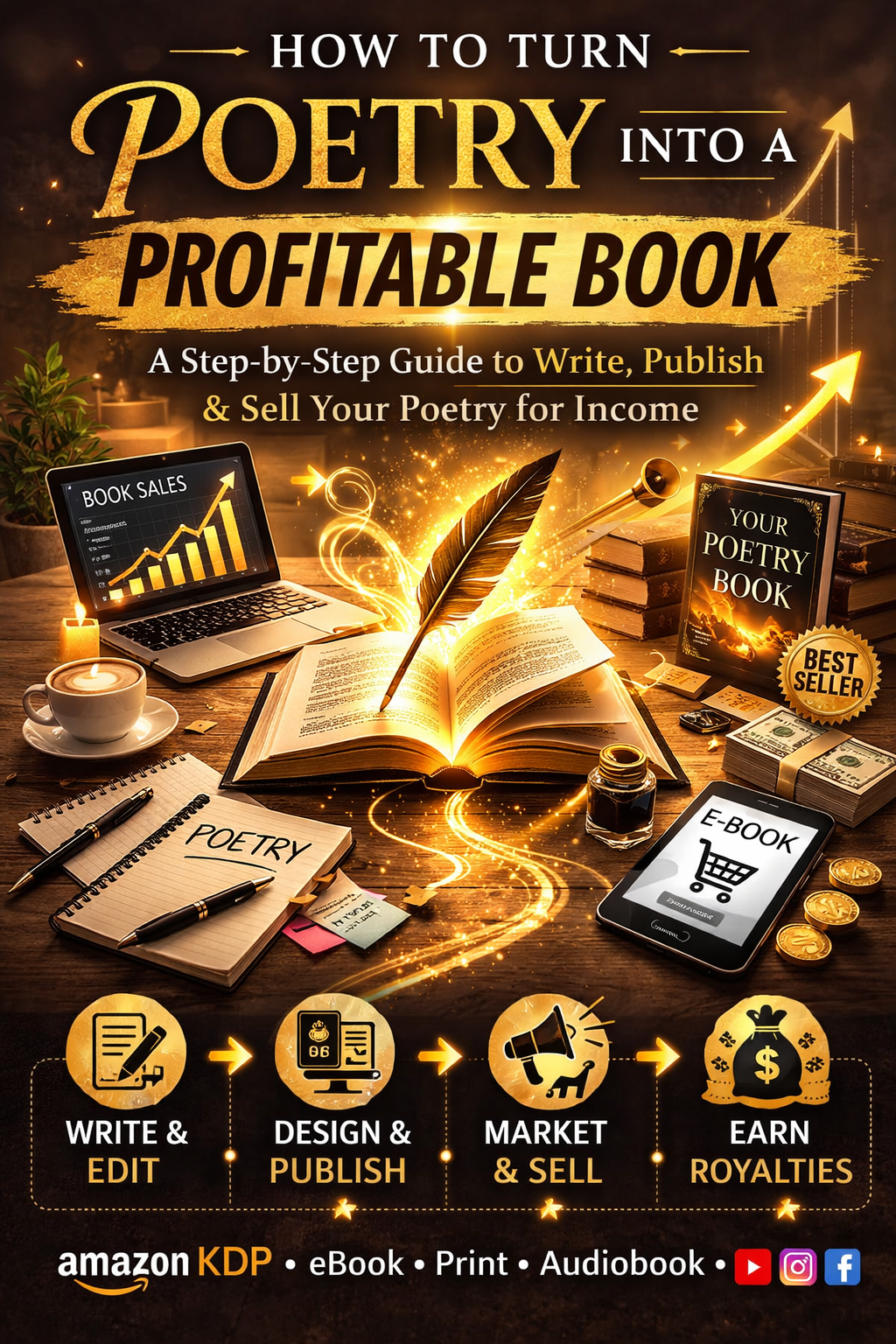
How to Turn Poetry into a Profitable Poetry Book
Poetry is powerful. It expresses emotion, truth, and creativity in a way few other forms can.
However, many poets struggle with one big problem: how to make money from their poetry. Writing poems is one thing. Turning them into a steady income stream is another.
The good news? It is absolutely possible to build a profitable poetry book with the right strategy.
In this guide, you’ll learn step-by-step how to transform your poems into a product readers love—and one that generates real revenue.
Why Most Poetry Books Don’t Make Money
Before we talk about solutions, we must understand the problem.
Many poetry books fail because:
-
They lack a clear theme
-
They are poorly edited
-
There is no marketing plan
-
The author has no audience
-
The pricing strategy is wrong
Poetry is competitive. Thousands of new books are published every year. Without positioning and strategy, your book may disappear in the crowd.
But when done right, poetry can be both meaningful and profitable.
Step 1: Define Your Poetry Book Concept
Choose a Clear Theme
A strong theme makes your book easier to market. Instead of random poems, organize them around:
-
Love and heartbreak
-
Healing and mental health
-
Personal growth
-
Spiritual reflection
-
Social issues
-
Cultural identity
Readers don’t just buy poems. They buy experiences and emotions.
Identify Your Target Audience
Ask yourself:
-
Who will relate most to these poems?
-
What age group?
-
What life stage?
-
What problems are they facing?
For example:
-
Young adults dealing with breakups
-
Women rediscovering self-worth
-
Readers seeking inspiration
When you know your audience, your profitable poetry book becomes easier to position and sell.
Step 2: Curate and Refine Your Poems
Select Your Best Work
Do not include every poem you’ve written.
Instead:
-
Choose quality over quantity
-
Remove repetitive themes
-
Keep emotional consistency
-
Ensure smooth flow between poems
A strong poetry collection usually has 60–120 pages. That’s enough to feel complete without overwhelming readers.
Edit Professionally
Editing is critical.
You need:
-
Grammar correction
-
Consistent formatting
-
Emotional clarity
-
Strong titles
Even short poems benefit from professional editing. Clean presentation builds trust and increases perceived value.
Step 3: Structure Your Book for Impact
A well-structured poetry book feels intentional.
Organize in Sections
Divide your book into 3–5 parts. For example:
-
Part I: The Breaking
-
Part II: The Healing
-
Part III: The Becoming
This creates a journey for the reader.
Add Small Enhancements
Consider:
-
A powerful introduction
-
A personal note
-
Short reflections between sections
-
Minimalist design elements
A visually appealing layout improves reader experience and supports your goal of building a profitable poetry book.
Step 4: Design a Cover That Sells
People judge books by their covers. This is especially true in poetry.
Your cover should:
-
Match your theme
-
Use readable fonts
-
Have emotional appeal
-
Look professional at thumbnail size
Remember, online buyers see your book as a small image first. If it does not stand out, it won’t get clicked.
Investing in professional cover design significantly improves sales.
Step 5: Choose the Right Publishing Path
There are two main options:
Traditional Publishing
Pros:
-
Professional support
-
Established distribution
-
Credibility
Cons:
-
Hard to get accepted
-
Lower royalties
-
Less creative control
Self-Publishing
Pros:
-
Full control
-
Higher profit margins
-
Faster release
-
Global distribution
Cons:
-
You handle marketing
-
You manage quality control
For many poets today, self-publishing offers more flexibility and higher income potential.
If your goal is a profitable poetry book, self-publishing often gives better financial results.
Step 6: Price Your Poetry Book Strategically
Pricing affects sales volume and profits.
General Pricing Guidelines
-
eBook: Affordable and competitive
-
Paperback: Mid-range pricing
-
Special editions: Higher price point
Do market research. Study similar poetry books in your niche.
Avoid pricing too low. Cheap pricing can reduce perceived value.
Instead, price based on:
-
Production cost
-
Audience spending habits
-
Market positioning
Step 7: Build an Audience Before Launch
Marketing should start before publication.
Grow Your Online Presence
Poets today thrive on:
-
Short-form video content
-
Instagram poetry posts
-
Spoken word clips
-
Email newsletters
Share snippets of your poems to build anticipation.
Create a Pre-Launch Strategy
Before release:
-
Announce launch date
-
Share cover reveal
-
Collect pre-orders
-
Offer early bonuses
An audience-first approach increases your chance of creating a profitable poetry book.
Step 8: Promote Consistently After Launch
Marketing does not stop on launch day.
Effective Promotion Methods
-
Social media reels with poetry readings
-
Collaborations with influencers
-
Book signing events
-
Podcast interviews
-
Email marketing campaigns
Consistency builds visibility. Visibility builds sales.
Benefits of Turning Poetry into a Profitable Book
When done correctly, the rewards are powerful.
Financial Freedom
A poetry book can generate:
-
Direct book sales
-
Bulk orders
-
Event revenue
-
Online course opportunities
Personal Brand Growth
Publishing builds authority. It positions you as:
-
A creative voice
-
A thought leader
-
A storyteller
Long-Term Passive Income
Books can sell for years. Once created, they continue generating revenue with ongoing marketing.
Best Practices for Long-Term Success
To sustain income, follow these principles:
-
Publish consistently
-
Build a loyal reader community
-
Collect email subscribers
-
Reinvest profits into marketing
-
Create multiple formats (eBook, print, audiobook)
Think beyond one book. Build a poetry brand.
Common Mistakes to Avoid
Many poets lose momentum because of simple errors.
1. Publishing Too Soon
Rushing leads to poor editing and weak reviews.
2. Ignoring Marketing
Great poetry does not automatically sell itself.
3. Inconsistent Branding
Your social media tone, cover design, and book theme should align.
4. No Clear Audience
If you write for everyone, you connect with no one.
5. Underpricing Your Work
Low prices may increase sales temporarily but reduce long-term profitability.
Avoid these mistakes if you want a truly profitable poetry book.
Why Work with a Professional Publishing Company
Many poets try to manage everything alone. This often leads to burnout.
A professional publishing service can provide:
-
Manuscript editing
-
Cover design
-
Interior formatting
-
ISBN registration
-
Global distribution
-
Marketing strategy
-
Launch planning
Most importantly, professionals understand the market.
They know how to position your book for sales—not just publication.
If you are serious about building a profitable poetry book, expert guidance can save time, money, and costly mistakes.
Turning One Poetry Book into Multiple Income Streams
Think bigger than just book sales.
You can expand into:
-
Limited signed editions
-
Poetry merchandise
-
Online writing workshops
-
Membership communities
-
Public speaking events
-
Audiobook narration
Your poetry becomes a foundation for a larger creative business.
Final Thoughts
Poetry deserves to be read. But it also deserves to be valued.
Turning your poems into a profitable poetry book requires more than talent. It demands strategy, structure, design, and consistent promotion.
Start with a clear theme.
Refine your work.
Present it professionally.
Build your audience.
Market with intention.
When creativity meets smart publishing, poetry can become both art and income.