ISBN Legal Guide 2026: Complete Strategy to Successfully Publish and Market Your Book
Introduction: Why Legal Steps Matter Before Publishing
Many authors finish writing their book but get stuck at the legal stage. They worry about ISBN registration, copyright protection, and publishing compliance. Without these steps, a book cannot be sold in stores, listed online, or protected from misuse.
That is where this ISBN Legal Guide 2026 helps. It explains every legal step clearly and simply. By following this strategy, you can publish your book safely, protect your rights, and market it worldwide without legal risks.
This guide is written for beginners, first-time authors, and self-publishers who want practical instructions instead of legal jargon.
What Is an ISBN and Why It Matters
An ISBN (International Standard Book Number) is a unique identifier assigned to each published book edition. It works like a fingerprint for books.
Why ISBN Is Important
-
Required for selling books online and in stores
-
Helps libraries and distributors track titles
-
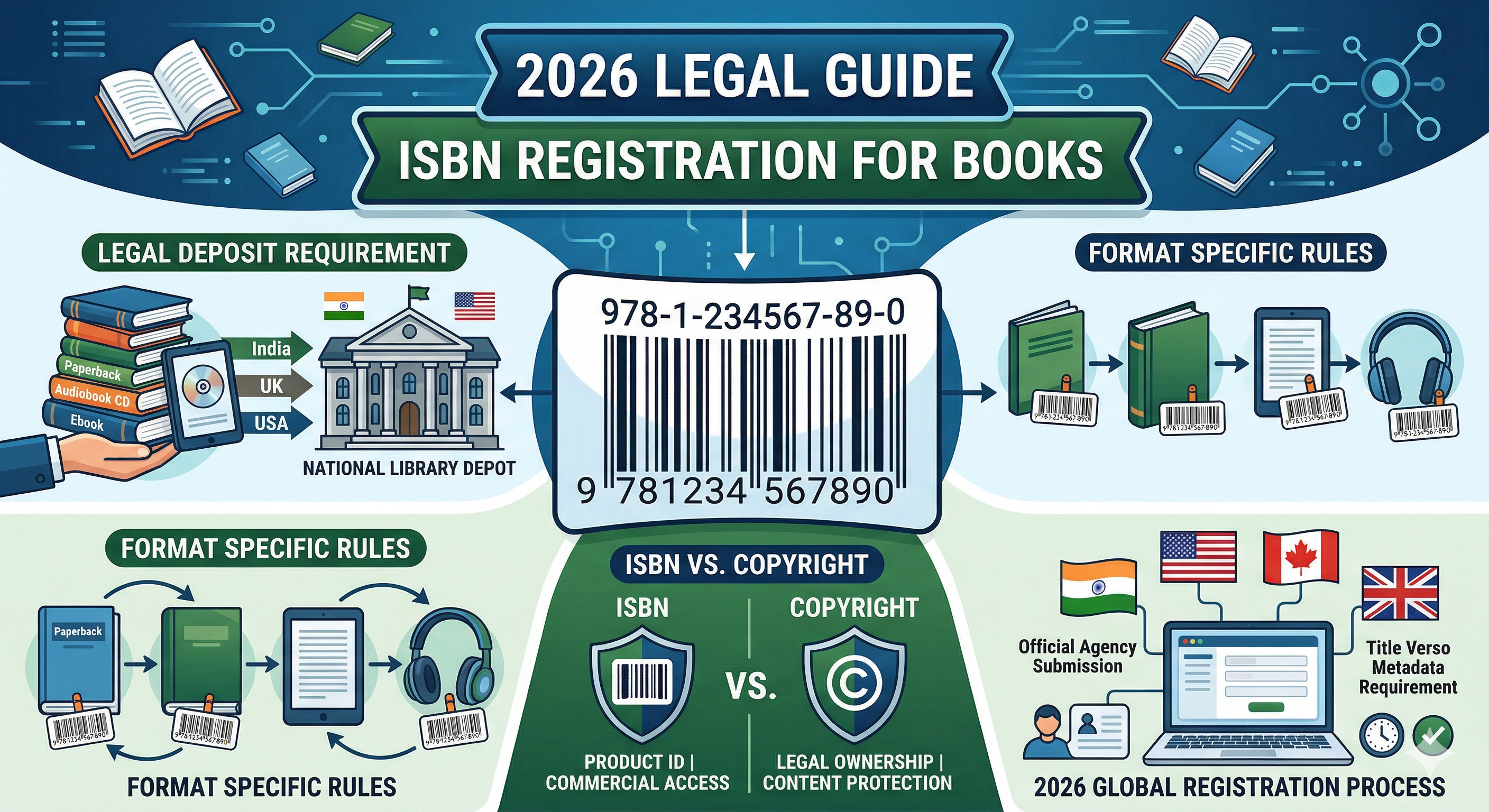
Distinguishes different formats (ebook, paperback, hardcover)
-
Improves credibility and professionalism
Without an ISBN, your book is difficult to distribute commercially. Most retailers and wholesalers will not list books without it.
Step-by-Step ISBN Legal Guide 2026
Step 1: Determine If Your Book Needs an ISBN
Not all content requires an ISBN. You generally need one if you plan to:
-
Sell your book commercially
-
Distribute through retailers
-
List your book in catalog databases
-
Publish multiple editions
You may not need an ISBN if:
-
The book is for private distribution
-
It is an internal company manual
-
It is free content not sold publicly
However, even free books often benefit from ISBN registration because it improves discoverability.
Step 2: Identify the Correct ISBN Type
Each format requires a separate ISBN.
Examples:
-
Paperback version → 1 ISBN
-
Hardcover version → 1 ISBN
-
Ebook version → 1 ISBN
-
Audiobook version → 1 ISBN
Many new authors make the mistake of using one ISBN for all formats. This creates cataloging errors and can block distribution.
Step 3: Register Your ISBN
To register:
-
Apply through your country’s ISBN agency
-
Provide publisher details
-
Submit book title and format
-
Receive ISBN number
Always register under your name or publishing imprint if you want full ownership. If a distributor provides the ISBN, they may be listed as the publisher instead.
Step 4: Assign ISBN Correctly
After receiving your ISBN:
-
Add it to your copyright page
-
Include it in barcode format for print books
-
Upload it during distribution platform setup
Incorrect placement or formatting can delay approval from retailers.
Step 5: Secure Copyright Protection
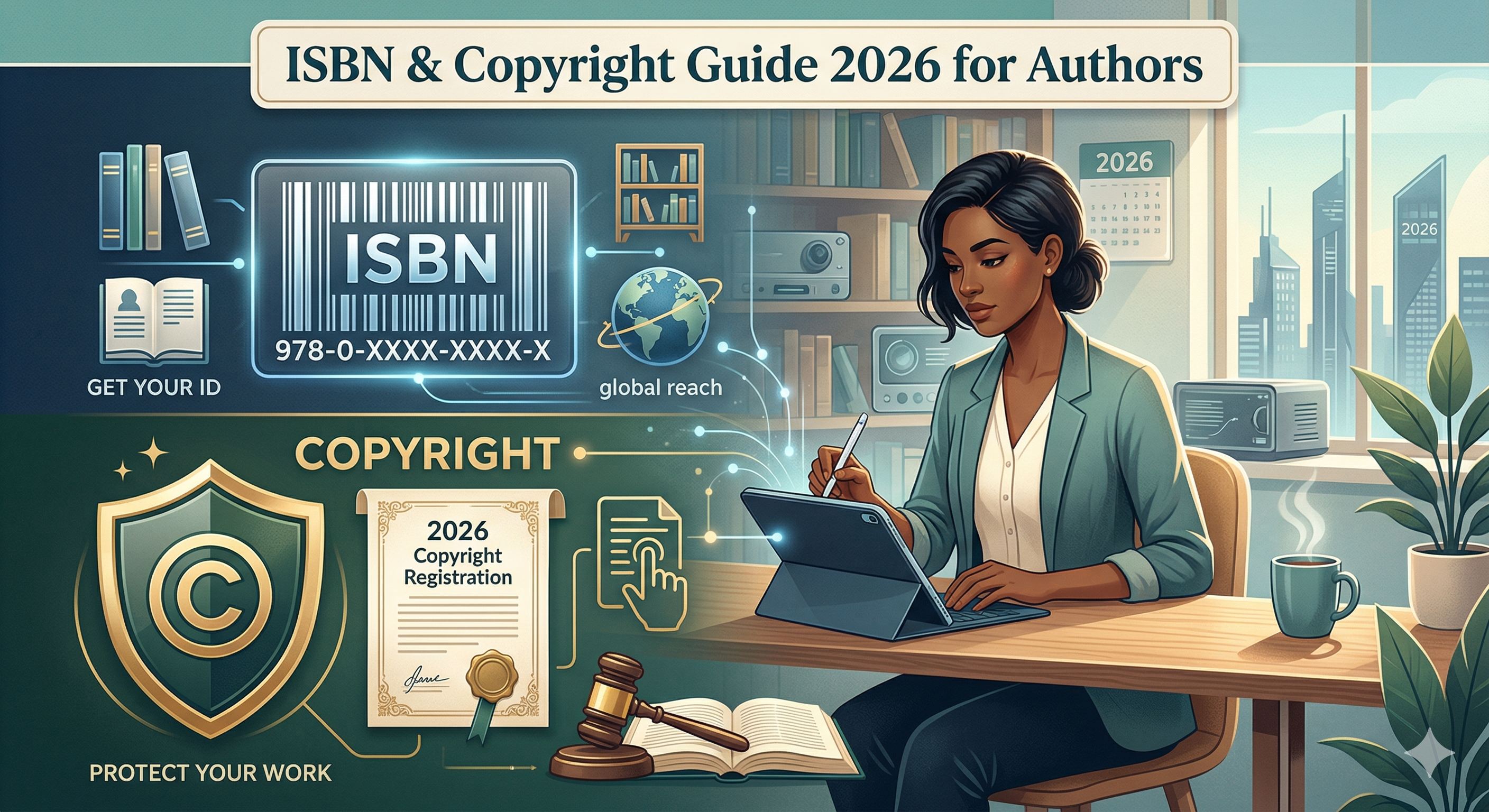
ISBN identifies your book. Copyright protects it.
Copyright safeguards:
-
Text content
-
Illustrations
-
Cover design
-
Layout
In most countries, copyright exists automatically when a work is created. However, formal registration strengthens legal protection and makes enforcement easier.
Step 6: Understand Legal Publishing Requirements
Publishing laws vary by region, but common legal requirements include:
-
Copyright notice page
-
Publisher information
-
Disclaimer statements
-
ISBN listing
-
Edition number
Some countries also require legal deposit copies submitted to national libraries.
Step 7: Verify Distribution Compliance
Retailers and distributors check legal data before approving books. They review:
-
ISBN validity
-
Metadata accuracy
-
Copyright information
-
Publisher listing
If your details do not match official ISBN records, your book may be rejected.
Legal Elements Every Book Must Include
Copyright Page Essentials
Your copyright page should contain:
-
Copyright notice
-
Author name
-
Publication year
-
ISBN
-
Publisher name
-
Rights statement
-
Disclaimer
This page protects you legally and signals professionalism to retailers.
Disclaimer Statements
Disclaimers protect authors from liability. Examples:
-
Fiction disclaimer
-
Advice limitation
-
Medical disclaimer
-
Financial disclaimer
Not all books need all disclaimers. Choose based on content type.
Metadata Accuracy
Metadata is the digital information attached to your book listing.
It includes:
-
Title
-
Subtitle
-
Author name
-
Genre
-
Description
-
ISBN
Accurate metadata improves search visibility and prevents listing errors.
Benefits of Following the ISBN Legal Guide 2026
Following proper legal steps gives authors major advantages.
1. Professional Credibility
Books with ISBNs and legal pages look legitimate. Retailers, reviewers, and libraries take them seriously.
2. Wider Distribution
Distributors require ISBN verification. Without it, your book cannot reach global markets.
3. Legal Protection
Proper registration helps prove ownership if someone copies or republishes your work without permission.
4. Easier Marketing
Retail platforms use ISBNs to track sales data, rankings, and inventory. This helps with analytics and promotions.
5. Long-Term Publishing Control
Owning your ISBN ensures you remain listed as publisher. This keeps rights in your hands.
Best Practices for ISBN and Publishing Compliance
Following best practices prevents delays and legal issues.
Always Buy ISBNs Yourself
Owning your ISBN ensures:
-
Full publishing rights
-
Control over metadata
-
Accurate publisher listing
Free ISBNs often assign the distributor as publisher.
Use Consistent Author Name
Your author name must match across:
-
ISBN registration
-
Book cover
-
Copyright page
-
Distribution platforms
Even small differences can cause catalog mismatches.
Keep ISBN Records Organized
Maintain a spreadsheet with:
-
ISBN numbers
-
Book titles
-
Format type
-
Publication date
This is especially important if you publish multiple books.
Double-Check Legal Pages
Before publishing, verify:
-
Spelling accuracy
-
Correct year
-
Valid ISBN
-
Proper formatting
Small errors can delay approval or require reprints.
Common ISBN and Legal Mistakes to Avoid
New authors often make preventable mistakes. Avoid these:
Using One ISBN for Multiple Formats
Each edition must have a unique ISBN. Sharing numbers causes distribution conflicts.
Registering ISBN Under Wrong Name
If you register under a distributor’s name, you may lose publishing control.
Skipping Copyright Page
Some authors skip this page to save time. This reduces legal protection and looks unprofessional.
Entering Incorrect Metadata
Incorrect metadata leads to:
-
Wrong search results
-
Listing rejections
-
Sales tracking issues
Ignoring Legal Deposit Rules
Certain countries require publishers to submit copies to national libraries. Failing to comply can result in penalties.
How ISBN Impacts Book Marketing
Many authors think ISBN is only legal. In reality, it plays a major marketing role.
Discoverability
Retailers use ISBN databases to categorize books. Correct data improves search ranking.
Sales Tracking
ISBN allows sales monitoring across platforms. This helps authors:
-
Measure performance
-
Adjust marketing strategy
-
Target readers
Retailer Trust
Stores prefer books with verified ISBN records. It signals authenticity and reliability.
Why Choose a Professional Publishing Service
Handling ISBN and legal steps alone can be confusing. Professional services simplify the process.
Advantages of Professional Help
-
Accurate ISBN registration
-
Correct metadata setup
-
Legal page preparation
-
Compliance verification
-
Distribution approval support
Professionals understand publishing rules and prevent costly mistakes.
When Professional Services Are Most Useful
Consider hiring experts if:
-
You are publishing your first book
-
You plan global distribution
-
You want fast approval
-
You lack legal knowledge
They save time and reduce stress so you can focus on writing and marketing.
Advanced Legal Tips for 2026 Authors
Publishing laws and standards evolve. These advanced tips help future-proof your book.
Register Your Publishing Imprint
Creating a publishing name:
-
Builds brand identity
-
Makes your books look professional
-
Allows multiple titles under one brand
Protect Digital Rights
Include digital rights statements covering:
-
Ebook sharing
-
Online reproduction
-
Translation rights
Digital piracy is rising, so clear rights language is essential.
Use Edition Control
If you revise your book:
-
Update edition number
-
Assign new ISBN
-
Revise copyright year
This prevents confusion between versions.
Track International Compliance
If selling globally, check requirements for:
-
Regional ISBN rules
-
Import regulations
-
Tax laws
This ensures smooth international distribution.
ISBN Checklist Before Publishing
Use this quick checklist before launch:
-
ISBN registered under your name
-
Correct ISBN for each format
-
Barcode added to print cover
-
Copyright page complete
-
Metadata verified
-
Publisher name consistent
If all items are complete, your book is legally ready for release.