ISBN & Legal Guide 126: Complete Strategy to Successfully Publish and Market Your Book in 2026
Introduction
Publishing a book today is easier than ever. However, many authors overlook the legal steps that protect their work and make their book sellable worldwide. One of the most important requirements is obtaining an ISBN for book publishing and understanding the legal rules behind publishing.
Without the proper legal setup, your book may face distribution limitations, copyright issues, or difficulties selling through major retailers. Many new authors only realize these problems after publication, when fixing them becomes complicated.
The good news is that the process does not have to be confusing. By understanding ISBN registration, copyright protection, publishing rights, and legal requirements, authors can publish with confidence.
This guide explains everything you need to know about ISBN for book publishing, legal protections, and the steps required to publish and market your book successfully in 2026.
Understanding ISBN for Book Publishing
What is an ISBN?
An ISBN (International Standard Book Number) is a unique 13-digit number used to identify a specific book edition and format. It acts like a global identification number for books.
Every published book sold through bookstores, online retailers, or libraries typically requires an ISBN.
An ISBN helps:
-
Bookstores track inventory
-
Libraries catalog books
-
Retailers sell and distribute titles
-
Readers find the correct book edition
Without an ISBN, your book may not be accepted by many distribution platforms.
Why ISBN Matters for Authors
Using an ISBN for book publishing offers several advantages.
It allows:
-
Global book distribution
-
Listing in book databases
-
Sales tracking
-
Professional publishing credibility
-
Easier bookstore placement
Authors who plan to sell through online marketplaces or physical bookstores almost always need an ISBN.
When You Need Multiple ISBNs
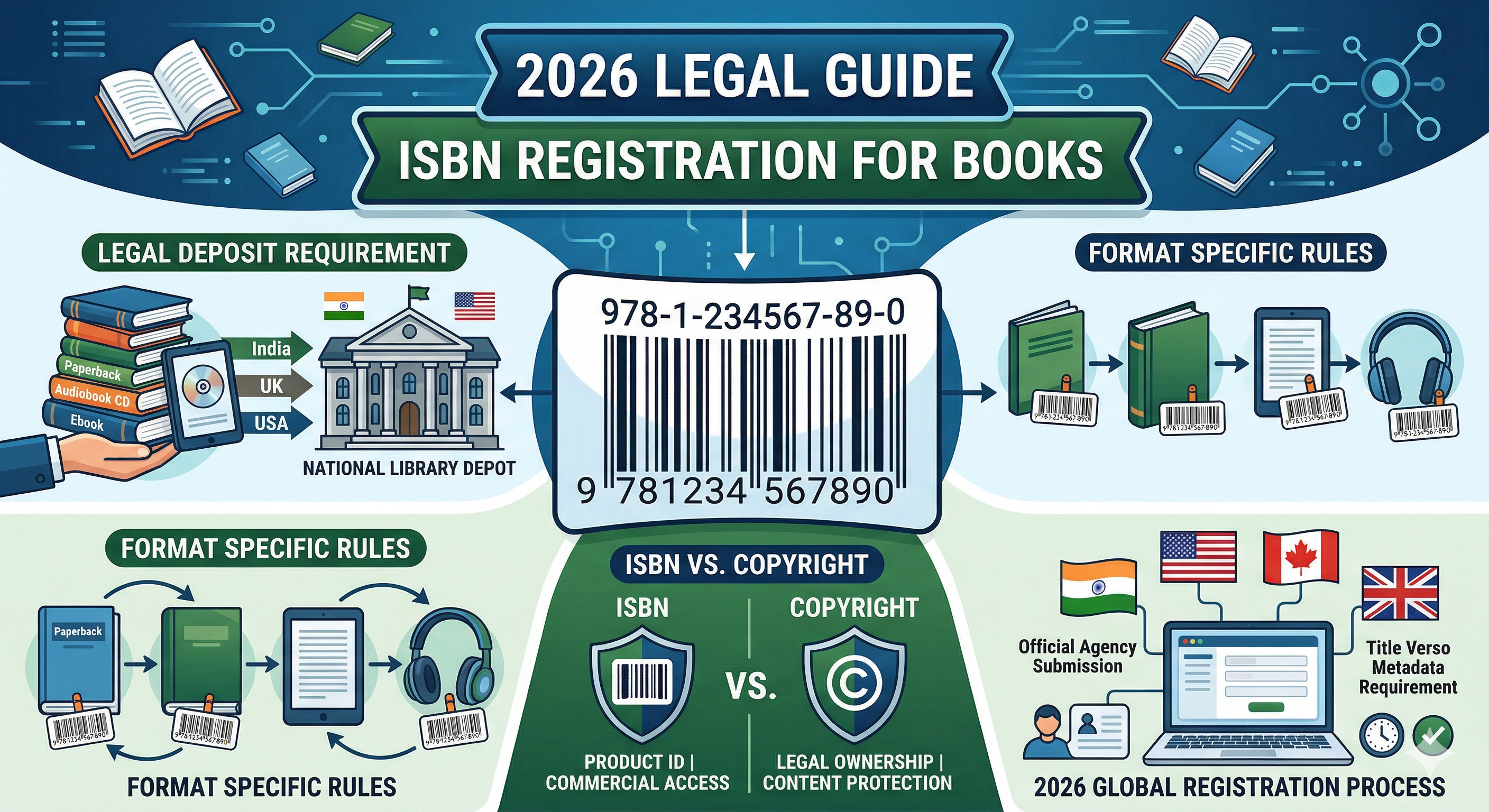
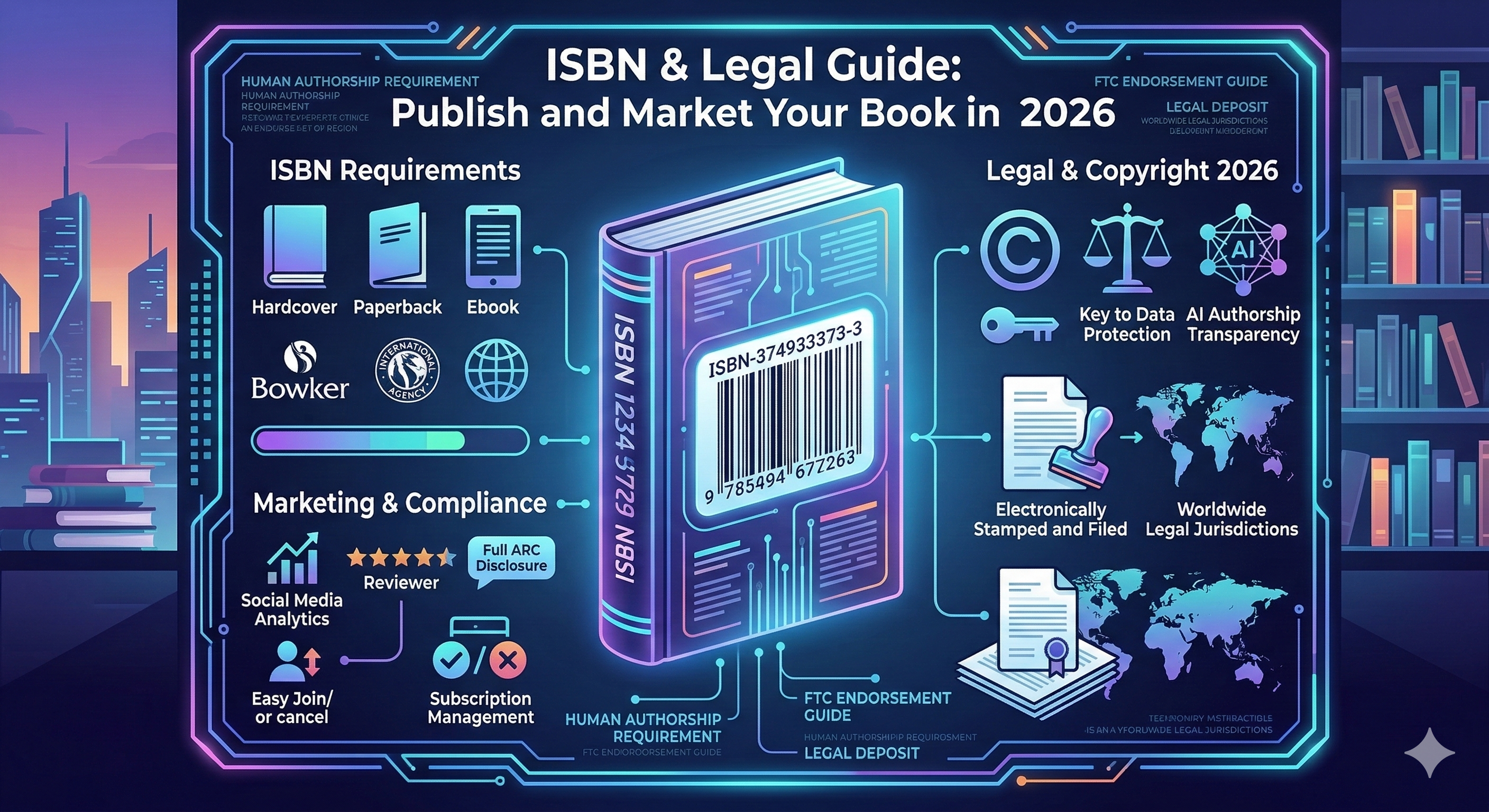
Each version of your book requires a different ISBN.
For example:
-
Paperback edition – 1 ISBN
-
Hardcover edition – 1 ISBN
-
eBook edition – 1 ISBN
-
Audiobook edition – 1 ISBN
This ensures that every format can be tracked and sold independently.
Legal Requirements for Publishing a Book
Publishing involves more than writing and printing. Authors must also ensure that their book follows basic legal guidelines.
Copyright Protection
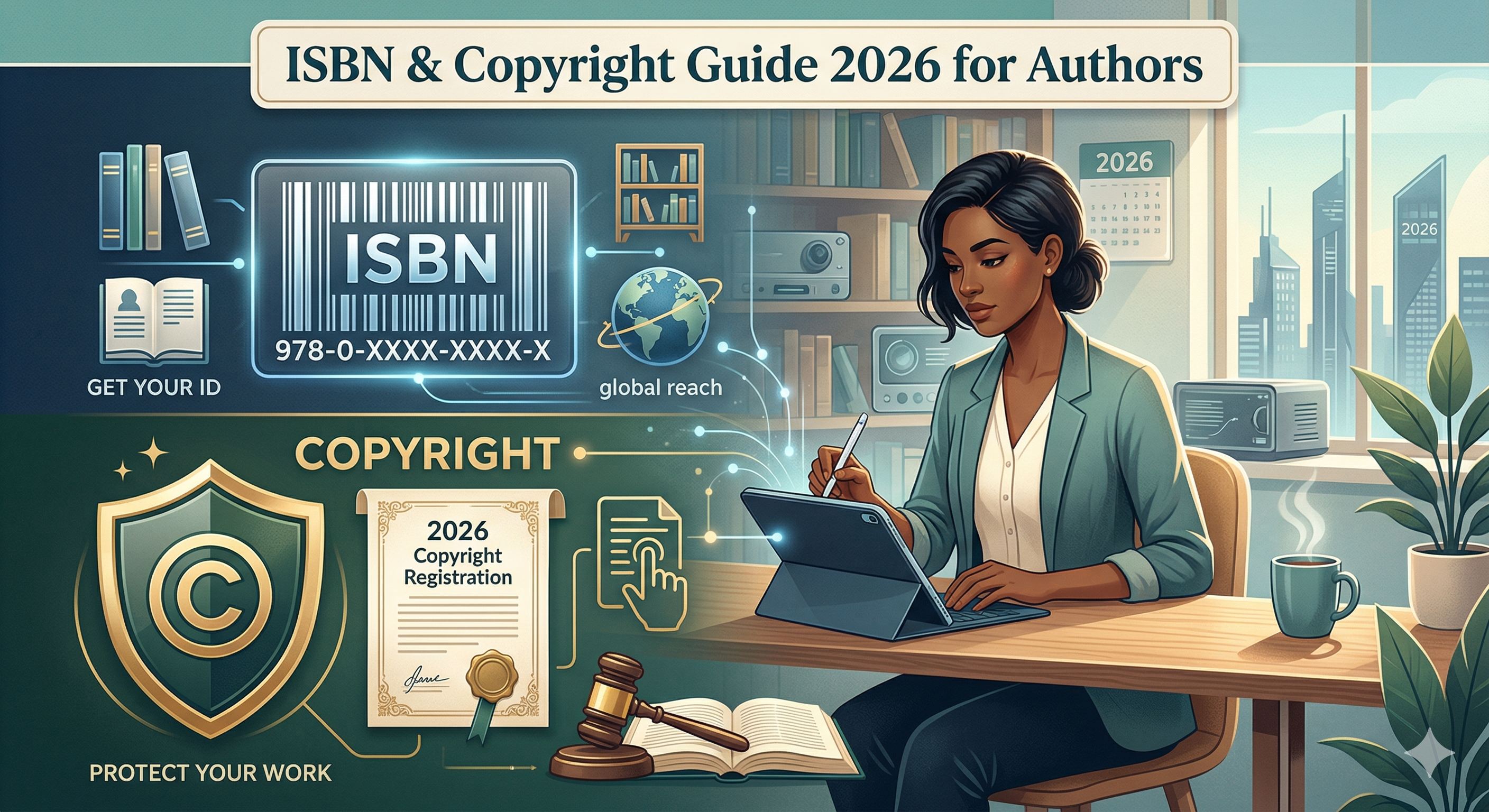
Copyright automatically protects original work once it is written. However, registering copyright provides stronger legal protection.
Copyright gives authors exclusive rights to:
-
Reproduce the work
-
Distribute copies
-
Create adaptations
-
License the content
If someone copies or distributes your book without permission, copyright law allows you to take legal action.
Publishing Rights
Authors should understand how publishing rights work before signing any agreement.
Common publishing rights include:
-
Print rights
-
Digital rights
-
Audio rights
-
Translation rights
-
Film or adaptation rights
Traditional publishers often request multiple rights. Self-published authors usually retain full control over their work.
Legal Disclaimers
Many books require disclaimers to protect the author and publisher.
Examples include:
-
Fiction disclaimers stating characters are fictional
-
Advice disclaimers for health or financial content
-
Liability disclaimers for instructional books
These notices reduce legal risks.
ISBN Ownership
When obtaining an ISBN for book publishing, the owner of the ISBN is listed as the publisher of record.
This matters because it determines:
-
Who controls book metadata
-
Who is recognized as the publisher
-
Who manages distribution rights
Authors using publishing services should confirm who owns the ISBN.
Step-by-Step Guide to ISBN for Book Publishing
Understanding the process makes publishing smoother and more professional.
Step 1: Finalize Your Manuscript
Before registering an ISBN, ensure your book is complete.
This includes:
-
Editing
-
Proofreading
-
Formatting
-
Cover design
ISBNs should only be assigned once the book format is finalized.
Step 2: Determine Book Formats
Decide which formats you will publish.
Common formats include:
-
Paperback
-
Hardcover
-
eBook
-
Audiobook
Each format requires its own ISBN.
Step 3: Register Your ISBN
Authors can register ISBNs through official national ISBN agencies or through publishing service providers.
The registration process typically requires:
-
Book title
-
Author name
-
Book format
-
Publication date
-
Publisher information
Once assigned, the ISBN remains permanently linked to that edition.
Step 4: Create Book Metadata
Metadata helps retailers and libraries understand and categorize your book.
Important metadata includes:
-
Title and subtitle
-
Author name
-
Book description
-
Genre and category
-
Publication date
-
ISBN number
Accurate metadata improves discoverability and search rankings in online stores.
Step 5: Add Barcode to Print Books
Print books must include a barcode on the back cover.
The barcode contains:
-
ISBN number
-
Retail price
This allows bookstores and retailers to scan and track the book.
Step 6: Submit Legal Deposits (if Required)
Some countries require publishers to send copies of published books to national libraries.
This process is called legal deposit.
It ensures that published works become part of the national archive.
Benefits of Proper ISBN and Legal Setup
Authors who follow correct publishing procedures gain several advantages.
Professional Publishing Credibility
Books with properly registered ISBNs appear more professional and trustworthy to retailers and readers.
Wider Distribution Opportunities
Retailers, libraries, and wholesalers rely on ISBN databases to manage inventory.
Without an ISBN, distribution options become limited.
Accurate Sales Tracking
ISBNs allow publishers to track book sales across multiple channels.
This data is useful for marketing strategies and revenue analysis.
Intellectual Property Protection
Copyright registration and legal documentation help protect the author's work from unauthorized use.
Best Practices for Authors in 2026
The publishing industry continues to evolve. Authors should follow modern best practices to stay competitive.
Register ISBN Early in the Publishing Process
Assigning an ISBN for book publishing early helps organize metadata and distribution planning.
Maintain Consistent Metadata
Ensure the same book information appears across all platforms.
Consistency improves discoverability and prevents confusion.
Protect Your Copyright
Register copyright before publication when possible. This simplifies enforcement if disputes occur.
Keep Publishing Records
Maintain documents for:
-
ISBN registration
-
copyright registration
-
publishing contracts
-
distribution agreements
Proper records protect authors in the long term.
Common Mistakes to Avoid
Many authors encounter problems because they overlook key legal steps.
Using the Same ISBN for Multiple Formats
Each book format must have its own ISBN. Reusing ISBNs can cause catalog errors.
Publishing Without Copyright Registration
While copyright exists automatically, failing to register it can complicate legal disputes.
Ignoring Publishing Agreements
Authors sometimes sign contracts without fully understanding rights transfers.
Always review publishing agreements carefully.
Incorrect Metadata
Mistakes in book information can reduce visibility and sales.
Double-check:
-
Author name spelling
-
publication dates
-
book categories
-
ISBN numbers
Skipping Legal Disclaimers
Certain book topics require disclaimers to avoid liability issues.
Ignoring them may expose authors to legal risks.
Why Choose a Professional Publishing Service
Handling ISBN registration, legal setup, formatting, and distribution can be overwhelming for new authors.
Professional publishing services simplify the process.
Expert Guidance
Experienced publishing teams understand ISBN regulations and legal requirements.
They ensure your book meets industry standards.
Accurate Metadata Management
Professionals help optimize metadata for discoverability across bookstores and digital platforms.
Legal Compliance
Publishing companies assist with:
-
ISBN registration
-
copyright documentation
-
legal disclaimers
-
publishing contracts
This reduces the risk of errors.
Distribution Support
Many publishing services provide access to major distribution networks, helping authors reach a larger audience.
The Role of ISBN in Book Marketing
ISBNs are not just legal identifiers. They also play a role in marketing and discoverability.
Retailers and libraries use ISBN data to organize books in databases.
When properly registered, ISBN metadata can help:
-
Improve bookstore listings
-
Enable library catalog inclusion
-
Support online search results
-
Track marketing performance
In modern publishing, discoverability is essential. ISBN registration ensures your book can be found and purchased globally.