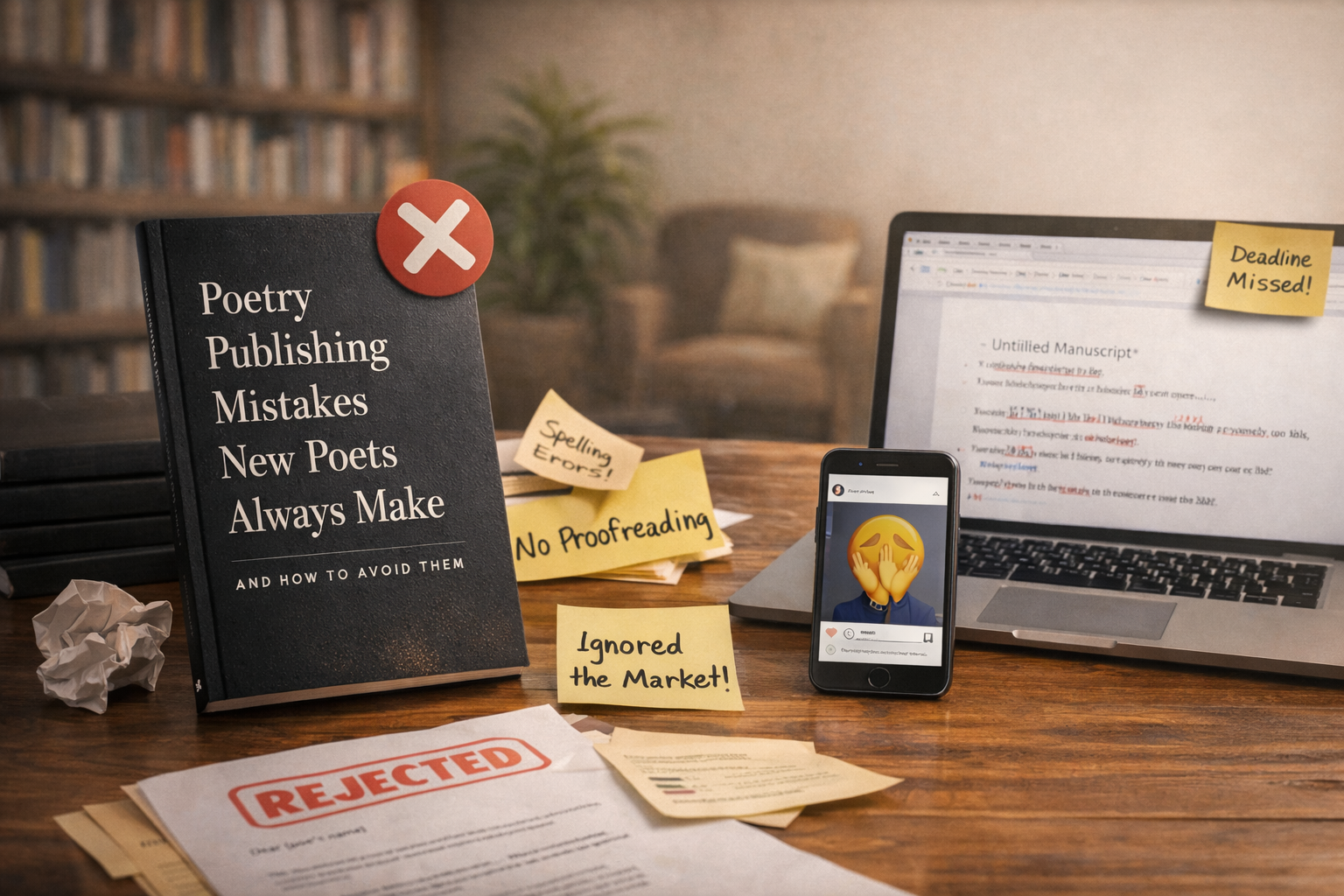
Poetry Publishing Mistakes New Poets Must Avoid
Publishing a poetry book is a dream for many writers. You spend months or even years crafting verses that come from your heart. Finally, you decide to share them with the world.
But here’s the hard truth: many talented poets struggle not because of bad writing, but because of poetry publishing mistakes.
New poets often rush into publishing without understanding editing, formatting, marketing, or distribution. As a result, their books fail to reach the right audience.
The good news? These mistakes are avoidable.
In this guide, you’ll learn the most common poetry publishing mistakes, how to avoid them, and how to publish your poetry professionally and confidently.
Why Publishing Poetry Is Different From Other Books
Poetry publishing is not the same as publishing a novel or business book.
Poetry books:
-
Have smaller but highly engaged audiences
-
Depend heavily on formatting and design
-
Require strong emotional branding
-
Often sell through niche marketing
Because of this, poets must be extra careful during the publishing process.
Step-by-Step Guide to Avoid Poetry Publishing Mistakes
Let’s break down the publishing journey into clear steps.
Step 1: Perfect Your Manuscript Before Publishing
One of the biggest poetry publishing mistakes is publishing too early.
Many poets think:
“My poems are personal, so they don’t need editing.”
That is not true.
Even the most emotional poetry needs:
-
Structural editing
-
Grammar and punctuation checks
-
Line-break consistency
-
Tone alignment
Why Editing Matters in Poetry
Poetry depends on rhythm, spacing, and silence. A misplaced comma or awkward line break can change the meaning completely.
Before publishing:
-
Get feedback from beta readers
-
Hire a professional editor
-
Revise multiple drafts
Publishing is permanent. Editing is your safety net.
Step 2: Understand Your Target Audience
Another common poetry publishing mistake is trying to write for “everyone.”
Poetry readers are usually niche-focused. For example:
-
Romantic poetry lovers
-
Spiritual poetry readers
-
Motivational poetry fans
-
Dark or modern poetry enthusiasts
If you don’t define your audience, your marketing becomes weak.
Ask yourself:
-
Who will emotionally connect with this book?
-
What age group am I targeting?
-
Where do they discover poetry?
Clarity improves sales.
Step 3: Design and Formatting Errors
Poetry formatting is delicate.
Poor formatting is one of the most damaging poetry publishing mistakes.
Common formatting issues:
-
Incorrect line spacing
-
Broken stanza alignment
-
Inconsistent font usage
-
Margin errors in print books
Poetry books must look elegant and intentional.
Print vs eBook Formatting
Print formatting must:
-
Maintain proper margins
-
Keep stanza breaks intact
-
Avoid awkward page splits
eBook formatting must:
-
Adapt to screen sizes
-
Keep line breaks stable
-
Avoid distorted alignment
Improper formatting makes a poetry book look amateur.
Step 4: Weak Book Cover Design
People do judge books by their covers.
Many new poets:
-
Use low-quality images
-
Overcrowd the design
-
Choose unreadable fonts
Your poetry cover should reflect the mood of your collection.
For example:
-
Soft pastel tones for romantic poetry
-
Minimal black-and-white for modern poetry
-
Bold colors for spoken-word style poetry
A professional cover builds trust instantly.
Step 5: Ignoring ISBN and Copyright Basics
Some poets upload their book without understanding publishing rights.
This is a serious poetry publishing mistake.
You must:
-
Register your copyright
-
Use a proper ISBN
-
Understand distribution agreements
Without this knowledge, you risk:
-
Losing control of your work
-
Facing royalty confusion
-
Limiting distribution options
Professional guidance prevents these issues.
Step 6: Skipping Professional Book Description Writing
Your book description sells your poetry.
Yet many poets:
-
Write vague summaries
-
Use overly dramatic language
-
Forget to include keywords
A strong poetry description should:
-
Explain the theme
-
Highlight emotional impact
-
Speak directly to the reader
-
Include relevant search terms
Think of it as the trailer for your poetry book.
Step 7: Not Building an Author Brand
Publishing a poetry book without building your brand is another major poetry publishing mistake.
Readers don’t just buy poetry.
They connect with poets.
Build your brand through:
-
Social media presence
-
Poetry readings
-
Email newsletters
-
A personal website
Consistency builds credibility.
Common Poetry Publishing Mistakes to Avoid
Let’s summarize the most frequent mistakes new poets make:
1. Publishing Without Professional Editing
This damages credibility immediately.
2. Using DIY Formatting Without Experience
It may look fine on your screen but break in print.
3. Choosing the Wrong Publishing Path
Traditional, hybrid, and self-publishing all have pros and cons.
4. Ignoring Marketing
Many poets think:
“Good poetry will sell itself.”
It won’t.
5. Setting the Wrong Price
Poetry books are usually priced lower than novels. Overpricing reduces sales.
6. Launching Without a Plan
No pre-orders, no social media buildup, no email announcements.
A launch strategy matters.
Benefits of Publishing Poetry the Right Way
Avoiding poetry publishing mistakes brings clear advantages.
Higher Credibility
A well-edited and professionally designed book builds trust.
Better Reviews
Readers appreciate clean formatting and thoughtful presentation.
Stronger Sales
Clear marketing and audience targeting improve conversions.
Long-Term Author Growth
Professional publishing supports your future books.
Publishing correctly once makes future launches easier.
Best Practices for New Poets
Here are practical best practices you should follow:
-
Revise your manuscript at least three times
-
Hire a poetry-specific editor
-
Invest in professional cover design
-
Use proper print and eBook formatting
-
Write an SEO-friendly book description
-
Build audience before launch
-
Plan a 30-day marketing campaign
Small professional steps create big results.
Traditional vs Self-Publishing for Poets
Understanding your publishing route is crucial.
Traditional Publishing
Pros:
-
Established credibility
-
Professional team
-
Wider bookstore distribution
Cons:
-
Highly competitive
-
Long waiting periods
-
Lower royalty percentages
Self-Publishing
Pros:
-
Full creative control
-
Faster publishing
-
Higher royalty rates
Cons:
-
You manage everything
-
Requires marketing effort
-
Quality depends on your team
Many new poets choose self-publishing but underestimate the work involved. That’s where mistakes happen.
Why Many Poetry Books Fail in the Market
Even talented poets struggle with sales.
The main reasons include:
-
Poor keyword optimization
-
No online presence
-
Weak Amazon category selection
-
No early reviews
-
Limited promotional activity
Publishing is only the first step. Visibility drives success.
Why Choose a Professional Publishing Company
If you want to avoid poetry publishing mistakes completely, professional support makes a difference.
A professional publishing company provides:
Expert Editing
Editors who understand poetic rhythm and structure.
Professional Formatting
Perfect alignment for print and digital formats.
Strategic Cover Design
Market-based design, not just aesthetic preference.
Metadata and SEO Optimization
Proper keywords, categories, and discoverability.
Distribution Guidance
Clarity on global platforms and royalty systems.
Most importantly, professional support saves time, stress, and costly errors.
How a Structured Publishing Process Works
Here is what a professional publishing workflow typically looks like:
-
Manuscript evaluation
-
Developmental and line editing
-
Formatting for print and eBook
-
Cover design creation
-
ISBN registration
-
Platform setup
-
Metadata optimization
-
Launch strategy planning
This structured approach eliminates most poetry publishing mistakes.
Final Thoughts: Publish With Purpose, Not Pressure
Writing poetry is emotional. Publishing poetry is strategic.
Many new poets rush into publishing because they are excited. However, excitement without preparation leads to avoidable errors.
The biggest poetry publishing mistakes happen when poets:
-
Skip editing
-
Ignore formatting
-
Avoid marketing
-
Underestimate branding
Take your time.
Treat your poetry like a long-term creative investment, not a quick release.
When done correctly, poetry publishing can:
-
Build your reputation
-
Grow a loyal readership
-
Open speaking opportunities
-
Create sustainable income
Avoid mistakes. Choose professionalism. Publish with purpose.