Printing & Distribution Guide 173: Complete Strategy to Successfully Publish and Market Your Book in 2026
Introduction
Publishing a book is no longer the biggest challenge. Getting it printed correctly and distributed effectively is where most authors struggle.
Many books fail not because of poor writing, but due to weak printing decisions and poor distribution planning. Authors either overspend on printing or fail to reach readers because their book is not available in the right places.
This guide gives you a complete book printing and distribution strategy for 2026. You’ll learn how to choose the right printing method, reduce costs, and distribute your book across both online and offline channels.
Understanding Book Printing and Distribution
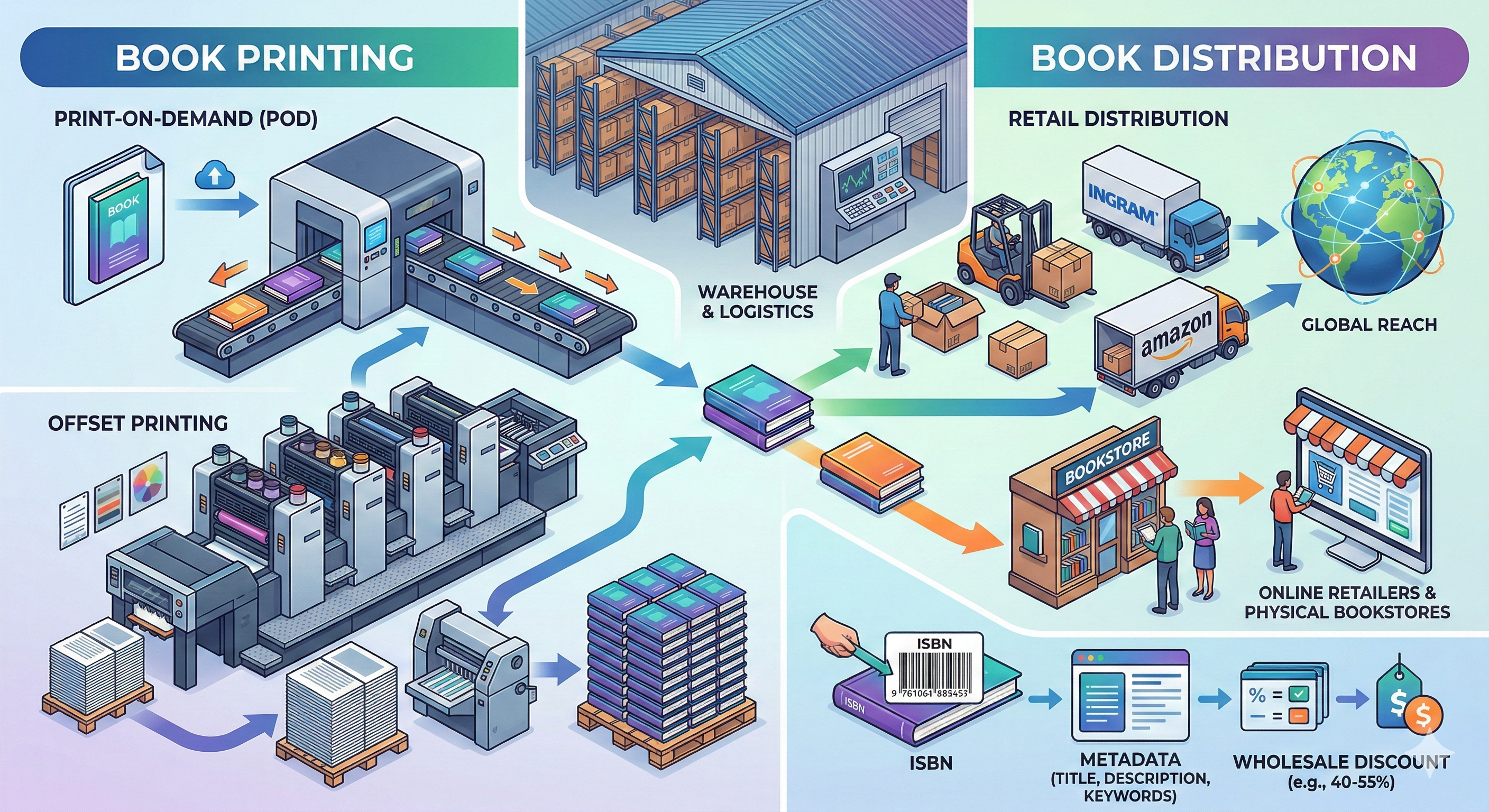
Before diving into steps, it’s important to understand the two core components:
- Printing: The process of producing physical copies of your book
- Distribution: Making your book available to readers through various channels
A successful strategy connects both. Printing without distribution leads to unsold stock. Distribution without proper printing leads to quality and availability issues.
Step-by-Step Book Printing Strategy
H2: Step 1 – Choose the Right Printing Method
Your first decision affects cost, inventory, and flexibility.
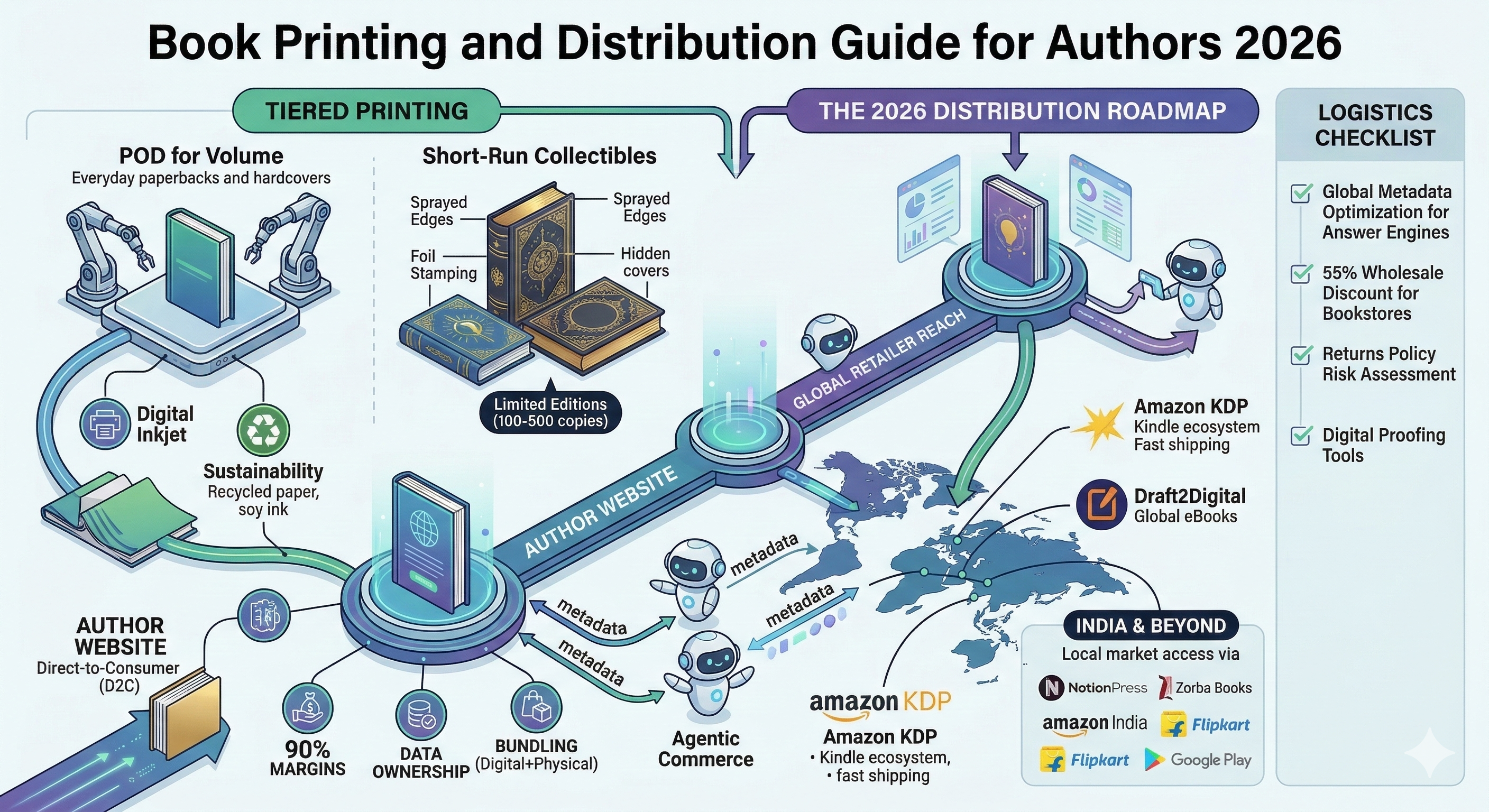
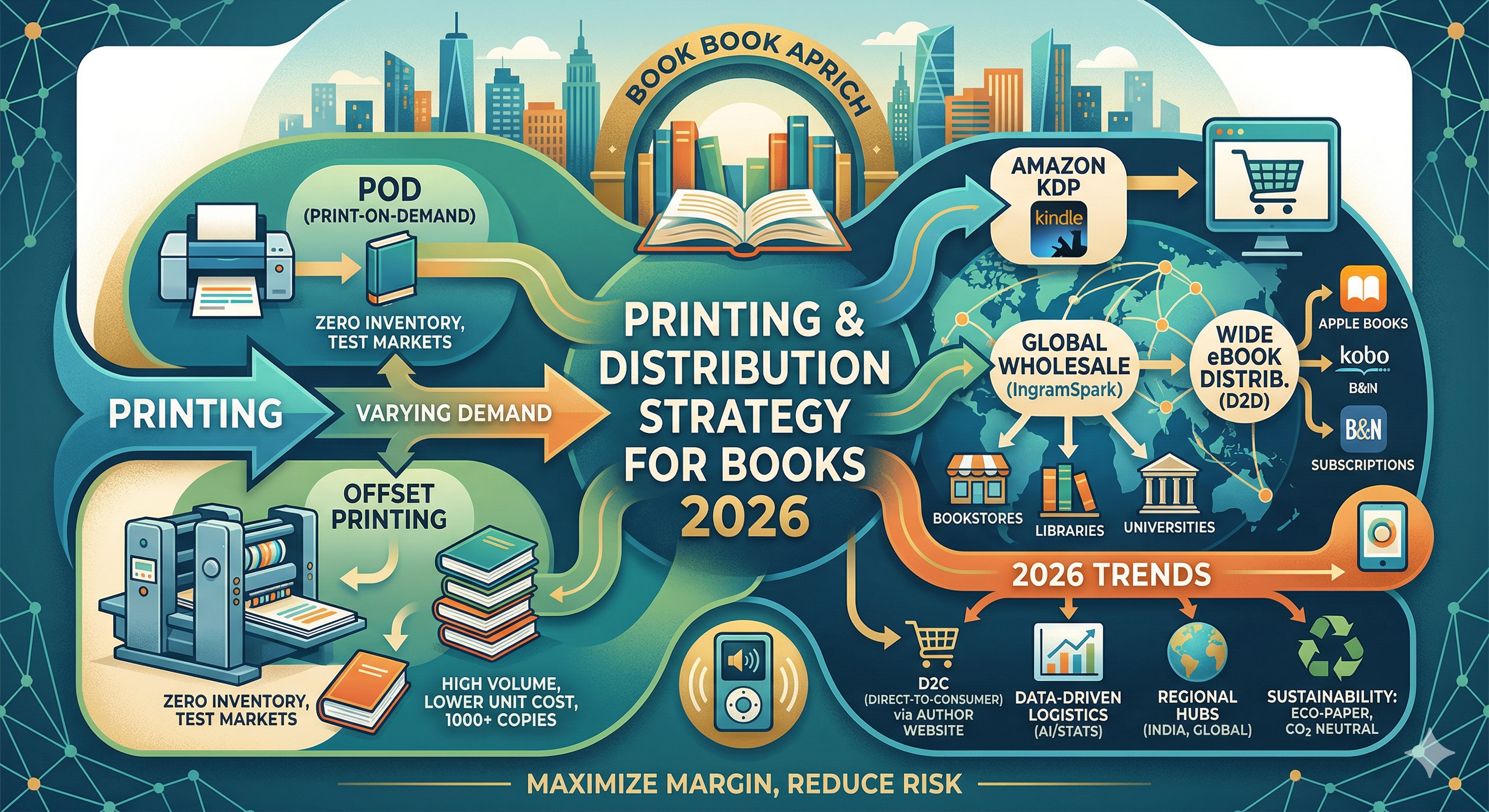
H3: Print-on-Demand (POD)
Print-on-demand is the most popular method in 2026.
How it works:
Books are printed only when someone orders them.
Advantages:
- No upfront inventory cost
- Low financial risk
- Easy to update content
Best for:
- New authors
- Testing the market
- Low to medium sales volume
H3: Offset Printing
Offset printing involves printing large quantities at once.
Advantages:
- Lower cost per copy (in bulk)
- High-quality printing
- Better profit margins
Disadvantages:
- High upfront investment
- Storage required
Best for:
- Established authors
- Bulk sales (schools, events)
H2: Step 2 – Select Book Specifications
The physical quality of your book matters.
H3: Key Elements to Decide
- Trim size (book dimensions)
- Paper quality (GSM, texture)
- Binding type (paperback, hardcover)
- Cover finish (matte or glossy)
Tip:
Choose specifications based on your genre. For example:
- Fiction → lightweight paper
- Coffee table books → premium glossy paper
H2: Step 3 – Calculate Printing Costs
A smart book printing and distribution strategy always starts with cost clarity.
H3: Factors Affecting Cost
- Page count
- Paper quality
- Printing method
- Quantity
- Color vs black & white
Cost-saving tips:
- Use standard trim sizes
- Avoid unnecessary color pages
- Start with small batches (if unsure of demand)
H2: Step 4 – Ensure Print Quality
Poor printing can damage your brand instantly.
H3: Checklist Before Final Print
- Check alignment and margins
- Ensure high-resolution images (300 DPI)
- Proofread final print copy
- Order a sample before bulk printing
Step-by-Step Book Distribution Strategy
H2: Step 5 – Choose Distribution Channels
A strong book printing and distribution strategy requires multi-channel distribution.
H3: Online Distribution
- E-commerce platforms
- Self-publishing platforms
- Author websites
Benefits:
- Global reach
- Automated sales
- Lower overhead
H3: Offline Distribution
- Bookstores
- Libraries
- Events and book fairs
Benefits:
- Local visibility
- Physical browsing experience
- Better brand credibility
H2: Step 6 – Use Aggregators and Distributors
Instead of managing everything manually, you can use distribution services.
H3: What They Do
- List your book across multiple platforms
- Handle logistics and shipping
- Manage retailer relationships
Result:
Wider reach with less effort.
H2: Step 7 – Set Pricing Strategically
Pricing directly impacts sales and profitability.
H3: Pricing Considerations
- Printing cost
- Distribution fees
- Market competition
- Target audience
Tip:
Balance affordability and profit. A very low price may hurt perceived value.
H2: Step 8 – Manage Inventory Smartly
Inventory mismanagement leads to losses.
H3: Best Practices
- Use POD to avoid overstocking
- Track sales trends
- Print in batches for bulk orders
Benefits of a Strong Printing & Distribution Strategy
A well-planned book printing and distribution strategy offers:
- Cost efficiency: Avoid unnecessary expenses
- Wider reach: Access both online and offline readers
- Professional quality: Builds trust with readers
- Scalability: Easily expand as demand grows
- Better profits: Optimize pricing and production
Best Practices for 2026
The publishing industry continues to evolve. Follow these practices to stay ahead:
H3: Go Hybrid
Combine:
- Print-on-demand for flexibility
- Offset printing for bulk demand
H3: Focus on Global Distribution
Readers are not limited to your region anymore.
- Use international platforms
- Enable worldwide shipping
H3: Optimize for Online Discovery
Even physical books depend on online visibility.
- Use strong metadata
- Write compelling descriptions
- Add relevant keywords
H3: Test Before Scaling
Do not invest heavily at the beginning.
- Start small
- Analyze sales
- Scale gradually
Common Mistakes to Avoid
Many authors fail due to avoidable mistakes.
H3: Overprinting
Printing too many copies leads to:
- Storage issues
- Financial loss
H3: Ignoring Distribution Planning
Printing without a distribution plan results in unsold books.
H3: Poor Quality Control
Low-quality printing damages your credibility.
H3: Wrong Pricing Strategy
Too high → fewer sales
Too low → low profit
H3: Limited Distribution Channels
Relying on one platform limits your reach.
Why Choose a Professional Publishing Service
Managing printing and distribution alone can be overwhelming.
H3: What Professionals Offer
- Expert guidance on printing methods
- Access to reliable printers
- Established distribution networks
- Cost optimization
- End-to-end management
H3: Advantages of Professional Services
- Saves time and effort
- Reduces costly mistakes
- Ensures high-quality output
- Improves market reach