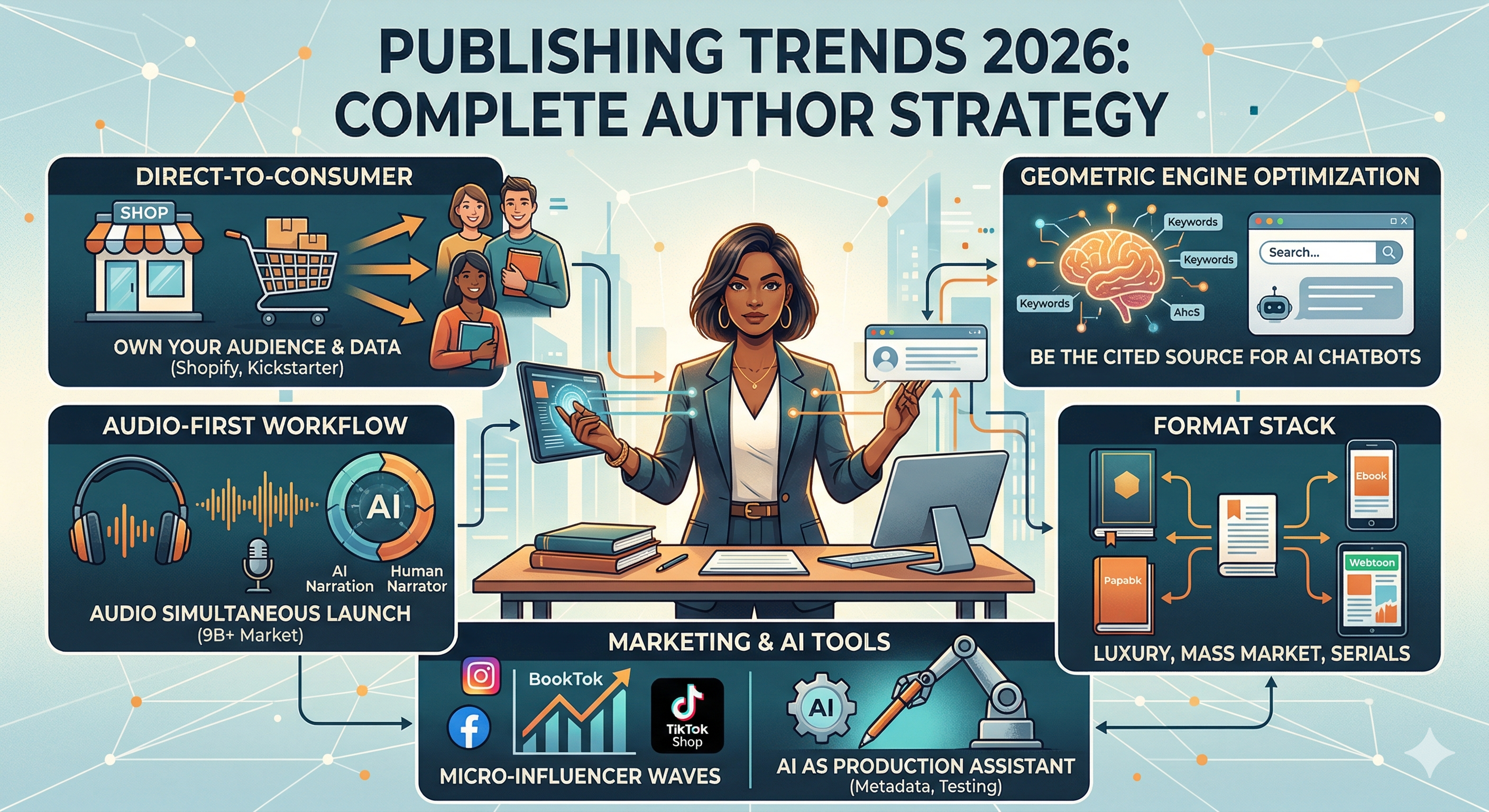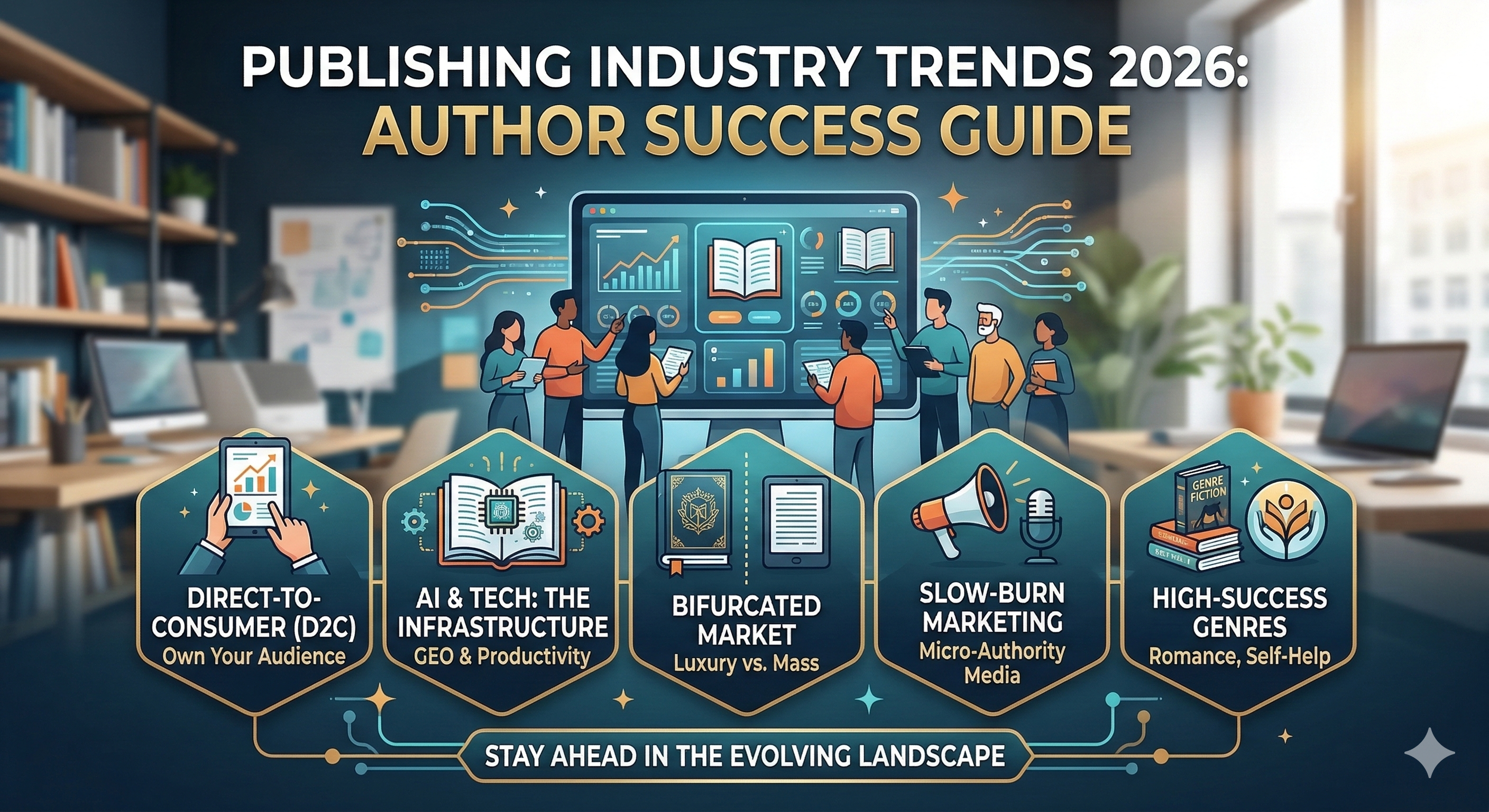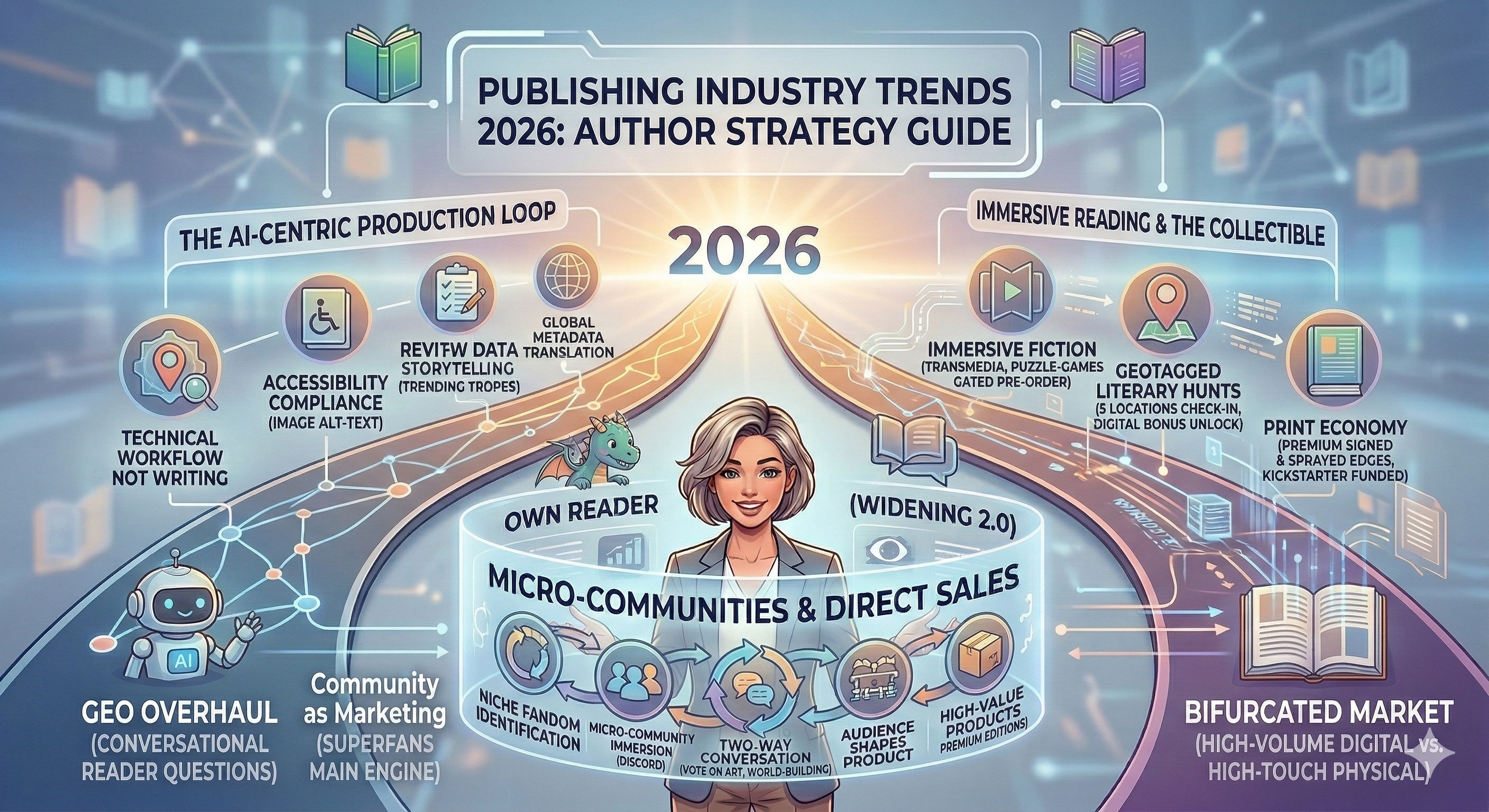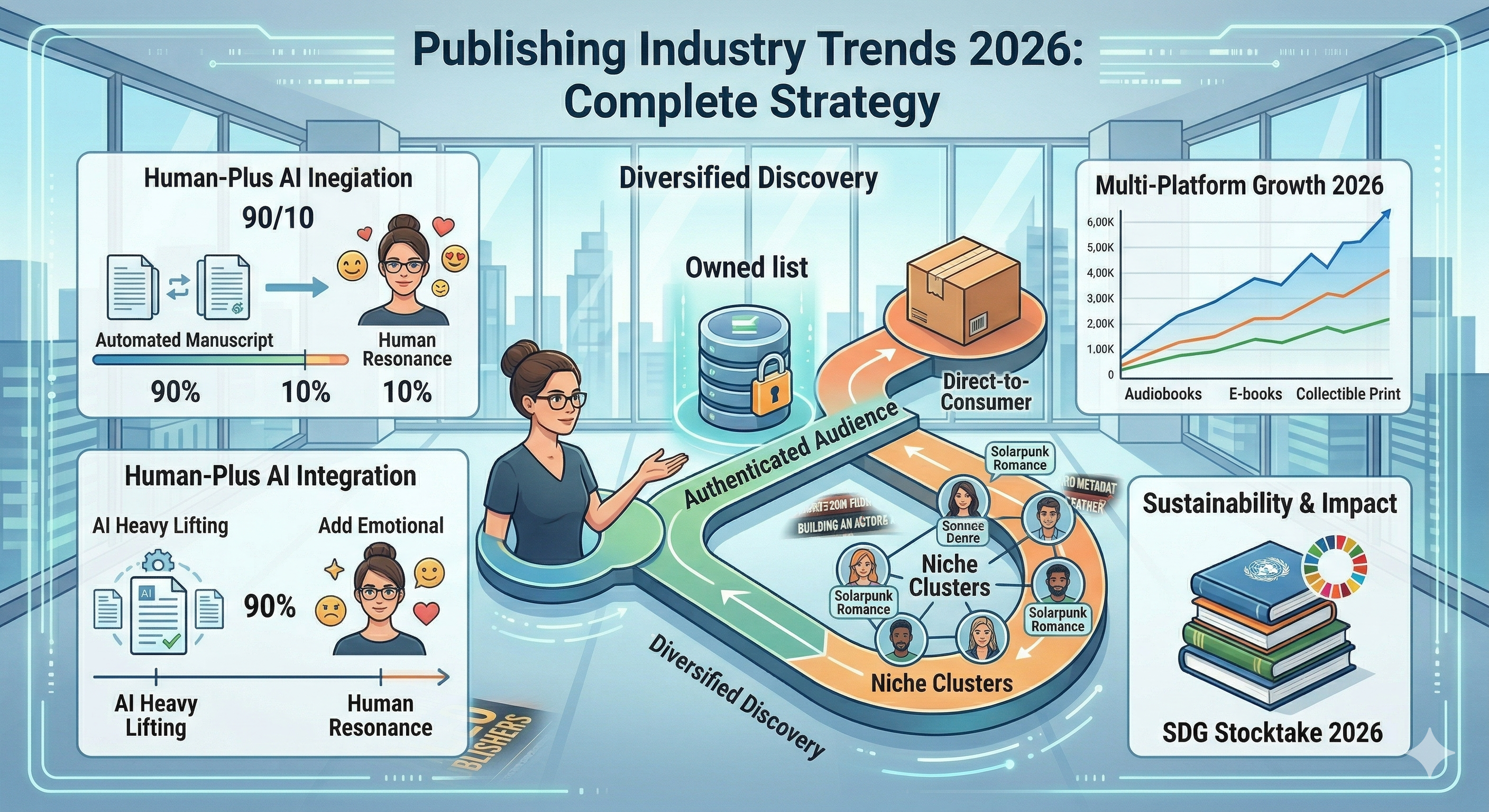
Publishing Industry Trends 2026: Complete Strategy
Introduction
The publishing world is changing faster than ever. New technology, shifting reader habits, and rising competition have made it harder for authors to stand out. Many writers struggle not because their books are bad, but because they follow outdated publishing methods.
That’s where understanding Publishing Industry Trends 2026 becomes essential. When you align your strategy with current trends, you increase your chances of getting noticed, selling more books, and building a long-term author brand.
This guide breaks down the latest trends and gives you a step-by-step strategy to publish and market your book successfully in 2026.
Understanding Publishing Industry Trends 2026
Before jumping into strategy, you need a clear view of what’s shaping the industry today.
Key Trends Driving the Industry
1. Growth of Self-Publishing
Self-publishing is no longer a backup option. It is now a primary path for many successful authors.
- More control over content and pricing
- Faster publishing timelines
- Higher royalty potential
2. Rise of Digital Formats
Ebooks and audiobooks continue to grow rapidly.
- Readers prefer convenience and portability
- Audiobooks are expanding due to busy lifestyles
- Subscription platforms are influencing buying habits
3. Data-Driven Marketing
Publishing is becoming more analytical.
- Authors track reader behavior
- Campaigns are optimized using real data
- Targeted ads outperform general promotions
4. Social Media as a Sales Engine
Platforms like Instagram, YouTube, and short-form video apps play a big role.
- Book discovery often happens online
- Viral content can boost sales quickly
- Author branding matters more than ever
5. Hybrid Publishing Models
Many authors combine traditional and self-publishing approaches.
- Traditional for credibility
- Self-publishing for flexibility
- Better control over career growth
Step-by-Step Strategy to Publish and Market Your Book
To succeed in 2026, you need a structured plan. Follow these steps carefully.
Step 1: Choose the Right Publishing Path
Start by deciding how you want to publish your book.
Options Available
-
Traditional Publishing
- Requires agents and approvals
- Strong credibility
- Slower process
-
Self-Publishing
- Full control
- Faster launch
- Requires marketing effort
-
Hybrid Publishing
- Mix of both approaches
- Balanced control and support
Tip: For new authors, self-publishing is often the fastest way to enter the market.
Step 2: Create a High-Quality Manuscript
No marketing strategy can fix a weak book.
Focus on:
- Strong structure and clarity
- Engaging storytelling or clear information
- Professional editing
Editing Checklist
- Grammar and spelling
- Flow and readability
- Consistency in tone
Step 3: Design a Professional Book Package
Your book’s presentation directly impacts sales.
Essential Elements
- Cover design
- Book formatting
- Title and subtitle
Best Practices
- Keep the cover simple and bold
- Use readable fonts
- Make sure it looks good as a thumbnail
Step 4: Optimize Your Book for Search
SEO is no longer just for blogs. It applies to books too.
Key Areas to Optimize
- Book title
- Subtitle
- Description
- Keywords
Example Optimization Strategy
- Include your main keyword naturally
- Write a compelling description
- Use categories strategically
Step 5: Build an Author Platform
In 2026, authors are brands.
What You Need
- Website or landing page
- Email list
- Social media presence
Why It Matters
- Direct communication with readers
- Better long-term sales
- Stronger personal brand
Step 6: Launch Your Book Strategically
A good launch can create momentum.
Pre-Launch Activities
- Teaser content
- Cover reveal
- Early reviews
Launch Day Strategy
- Announce on all platforms
- Run limited-time promotions
- Engage with readers
Step 7: Use Multi-Channel Marketing
Don’t rely on one platform.
Effective Channels
- Social media marketing
- Email campaigns
- Paid ads
- Influencer collaborations
Content Ideas
- Behind-the-scenes posts
- Writing journey
- Reader testimonials
Step 8: Focus on Long-Term Growth
Publishing is not a one-time activity.
Build a System
- Release books consistently
- Grow your audience
- Improve marketing skills
Benefits of Following Publishing Industry Trends 2026
Adapting to trends gives you a competitive advantage.
Key Benefits
- Better visibility in crowded markets
- Higher sales potential
- Stronger reader engagement
- Faster publishing timelines
- More control over your career
Best Practices for Success
To maximize your results, follow these proven practices.
1. Keep Learning
Publishing trends change quickly. Stay updated.
2. Focus on Your Audience
Understand what your readers want.
3. Invest in Quality
Editing, design, and marketing matter.
4. Be Consistent
Success comes from regular effort.
5. Track Your Results
Use data to improve your strategy.
Common Mistakes to Avoid
Many authors fail because of avoidable mistakes.
1. Ignoring Market Research
Writing without understanding demand leads to poor sales.
2. Poor Cover Design
A weak cover reduces clicks and sales.
3. Skipping Editing
Errors damage credibility.
4. No Marketing Plan
Publishing alone does not bring readers.
5. Giving Up Too Early
Success takes time and persistence.
Why Choose a Professional Publishing Service
While self-publishing offers control, professional services can improve results.
What They Offer
- Expert editing
- High-quality design
- Marketing support
- Distribution guidance
When to Consider It
- If you lack technical skills
- If you want faster results
- If you aim for professional-level quality
Key Advantage
You focus on writing while experts handle production and marketing.
Future Outlook of Publishing Industry Trends 2026
Looking ahead, the industry will continue evolving.
Expected Developments
- More AI-assisted tools (editing, marketing insights)
- Growth in audiobook consumption
- Increased competition among authors
- Greater importance of personal branding
Authors who adapt early will have a clear advantage.