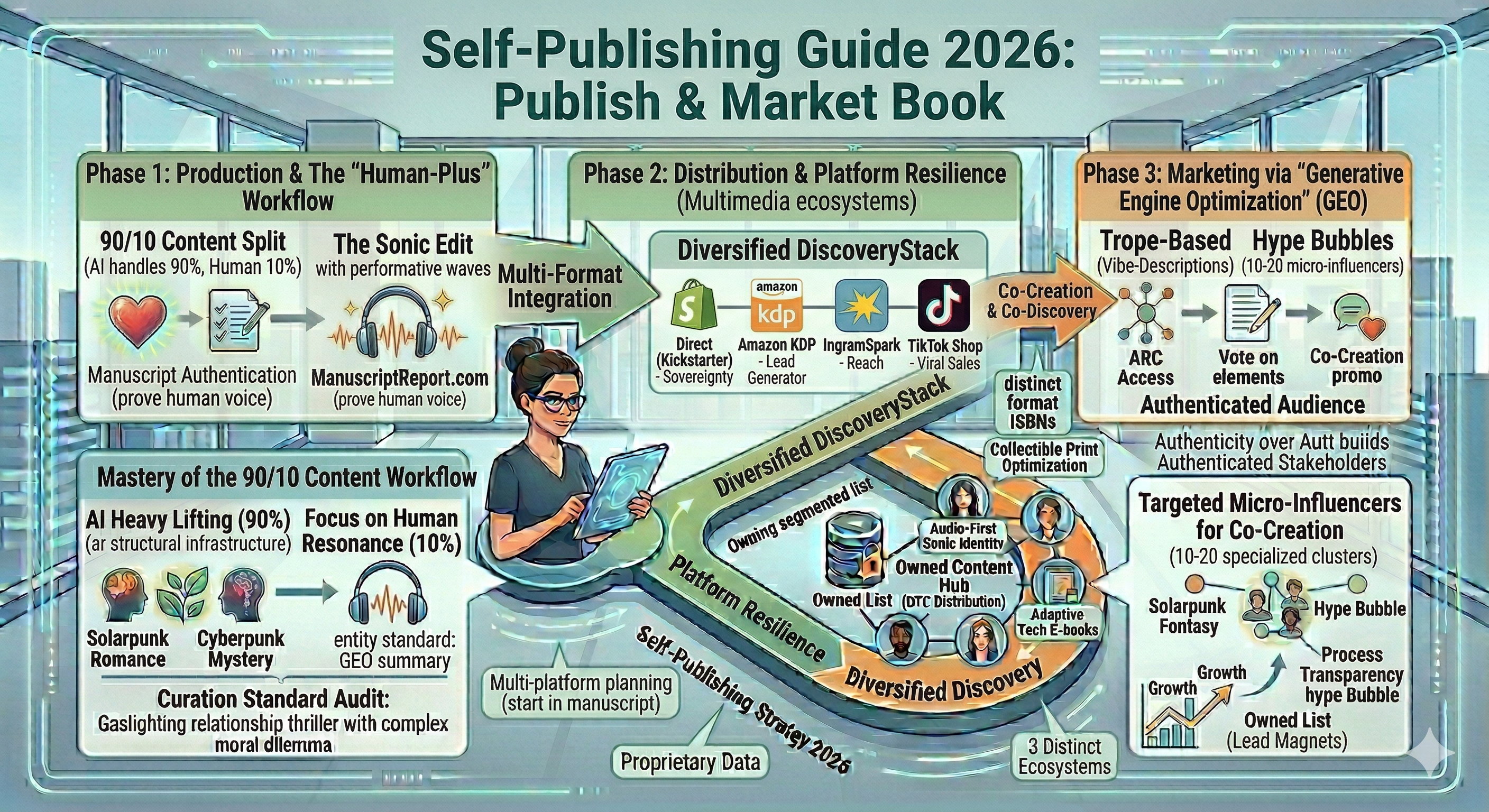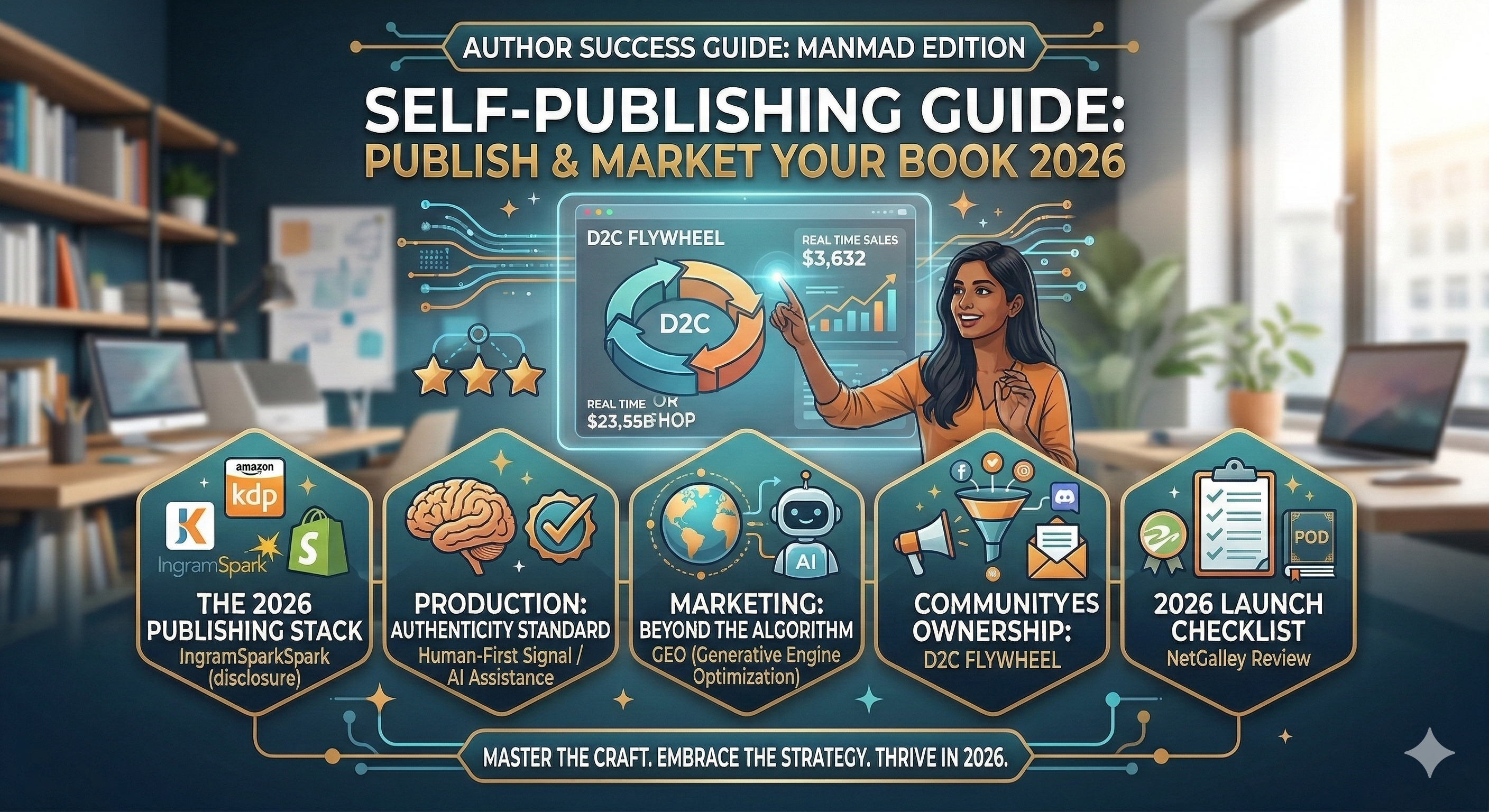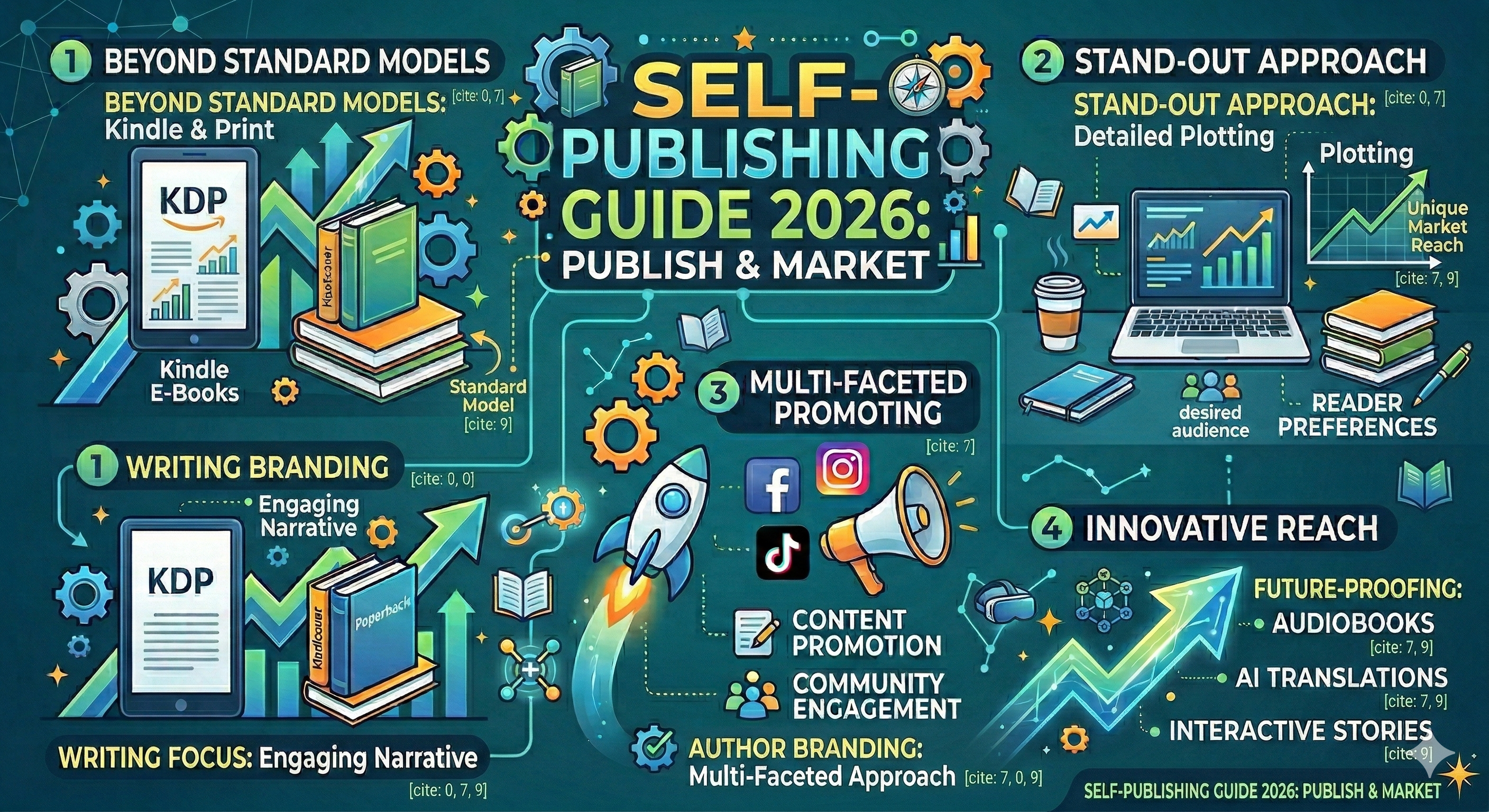
Self-Publishing Guide 2026: Publish & Market
Introduction: Why Authors Need a Clear Plan in 2026
Publishing a book has never been easier. Yet, building a successful book career has never been more competitive.
Thousands of new titles launch every day. Readers have endless choices. Without a clear strategy, even a great book can go unnoticed.
That’s why this Self-Publishing Guide 2026 gives you a complete roadmap—from idea to launch to long-term sales. If you follow the steps carefully, you can turn your manuscript into a professionally published and well-marketed book.
Let’s break it down step by step.
Step 1: Validate Your Book Idea
Before you publish, make sure there is demand.
Research Your Market
Start by asking:
-
Who is your target reader?
-
What problem does your book solve?
-
What similar books already exist?
Look at:
-
Bestselling titles in your genre
-
Reader reviews (to identify gaps)
-
Current publishing trends
This research helps you position your book correctly.
Define Your Unique Selling Point (USP)
What makes your book different?
It could be:
-
A fresh perspective
-
A niche topic
-
A strong author voice
-
Actionable frameworks or tools
Clarity here improves both writing and marketing.
Step 2: Write and Refine Your Manuscript
A powerful idea means little without strong execution.
Focus on Structure
Ensure your book has:
-
A compelling introduction
-
Logical chapter flow
-
Clear takeaways
For nonfiction, include:
-
Examples
-
Case studies
-
Step-by-step guidance
For fiction, focus on:
-
Strong character arcs
-
Consistent pacing
-
Emotional engagement
Edit Professionally
Never skip editing. In 2026, readers expect polished books.
You need:
-
Developmental editing (structure and clarity)
-
Copyediting (grammar and consistency)
-
Proofreading (final polish)
Professional editing builds credibility and prevents negative reviews.
Step 3: Design a Professional Book Package
Your book must look as good as it reads.
Book Cover Design
Your cover is your first marketing tool.
It should:
-
Match your genre
-
Be clear in thumbnail size
-
Use readable typography
-
Create emotional impact
A weak cover reduces clicks. A strong cover increases sales instantly.
Interior Formatting
Formatting must be:
-
Clean and consistent
-
Compatible with print and ebook platforms
-
Easy to read
Proper formatting improves reader experience and reviews.
Step 4: Choose the Right Publishing Platform
Selecting the right platform is critical in any Self-Publishing Guide 2026.
Popular Publishing Platforms
Authors often publish on:
-
Amazon Kindle Direct Publishing (KDP)
-
IngramSpark
-
Draft2Digital
Each platform offers:
-
Global distribution
-
Print-on-demand services
-
Ebook publishing
Choose based on:
-
Your distribution goals
-
Print quality preferences
-
Royalty structure
Many authors use a combined approach for maximum reach.
Step 5: Price Your Book Strategically
Pricing affects both visibility and profit.
Ebook Pricing Strategy
Common ebook price ranges:
-
$2.99–$4.99 for new authors
-
Higher pricing for established brands
Lower pricing may boost:
-
Sales volume
-
Reviews
-
Ranking
Print Book Pricing
Consider:
-
Printing cost
-
Genre expectations
-
Competitor pricing
Balance affordability with profitability.
Step 6: Build Your Author Platform Before Launch
Marketing does not start on launch day. It starts months earlier.
Create an Author Website
Your website should include:
-
About the author
-
Book details
-
Email signup form
-
Contact information
An email list is one of your strongest marketing assets.
Grow Your Audience
Use:
-
Blogging
-
Social media
-
Guest interviews
-
Newsletter content
Consistency builds trust.
Step 7: Plan a Strategic Book Launch
A strong launch can create momentum that lasts for months.
Pre-Launch Phase
-
Reveal your cover
-
Offer advance reader copies (ARCs)
-
Collect early reviews
-
Announce launch date
Launch Week Strategy
-
Run limited-time discounts
-
Send email announcements
-
Host live sessions or webinars
-
Encourage honest reviews
The goal is to concentrate attention in a short period.
Step 8: Long-Term Book Marketing in 2026
Publishing is only the beginning.
A true Self-Publishing Guide 2026 must focus on sustainable marketing.
Use Paid Advertising Carefully
Platforms include:
-
Amazon Ads
-
Facebook Ads
-
Book promotion sites
Start small. Test different audiences. Scale what works.
Content Marketing
Create:
-
Blog posts related to your topic
-
Short educational videos
-
Podcast appearances
Content builds authority and keeps your book visible.
Build Partnerships
Collaborate with:
-
Influencers in your niche
-
Other authors
-
Online communities
Partnerships expand your reach organically.
Benefits of Self-Publishing in 2026
Self-publishing offers powerful advantages.
Full Creative Control
You decide:
-
Cover design
-
Title
-
Pricing
-
Marketing approach
Higher Royalty Rates
Traditional publishing offers smaller royalties. Self-publishing can offer significantly higher percentages per sale.
Faster Publishing Timeline
Instead of waiting years, you can publish in months.
Ownership of Rights
You keep:
-
Translation rights
-
Film rights
-
Audio rights
This allows future expansion opportunities.
Best Practices for Success
To maximize results, follow these principles:
-
Focus on quality over speed
-
Invest in professional services
-
Build your email list early
-
Think long term, not just launch week
-
Analyze sales data and adjust strategy
Success comes from consistency, not shortcuts.
Common Mistakes to Avoid
Even talented authors make these errors.
Skipping Professional Editing
This leads to negative reviews and lost credibility.
Poor Cover Design
Readers judge books by covers—especially online.
Ignoring Metadata Optimization
Keywords, categories, and descriptions matter. Choose them carefully to improve discoverability.
Publishing Without Marketing
A book without marketing rarely succeeds.
Giving Up Too Early
Many authors stop promoting after one month. Real growth takes time.
Why Choose a Professional Publishing Service?
While self-publishing gives control, professional guidance increases success rates.
A reputable publishing service can provide:
-
Professional editing
-
Custom cover design
-
Interior formatting
-
Metadata optimization
-
Marketing strategy planning
-
Distribution support
Instead of learning everything through trial and error, you gain structured expertise.
This saves:
-
Time
-
Costly mistakes
-
Frustration
More importantly, it positions your book as a serious, high-quality product.
Self-Publishing Trends to Watch in 2026
To stay competitive, understand emerging shifts.
Growth of Audiobooks
Audio consumption continues to rise. Consider producing an audiobook version.
Direct-to-Reader Sales
More authors are selling directly through their websites to increase profit margins.
AI-Assisted Tools (Used Carefully)
While tools can help with productivity, originality and human creativity remain essential.
Community-Based Marketing
Private reader groups and exclusive content memberships are gaining popularity.
Adapting to trends keeps your strategy modern and effective.