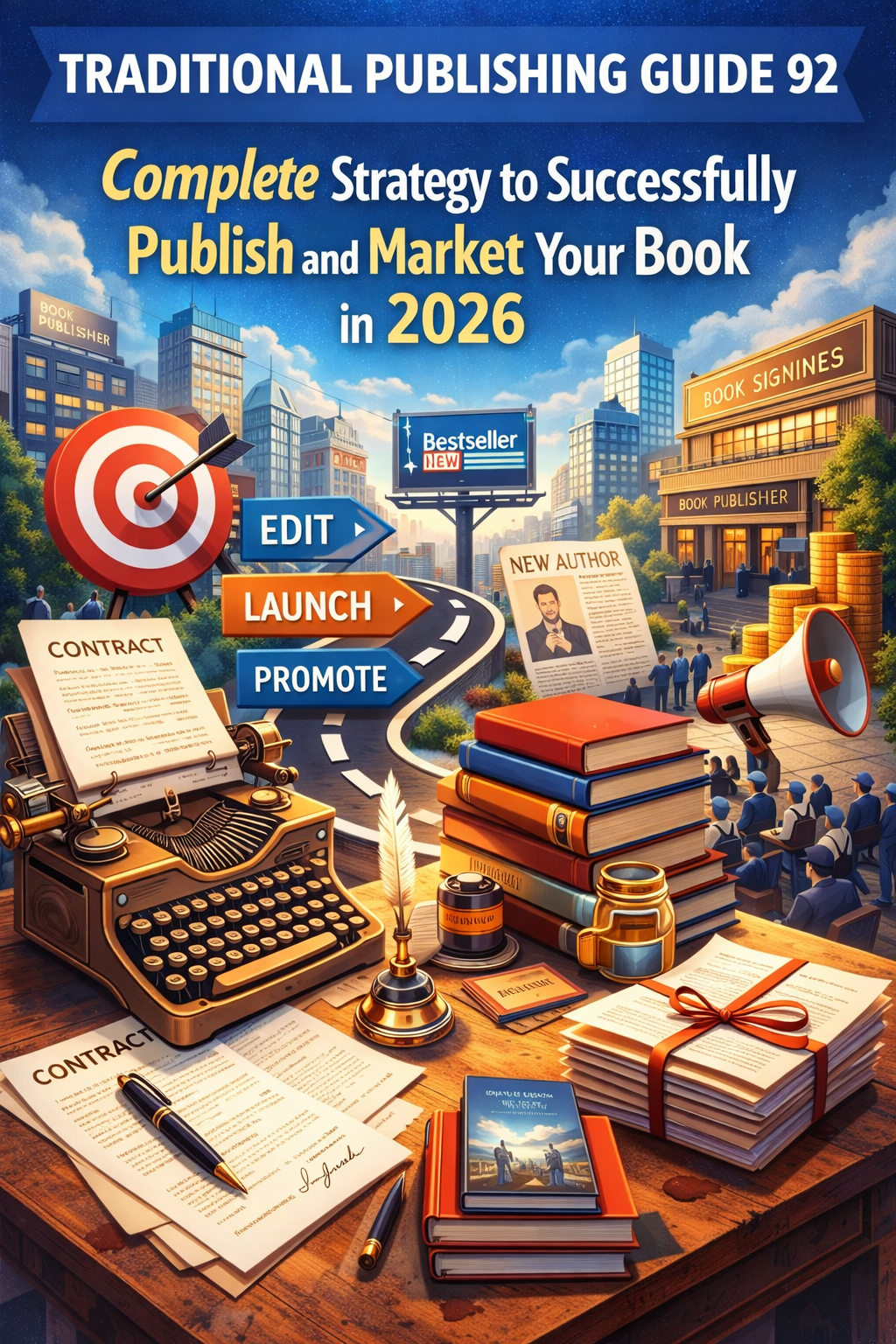
Traditional Publishing Guide 122: Complete Strategy to Successfully Publish and Market Your Book in 2026
Introduction
Many writers dream of seeing their book on bookstore shelves and published by a respected publishing house. Traditional publishing can make this dream possible. However, the process often feels confusing and competitive for new authors.
Writers frequently struggle with questions like:
-
How do I get a literary agent?
-
What do publishers actually look for?
-
How can I market my book after signing a publishing deal?
Without a clear plan, even talented authors can face rejection or delays.
This Traditional Publishing Guide explains the entire process step by step. From preparing your manuscript to marketing your book in 2026, this guide will help you understand how to succeed in the traditional publishing world.
Understanding Traditional Publishing
Traditional publishing involves working with an established publishing company that handles editing, design, printing, distribution, and marketing.
In this model, the publisher invests in your book and pays you royalties from sales.
Key characteristics of traditional publishing
-
The publisher owns publishing rights for a specific period
-
Authors receive royalties from book sales
-
The publisher handles production and distribution
-
Literary agents usually represent authors during negotiations
Because publishers take financial risks, they carefully select manuscripts that show strong market potential.
Step-by-Step Traditional Publishing Guide
Step 1: Write a Strong Manuscript
The first step in traditional publishing is creating a high-quality manuscript.
Publishing houses receive thousands of submissions every year. Only manuscripts that stand out move forward.
Tips for improving your manuscript
-
Focus on a clear genre and target audience
-
Develop compelling characters or arguments
-
Maintain strong pacing and structure
-
Revise multiple times before submitting
Many successful authors spend months or even years refining their manuscripts before sending them to agents.
Step 2: Research the Publishing Market
Understanding the publishing industry is essential before submitting your work.
Different publishers specialize in specific genres such as:
-
Fiction
-
Nonfiction
-
Business
-
Self-help
-
Children’s books
Submitting your manuscript to the wrong publisher can lead to quick rejection.
How to research publishers
-
Study recently published books in your genre
-
Identify publishers accepting similar titles
-
Check submission guidelines carefully
-
Review author success stories
Market research increases the chances that your manuscript reaches the right publishing team.
Step 3: Find a Literary Agent
Most large publishers do not accept direct submissions from authors. Instead, they rely on literary agents to discover promising manuscripts.
A literary agent represents your interests and negotiates publishing deals.
What literary agents do
-
Review and improve your proposal
-
Pitch your manuscript to publishers
-
Negotiate contracts
-
Manage rights and royalties
Because agents earn a percentage of your earnings, they only represent books they believe can succeed.
How to approach literary agents
-
Write a professional query letter
-
Prepare a synopsis of your book
-
Include sample chapters
-
Follow each agent's submission rules
Patience is important. Agents may take several weeks or months to respond.
Step 4: Create a Professional Book Proposal
For nonfiction books, publishers often request a book proposal instead of a full manuscript.
A strong proposal helps publishers evaluate your idea and market potential.
Key elements of a book proposal
-
Overview of the book concept
-
Target audience analysis
-
Author background and credibility
-
Chapter outline
-
Marketing strategy
-
Sample chapters
Even fiction writers may need supporting materials when pitching their manuscript.
Step 5: Submit Your Manuscript
Once an agent agrees to represent your book, they submit it to publishing houses.
This stage is often called submission rounds.
What happens during submission
-
Agents send your manuscript to selected editors
-
Editors review the manuscript and discuss it internally
-
Some publishers may request revisions
-
One or more publishers may offer a contract
Receiving multiple offers can lead to an auction where publishers compete for the rights to your book.
Step 6: Sign a Publishing Contract
If a publisher wants your book, they will offer a contract.
Your literary agent reviews the contract terms to ensure they protect your interests.
Common contract elements
-
Advance payment
-
Royalty percentage
-
Publishing rights
-
Distribution territories
-
Marketing commitments
Understanding your contract is critical before signing.
Step 7: Editing and Book Production
After signing the contract, your manuscript enters the production phase.
Publishing teams work closely with authors to refine the book.
The production process includes
-
Developmental editing
-
Copyediting
-
Proofreading
-
Cover design
-
Interior formatting
This process can take several months depending on the publisher’s schedule.
Step 8: Book Distribution and Launch
One of the biggest advantages of traditional publishing is distribution.
Publishers have established networks that place books in:
-
Bookstores
-
Online retailers
-
Libraries
-
International markets
They also coordinate book launches and promotional campaigns.
Marketing Your Book in 2026
Even with traditional publishing, authors must actively participate in marketing.
Publishers expect authors to help promote their work.
Effective book marketing strategies
-
Build a strong author website
-
Grow an email newsletter
-
Engage readers on social media
-
Participate in book events
-
Appear on podcasts and interviews
Marketing begins long before your book’s release date.
Building an author platform
A strong author platform increases your visibility.
Focus on:
-
Personal branding
-
Consistent online presence
-
Thought leadership in your topic
Publishers often consider platform size when evaluating proposals.
Benefits of Traditional Publishing
Following a structured Traditional Publishing Guide offers several important advantages.
Professional editorial support
Publishing houses provide experienced editors who improve the quality of your book.
Wide distribution
Traditional publishers distribute books globally through retail networks.
Industry credibility
Being published by a recognized publisher builds credibility and professional reputation.
Marketing and publicity
Publishers provide marketing campaigns, media outreach, and promotional strategies.
Financial advances
Many authors receive advance payments before their books are published.
Best Practices for Traditional Publishing Success
Authors who succeed in traditional publishing usually follow several best practices.
Focus on writing quality
Great writing remains the most important factor in attracting agents and publishers.
Be patient and persistent
Rejection is common in the publishing industry. Many successful books faced multiple rejections before acceptance.
Understand the business side
Learning about contracts, royalties, and rights management helps authors make better decisions.
Build your audience early
Authors with established audiences often receive more publishing opportunities.
Common Mistakes to Avoid
Many authors struggle with traditional publishing because of avoidable mistakes.
Submitting unfinished manuscripts
Publishers expect polished, complete work. Submitting early can harm your chances.
Ignoring submission guidelines
Each agent and publisher has specific requirements. Ignoring them signals unprofessionalism.
Targeting the wrong agents
Sending your manuscript to agents who do not represent your genre wastes time.
Neglecting marketing responsibilities
Even traditionally published authors must participate in marketing efforts.
Giving up too soon
Many successful authors faced dozens of rejections before receiving their first book deal.
Persistence is often the difference between failure and success.
Why Choose a Professional Publishing Service
While traditional publishing offers many benefits, navigating the process alone can be difficult.
Professional publishing services can help authors prepare their manuscripts and submissions effectively.
Benefits of professional guidance
-
Manuscript evaluation and editing
-
Query letter preparation
-
Book proposal development
-
Market positioning strategies
-
Publishing consultation
These services improve the chances of attracting literary agents and publishers.
Professional support also helps authors avoid common mistakes and present their work in the best possible way.
The Future of Traditional Publishing
The publishing industry continues to evolve in 2026.
Several trends are shaping traditional publishing today:
-
Increased demand for diverse voices
-
Growth of digital marketing for books
-
Hybrid author careers combining publishing models
-
Greater focus on author platforms
Despite technological changes, traditional publishing remains a powerful path for authors seeking professional recognition and wide distribution.