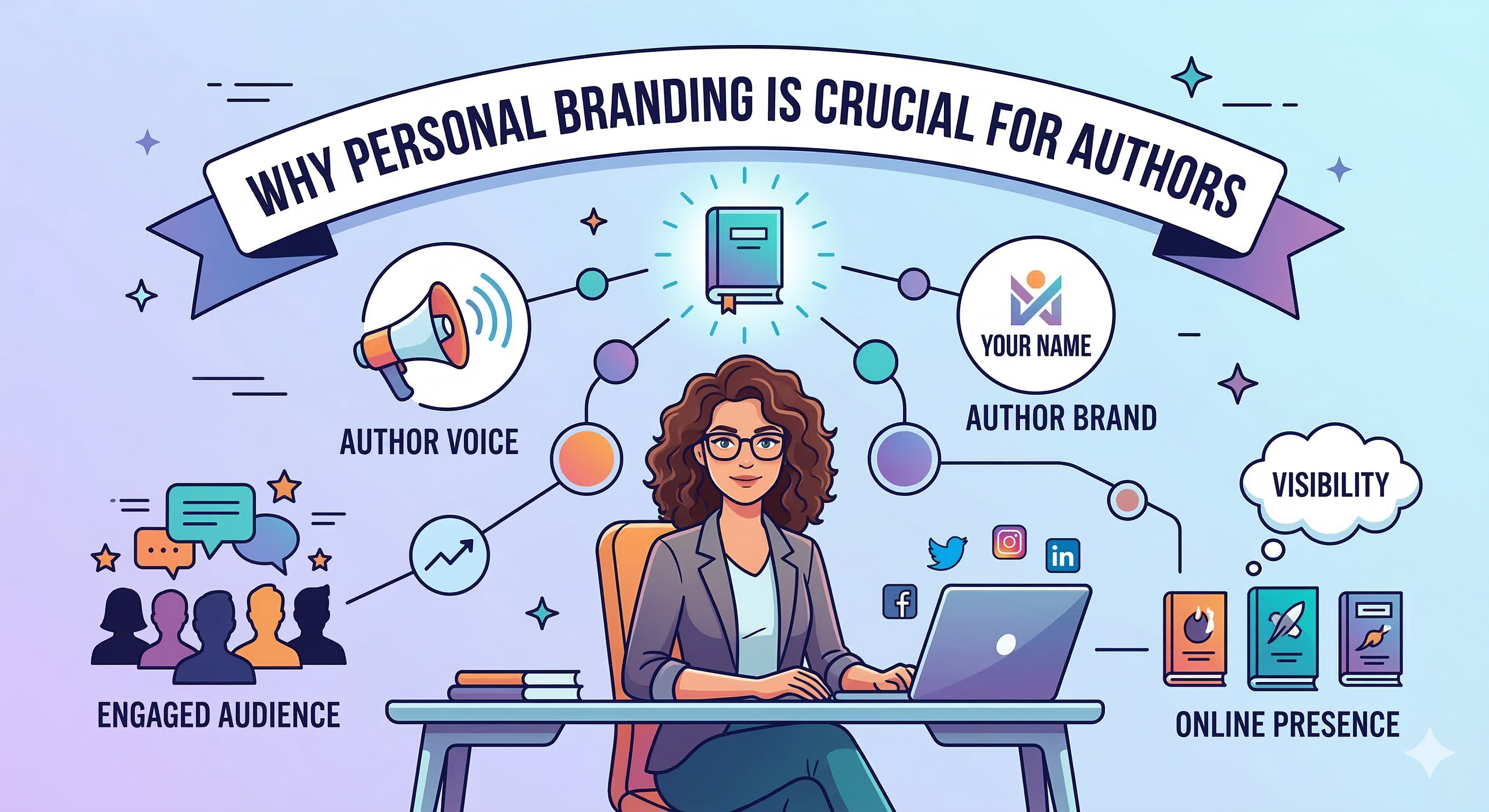
Why Author Personal Branding Is Crucial for Success
Introduction: Why Authors Need More Than Just a Good Book
Writing a great book is only one part of becoming a successful author. In today's competitive publishing world, thousands of new books are released every day. Without a clear identity, even excellent books can remain unnoticed.
This is where author personal branding becomes important.
Author personal branding helps writers create a recognizable identity that readers remember and trust. It shows who you are, what you write about, and why readers should care about your work.
Instead of promoting just one book, a strong personal brand promotes the author behind the book.
As a result, readers begin to follow the author, not just a single title. This builds long-term success, loyal audiences, and stronger book sales.
In this article, we will explore why author personal branding is crucial, how to build it step by step, and the mistakes authors must avoid.
What Is Author Personal Branding?
Understanding the Concept
Author personal branding is the process of building a unique identity as a writer. It defines how readers see you and what they expect from your work.
Your brand includes:
-
Your writing style
-
Your values and message
-
Your visual identity
-
Your online presence
-
Your interaction with readers
In simple terms, author personal branding tells the world who you are as a writer.
For example, some authors are known for:
-
Thrilling mysteries
-
Inspirational self-help books
-
Deep historical storytelling
-
Fantasy world building
Readers often follow these authors because they trust the experience they provide.
Why Author Personal Branding Matters in Modern Publishing
The Publishing Industry Is Highly Competitive
Every year, millions of books are published globally. With traditional and self-publishing platforms growing rapidly, standing out has become harder than ever.
Without author personal branding, your book may struggle to get noticed.
A strong brand helps you:
-
Stand out in crowded markets
-
Build recognition among readers
-
Create a consistent author identity
This increases your chances of long-term success.
Readers Connect With Authors, Not Just Books
Modern readers enjoy connecting with writers.
They follow authors on social media, attend events, subscribe to newsletters, and read future books from writers they admire.
When authors build a strong personal brand, they create trust and emotional connection with readers.
This connection often leads to:
-
Loyal fan bases
-
Repeat book purchases
-
Word-of-mouth marketing
A Strong Brand Supports Every Book You Publish
Without personal branding, every new book starts from zero.
However, when you build author personal branding, each new release benefits from your existing reputation.
Readers who already trust your work are more likely to buy your next book.
This makes marketing easier and more effective.
Step-by-Step Guide to Building Author Personal Branding
Step 1: Define Your Author Identity
The first step in author personal branding is understanding who you are as a writer.
Ask yourself:
-
What genres do I write?
-
What themes appear in my books?
-
What message do I want readers to remember?
Your answers will help shape your brand.
For example:
-
A thriller author may focus on suspense and mystery.
-
A motivational author may focus on growth and inspiration.
Your identity must remain consistent across all platforms.
Step 2: Identify Your Target Audience
Successful author branding always focuses on a clear audience.
Understanding your readers helps you communicate better with them.
Consider factors such as:
-
Age group
-
Interests
-
Reading preferences
-
Online platforms they use
For example:
Young adult fiction readers may spend more time on social media, while academic readers may engage through professional networks.
Knowing your audience allows you to build a brand that speaks directly to them.
Step 3: Create a Professional Author Website
An author website is the central hub of your brand.
It gives readers a place to learn more about you and your work.
A good author website should include:
-
Author biography
-
Book listings
-
Media coverage
-
Blog or updates
-
Contact information
It also helps establish credibility and professionalism.
Step 4: Maintain a Consistent Online Presence
Consistency is a key part of author personal branding.
Your online presence should reflect your identity across platforms such as:
-
Social media
-
Author websites
-
Book promotion pages
-
Newsletters
Your tone, messaging, and visuals should stay consistent.
This helps readers instantly recognize your brand.
Step 5: Share Valuable Content
Readers appreciate authors who share meaningful content.
This may include:
-
Writing insights
-
Behind-the-scenes stories
-
Book research details
-
Writing tips
-
Personal experiences
Sharing valuable content builds authority and strengthens your brand.
Benefits of Strong Author Personal Branding
Increased Reader Trust
When readers see a consistent and professional brand, they feel more confident about your work.
Trust encourages readers to try your books and recommend them to others.
Better Marketing Opportunities
Publishers, media outlets, and event organizers prefer working with authors who have a strong personal brand.
It signals professionalism and audience reach.
This can lead to:
-
Speaking opportunities
-
Book launch events
-
Media interviews
-
Collaboration projects
Long-Term Career Growth
Author personal branding supports long-term writing careers.
Instead of promoting only one book, you build a reputation that lasts for years.
This helps authors expand into:
-
New genres
-
Speaking engagements
-
Courses or workshops
-
Publishing partnerships
Stronger Book Sales
A recognizable brand encourages repeat purchases.
Readers who enjoy one book often buy future releases because they trust the author.
This creates sustainable sales growth.
Best Practices for Effective Author Personal Branding
Be Authentic
Authenticity is essential for a strong brand.
Readers appreciate honesty and real experiences.
Do not try to imitate other authors. Instead, highlight your own voice and perspective.
Stay Consistent
Consistency builds recognition.
Use the same:
-
Author photo
-
Brand colors
-
Tone of communication
-
Messaging
This helps readers remember your identity.
Engage With Your Audience
Successful authors build relationships with readers.
You can engage through:
-
Social media discussions
-
Newsletter updates
-
Live sessions
-
Reader questions
Engagement strengthens loyalty.
Invest in Professional Design
Professional book covers, author photos, and website design significantly impact branding.
High-quality visuals communicate professionalism and credibility.
Common Personal Branding Mistakes Authors Should Avoid
Inconsistent Messaging
Some authors present different identities across platforms.
This confuses readers and weakens branding.
Your message must remain consistent everywhere.
Ignoring Online Presence
Many writers focus only on writing and neglect visibility.
Without an online presence, readers may never discover your work.
Trying to Appeal to Everyone
A strong brand targets a specific audience.
Trying to reach everyone often results in weak messaging.
Over-Promotion Without Value
Constantly promoting books without sharing helpful or engaging content can drive readers away.
Balance promotion with meaningful communication.
Why Authors Should Consider Professional Publishing Services
Building author personal branding requires time, planning, and expertise.
Many authors struggle with marketing, design, and audience development.
Professional publishing services help authors build a powerful brand by providing:
-
Strategic marketing guidance
-
Professional book design
-
Author website development
-
Branding consultation
-
Promotional campaigns
These services allow authors to focus on writing while experts handle branding and marketing strategies.
For new authors especially, professional guidance can significantly improve visibility and success.
Final Thoughts
In today’s competitive publishing environment, writing a great book is no longer enough.
Readers want to connect with the author behind the story. This is why author personal branding has become essential for long-term success.
A strong brand helps authors stand out, build trust, and grow loyal audiences.
By defining your identity, understanding your readers, maintaining a consistent presence, and engaging authentically, you can build a powerful brand that supports every book you publish.
When done correctly, author personal branding transforms writers into recognized voices in their field, opening doors to greater opportunities and lasting success in the publishing world.