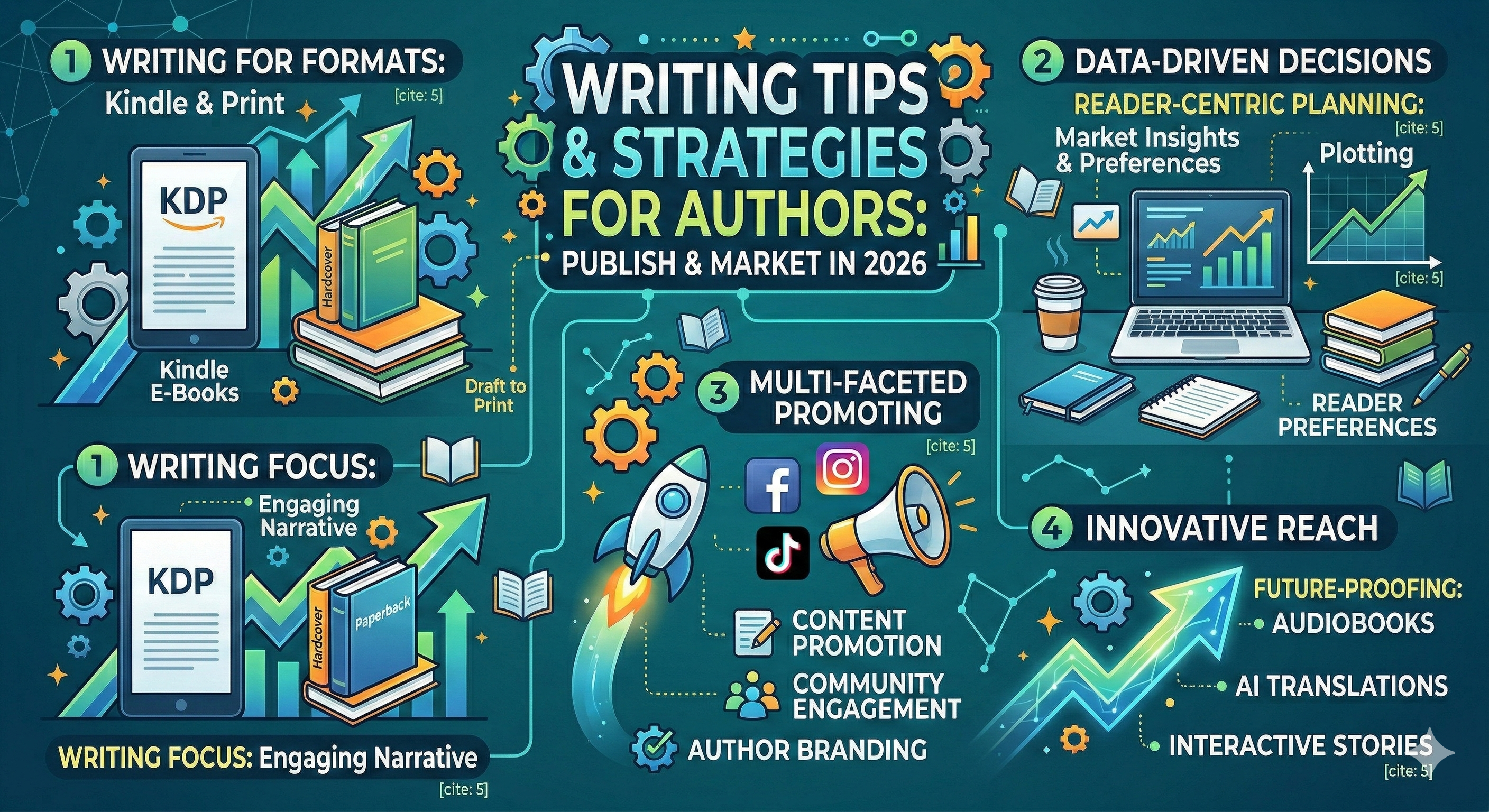
Writing Tips for Authors: Publish & Market in 2026
Publishing a book in 2026 is more exciting—and more competitive—than ever. Thousands of new titles launch every week across print and digital platforms. Many authors work hard on their manuscripts but struggle when it comes to publishing and marketing.
The good news? With the right writing tips for authors, plus a clear publishing and marketing plan, you can stand out.
This complete guide walks you step by step through writing smarter, publishing strategically, and promoting effectively in today’s fast-changing market.
Why Writing Tips for Authors Matter More in 2026
The publishing industry continues to evolve. Readers expect high-quality content, professional formatting, and strong author branding. At the same time, digital platforms make it easier for anyone to publish.
Because of this, strong writing alone is not enough. You need:
-
A polished manuscript
-
A clear genre strategy
-
Professional presentation
-
Smart marketing execution
When you combine creative skill with business thinking, you increase your chances of long-term success.
Step 1: Start With Market-Aware Writing
Before writing your book, understand your target audience.
Identify Your Ideal Reader
Ask yourself:
-
Who is this book for?
-
What problems does it solve?
-
What emotions should it create?
Research bestselling books in your genre. Study their covers, descriptions, and reader reviews. Notice what readers praise—and what they criticize.
This research helps you write a book that fits market demand while staying original.
Define Your Unique Selling Point (USP)
Your book must answer one question clearly:
Why should someone buy this instead of another similar book?
Your USP could be:
-
A unique theme
-
A fresh writing style
-
A new perspective
-
A specific niche focus
Strong writing tips for authors always start with clarity of purpose.
Step 2: Build a Strong Manuscript Foundation
A powerful manuscript is the core of your publishing success.
Create a Clear Outline
Even if you are a creative writer, structure matters.
For nonfiction:
-
Define chapters logically
-
Include actionable insights
-
Use examples and case studies
For fiction:
-
Develop strong character arcs
-
Maintain tension and pacing
-
Ensure a satisfying resolution
An outline reduces rewriting time and improves flow.
Focus on Simplicity and Clarity
Readers in 2026 prefer:
-
Short paragraphs
-
Clear sentences
-
Active voice
Avoid unnecessary complexity. Simple writing builds deeper connection.
Edit Ruthlessly
First drafts are rarely perfect. Revise for:
-
Grammar and spelling
-
Repetitive phrases
-
Weak dialogue
-
Slow pacing
Professional editing is not optional—it is essential.
Step 3: Professional Book Design and Formatting
Even the best manuscript can fail if presentation is poor.
Cover Design Matters
Your cover is your first marketing tool. It must:
-
Fit your genre
-
Be readable as a thumbnail
-
Look modern and professional
Readers judge books within seconds. A strong cover increases click-through rates dramatically.
Interior Formatting
Clean formatting ensures:
-
Easy reading
-
Proper spacing
-
Professional appearance
Whether publishing print or eBook, formatting errors damage credibility.
Step 4: Choose the Right Publishing Path
There are three primary publishing options in 2026:
Traditional Publishing
Pros:
-
Industry credibility
-
Distribution support
-
Professional team
Cons:
-
Long timelines
-
Competitive acceptance
-
Lower royalty percentage
Self-Publishing
Pros:
-
Full control
-
Higher royalties
-
Faster launch
Cons:
-
Upfront investment
-
Marketing responsibility
Hybrid Publishing
A balanced option where authors share costs but receive professional support.
Choosing the right path depends on your goals, budget, and timeline.
Step 5: Pre-Launch Marketing Strategy
One of the most overlooked writing tips for authors is this:
Marketing starts before publication.
Build Your Author Platform Early
Start at least 3–6 months before launch.
Build:
-
A professional website
-
An email list
-
Social media presence
Share writing updates, insights, and behind-the-scenes content.
Grow an Email List
Email remains one of the highest-converting marketing tools.
Offer:
-
A free chapter
-
A checklist
-
A bonus guide
Encourage readers to subscribe before launch.
Step 6: Launch Your Book Strategically
A strong launch creates momentum.
Plan a Launch Week
During launch:
-
Announce across all platforms
-
Send email campaigns
-
Request reviews from early readers
-
Run limited-time promotions
Concentrated activity improves ranking visibility on major book platforms.
Encourage Reviews
Reviews influence buying decisions.
Ask readers directly:
-
At the end of your book
-
Through email follow-ups
-
On social media
Even 25–50 honest reviews can significantly impact sales.
Step 7: Long-Term Book Marketing Strategy
Marketing does not end after launch week.
Use Content Marketing
Write:
-
Blog posts
-
Guest articles
-
Newsletter content
Share helpful knowledge related to your book topic.
Leverage Social Proof
Highlight:
-
Positive reviews
-
Testimonials
-
Media mentions
Trust builds sales.
Explore Paid Advertising
If budget allows, consider:
-
Social media ads
-
Sponsored listings
-
Promotional campaigns
Test small budgets first. Track results carefully.
Benefits of Following These Writing Tips for Authors
Applying these strategies offers clear advantages:
-
Higher publishing success rate
-
Stronger brand authority
-
Increased reader trust
-
Better long-term book sales
-
Scalable writing career
Instead of guessing what works, you follow a proven system.
Best Practices for Authors in 2026
To stay competitive:
-
Write consistently
-
Study industry trends
-
Invest in professional editing
-
Maintain a strong online presence
-
Focus on reader relationships
Success in publishing is not only about talent—it is about discipline and strategic action.
Common Mistakes to Avoid
Many authors repeat the same errors.
1. Publishing Too Quickly
Rushing to publish without editing damages reputation.
2. Ignoring the Target Audience
Writing without a clear reader in mind leads to weak positioning.
3. Skipping Professional Services
DIY design and editing often look amateur.
4. Poor Marketing Planning
Waiting until launch week to think about marketing is too late.
5. Inconsistent Branding
Your author image, messaging, and book style must align.
Avoiding these mistakes saves time, money, and frustration.
Why Choose a Professional Publishing Service?
Working with a professional publishing company offers structure and support.
Expert Editing
Professional editors refine your voice while improving clarity and impact.
Custom Design
Design teams create covers and layouts that match current market standards.
Strategic Marketing Support
Professionals help with:
-
Launch planning
-
Distribution strategy
-
Promotional campaigns
Time Efficiency
Instead of learning every step alone, you work with specialists who streamline the process.
This partnership allows you to focus on what matters most—writing great books.
Creating a Sustainable Author Career
One book is a milestone. A career is a strategy.
To build long-term success:
-
Plan future books early
-
Stay connected with readers
-
Develop a recognizable author brand
-
Track sales data and adjust strategy
Authors who treat writing as both art and business grow faster and stronger over time.